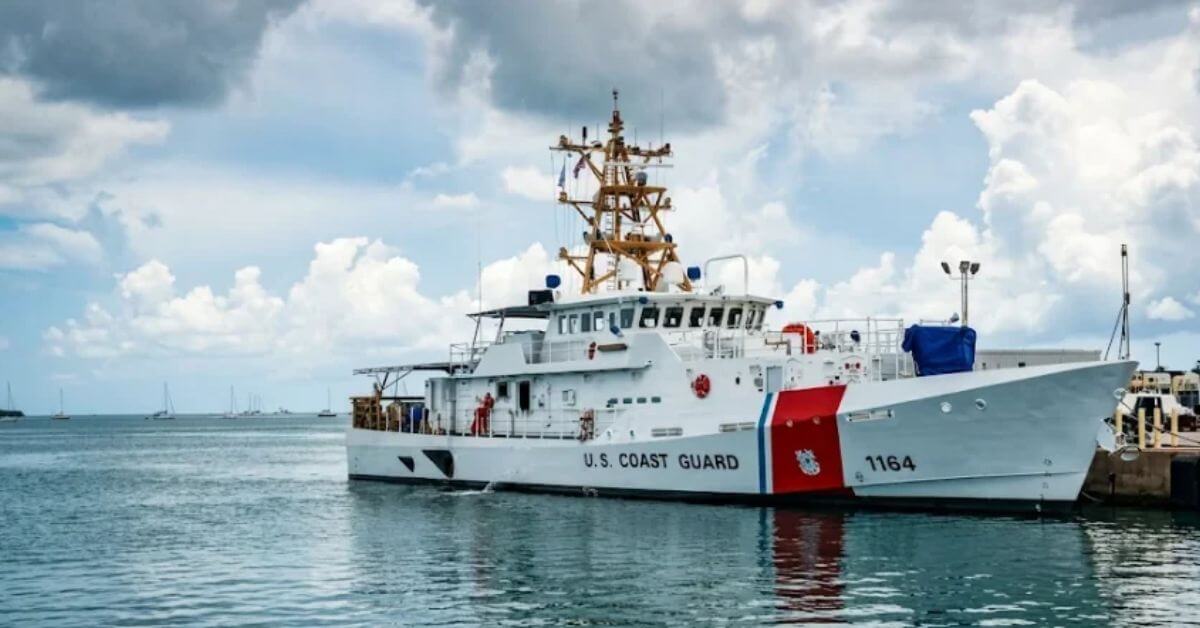
The naming of a Coast Guard cutter after a World War II Higgins boat coxswain is not merely ceremonial, it is a strategic statement about the continuity of maritime capability. The USCGC *Marvin Perrett* joins the fleet as a Sentinel-class fast response cutter, and its commissioning in New Orleans on November 19, 2026, connects a D-Day landing craft operator to a vessel armed with next-generation sensors and an over-the-horizon pursuit boat. This is a tangible link between empirical lessons from the past and the integrated data ecosystems of modern maritime security. As the US Navy pushes for foreign investment in its frigate fleet, a move debated in Global Shipbuilding Strategy Must Include Foreign Investment for Frigate Fleet, the Coast Guard demonstrates that proven, calibrated platforms remain the backbone of sovereign patrol.
For our readers, researchers, policymakers, and maritime operators, this cutter represents more than a hull number. The *Marvin Perrett* will homeport in San Juan, Puerto Rico, and its mission set covers search and rescue, law enforcement, and homeland security across the Caribbean and the southern maritime approaches to the United States. Vice Admiral Jo-Ann Burdian, who presided over the commissioning, stated plainly that the vessel gives the service a capable new asset with a crew ready to guard the southern maritime border. That is a measurable statement of intent. The cutter's integrated intelligence and communications suites, combined with its ability to launch an over-the-horizon pursuit boat, provide real-time ocean intelligence in a region where climate indicators and human migration patterns increasingly intersect. Compare this with the Arctic patrol logged by the cutter *Storis*, which tracked a Chinese research fleet over 17,000 nautical miles, Arctic patrol logs 17,000 nautical miles tracking Chinese research fleet, and the pattern is clear: the Coast Guard is deploying validated, longitudinal capability from pole to equator.
The namesake matters here. Marvin Perrett steered a Higgins boat during the D-Day landings at Normandy, the invasion of southern France, and later at Okinawa and Iwo Jima. At Iwo Jima, he deliberately turned his landing craft away to avoid a US Marine, losing the boat in the process. That is not a sentimental anecdote; it is a calibrated decision under extreme pressure, the kind of judgment the Coast Guard now seeks to embed in its sensor-fused command systems. Perrett spent decades after the war telling young people about the Coast Guard's role in World War II, and he was awarded the Knight of the Legion of Honour by France. His daughter attended the commissioning alongside the CEO of Bollinger Shipyards. The cutter is a physical record of that legacy, but the operational question is whether the service can sustain this tempo of forward-deployed patrols while also meeting demands for Arctic presence and southern border security.
One concrete takeaway: the *Marvin Perrett* will test whether a single Sentinel-class cutter can effectively layer search and rescue, law enforcement, and homeland security missions across a region where partner nations in the Caribbean depend on shared maritime domain awareness. If the integrated intelligence suites perform as designed, the data collected here could inform how the Coast Guard allocates its fleet between the Atlantic, the Arctic, and the southern approaches. Watch for the cutter's first quarter of operational metrics, the empirical results will matter more than the ceremony.