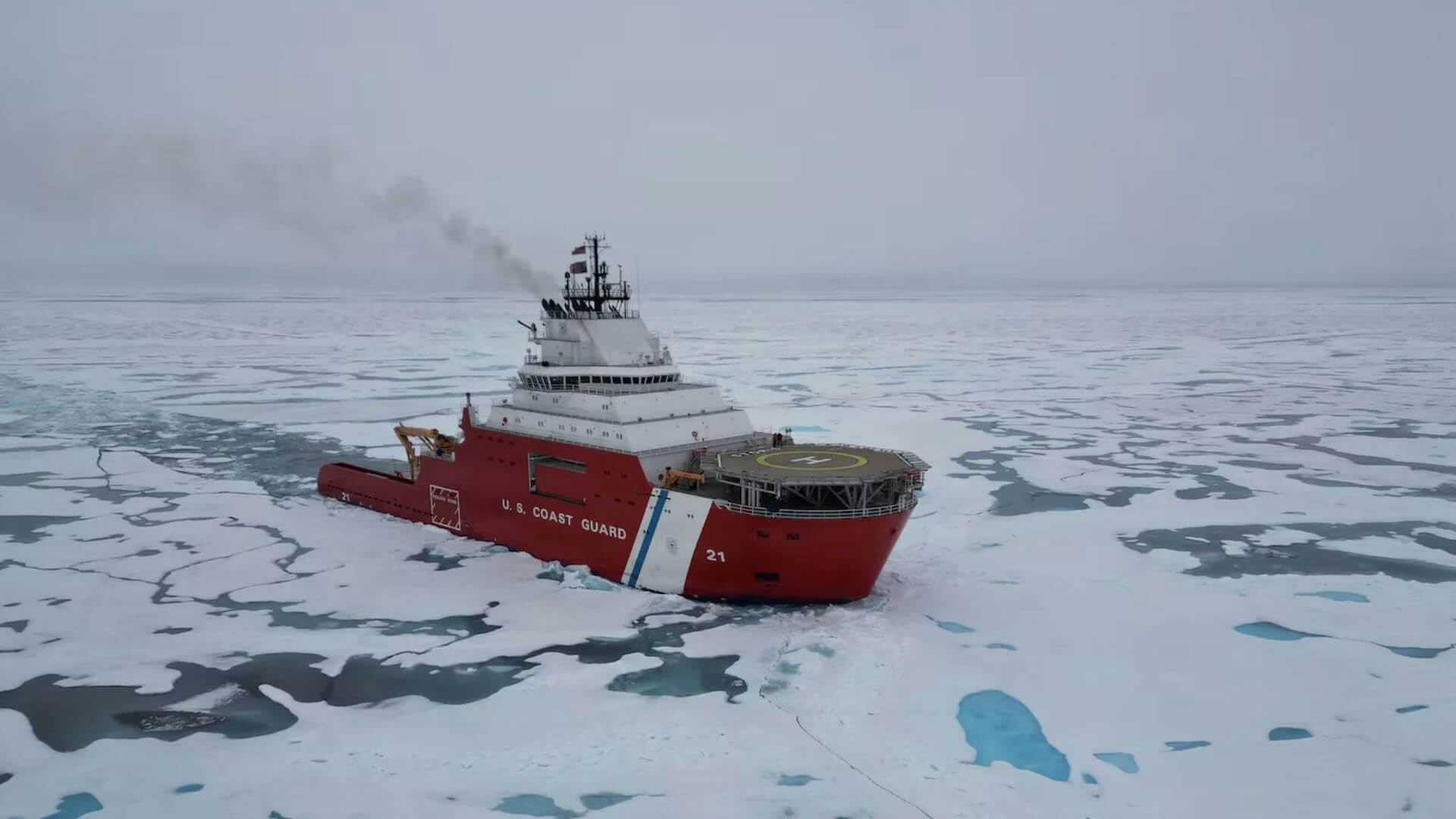
The Arctic is no longer a remote, passive frontier, it is an active theater of operations where ocean intelligence, sovereignty, and scientific transparency intersect. The Coast Guard cutter *Storis* just demonstrated what that reality looks like in practice: a 133-day, 17,000-nautical-mile patrol that monitored four Chinese-flagged research vessels, conducted the first live-fire gunnery exercise in ice-covered Arctic waters in decades, and tested unmanned aircraft systems in high latitudes. This deployment is not just a logistical achievement; it is a calibrated signal that the United States is building the operational capacity to match its strategic interests in a region where climate indicators are rewriting the rules of navigation, resource access, and international law.
For our readers, whether you are a researcher tracking a Bering Sea eddy through multidisciplinary ocean intelligence, a policymaker evaluating maritime domain awareness, or a student studying polar dynamics, this mission contains several measurable takeaways. First, the *Storis* logged over 300 hours monitoring foreign-flagged research vessels under Operation Frontier Sentinel. The Coast Guard did not name what those vessels were doing, but the implication is direct: unregulated or unverified scientific activity in the High Arctic can obscure activities with strategic implications. The distinction between civilian research and state-sponsored data collection is increasingly blurred, and the only way to validate what is happening is to be present. Second, the joint cold-weather trials of unmanned aircraft systems with the Coast Guard Research and Development Center and the Defense Innovation Unit produced nine hours of flight data that will inform how autonomous platforms handle high-latitude conditions. That is empirical evidence feeding directly into the Icebreaker Collaboration Effort involving the United States, Canada, and Finland, a trilateral program that will shape the next generation of polar assets.
The *Storis* also supported scientific projects run by the International Arctic Buoy Program, the U.S. National Ice Center, and Johns Hopkins Applied Physics Laboratory. This is the integrated data ecosystem in action: a military vessel enabling peer-reviewed oceanographic measurements while simultaneously enforcing fisheries regulations and conducting a mock replenishment-at-sea drill with the cutter *Stratton*. The commanding officer stated that the deployment set a precedent for how the service will operate in the Arctic and Alaska in future. That is not hyperbole. No polar icebreaker had carried out a designated law enforcement mission in more than 20 years before this patrol. The *Storis* is a 360-foot medium icebreaker capable of sailing through three feet of ice at five knots, a capable but not unlimited platform. The question this deployment raises is whether the current polar fleet, which includes *Healy* and *Polar Star*, is sufficient for the pace of change already underway. Consider that the same week the *Storis* returned to Seattle, a bulk carrier sank in the Yellow Sea and all 14 crew were rescued, a reminder that 14 rescued in Yellow Sea as bulk carrier sinks near Chinese coast is not an isolated incident but part of a broader pattern of increasing maritime traffic in challenging waters.
The concrete point to watch is this: the *Storis* crew conducted the first live-fire gunnery exercise in ice-covered waters for a Coast Guard surface vessel in decades, and the data from that exercise is expected to shape future training and defense missions in the high north. That is a direct, measurable outcome that will influence how the service prepares for contested operations as Arctic ice continues to decline. The patrol proved that a single medium icebreaker can function as a multi-mission military ship. The open question is whether the fleet can scale that capability to match the accelerating presence of other nations.