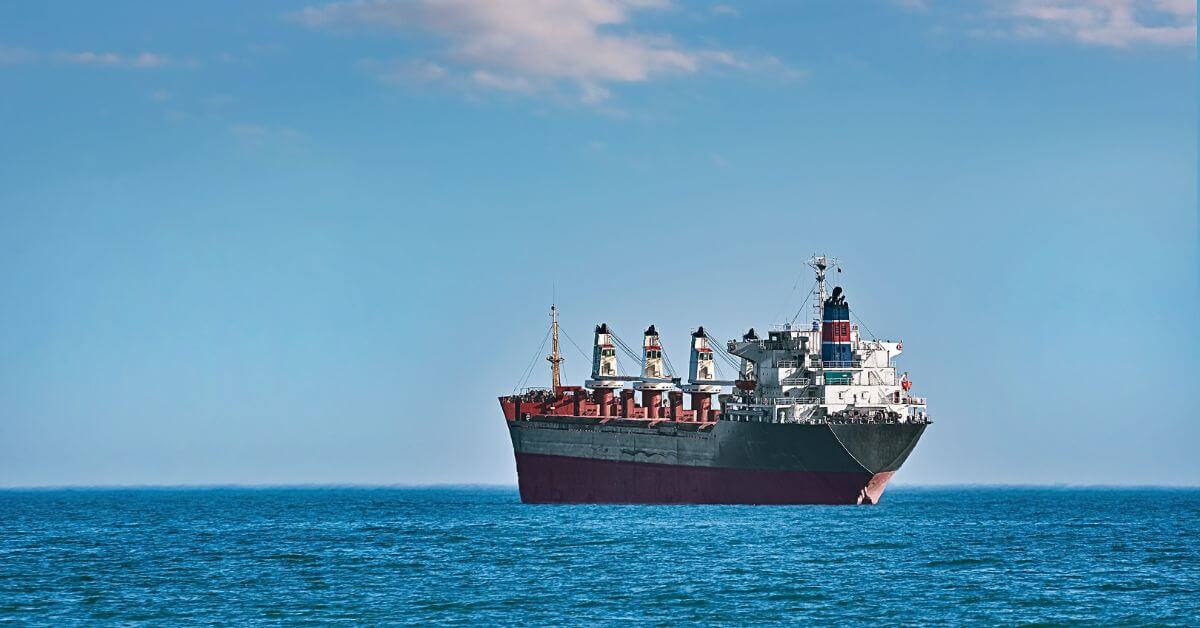
The Coast Guard's deployment of integrated air-sea assets to reach the stranded bulk carrier *Sigma Pearl* is a textbook demonstration of operational readiness, but it also exposes a systemic vulnerability in maritime logistics that the industry cannot afford to ignore. When a vessel loses engine power in the Ravva oilfield, a location central to India's energy infrastructure, the response must be immediate and coordinated. The rescue effort, involving a helicopter, coastal vessels, and the Offshore Patrol Vessel *Sujay*, underscores the value of a layered maritime domain awareness system. Yet the fact that MarineTraffic showed the ship as "out of range" two days before the crisis is a signal that our ocean intelligence networks still have blind spots.
This operation should be read alongside the recent launch of INS *Srishti*, a Next Generation Offshore Patrol Vessel built for the Indian Navy. The new patrol vessel INS Srishti strengthens India's maritime observation capacity precisely because it enhances persistent surveillance, exactly the kind of capability that could have flagged the *Sigma Pearl*'s drift before it became a rescue case. Similarly, the sanctions targeting New Sanctions Target Law Firm Behind Iran's Shadow Fleet Operations highlight how vessel-tracking data is now a tool of geopolitical leverage. The gap between a ship being "out of range" and a crew in distress is where the next generation of integrated data ecosystems must close the loop.
Cyclone Arnab was not a surprise. The IMD's forecast of sustained winds of 125-135 kmph and a six-hour landfall process gave authorities a clear window to pre-position assets. Yet the *Sigma Pearl* left Visakhapatnam on October 27, after unloading cargo, and headed directly toward the approaching storm. This raises a practical question about voyage planning protocols: should bulk carriers departing ports under cyclone warnings be required to maintain engine redundancy checks before departure? The vessel's engine failure, suspected to be linked to the cyclone, suggests that the empirical link between severe weather and mechanical stress is still being treated as a post-hoc explanation rather than a predictive metric. For researchers and policymakers reading this, the takeaway is clear: we need calibrated, real-time climate indicators integrated into vessel clearance systems, not just post-disaster attribution.
Local authorities in West Godavari district are assisting the Coast Guard, and the six crew members remain the immediate priority. But the open question is whether the *Sigma Pearl* will resume its journey to Singapore or require a tow. The cost of a salvage operation, the delay in cargo delivery, and the risk to crew lives are all measurable consequences of a single engine failure in a storm. For an industry that prides itself on just-in-time logistics, the absence of a redundant propulsion system, or a pre-agreed emergency shelter plan, is a vulnerability that no amount of helicopter rescues can fully patch. The specific detail to watch is whether the vessel's accident report, once released, includes a recommendation for mandatory engine testing before transiting cyclone-prone corridors.