China’s 134.2 Km Long River-To-Sea Pinglu Canal Opens, Offering Trade Shortcut To Southeast Asia
Our take
The recent opening of China’s 134.2 kilometer Pinglu Canal, designed to significantly shorten shipping routes to Southeast Asia, presents a complex interplay of economic opportunity and geopolitical considerations that warrants careful observation. The projected annual savings of over 5 billion yuan in shipping costs are undoubtedly attractive, reflecting a desire to optimize trade efficiency and bolster regional connectivity. This development arrives amidst increasing global competition for maritime dominance and underscores China's continued investment in its infrastructure capabilities. The canal’s capacity to handle ships up to 5,000 tonnes suggests a focus on mid-sized cargo transport, likely impacting feeder routes and potentially shifting trade patterns within the region. The timing of this opening, alongside developments like Japan Plans Drone-Mounted Quantum Sensors To Track Chinese Submarines, highlights the escalating strategic tensions in the Indo-Pacific, where maritime security and trade routes are of paramount importance. Furthermore, the broader context of port activity, as demonstrated by Two Major U.S. Container Gateways Handled Nearly 1.88 Million TEUs In August, underscores the global demand for efficient logistics and the competitive pressure facing established maritime hubs.

The canal’s construction and operational impact will undoubtedly generate measurable data relevant to ocean intelligence. We anticipate increased vessel traffic through the Bohai Sea and the Yellow River Delta, necessitating enhanced monitoring and calibration of existing environmental models. The potential for increased sedimentation and changes in water salinity patterns within the canal and surrounding waterways require longitudinal empirical studies. Integrated data ecosystems will be crucial for accurately assessing these impacts and informing adaptive management strategies. This project also raises questions about the canal’s resilience to climate change, particularly sea-level rise and extreme weather events, which could impact its long-term viability and necessitate ongoing infrastructure investments. The reliance on a single, albeit significant, waterway also introduces a potential vulnerability within China's trade network, highlighting the importance of diversifying routes and developing robust contingency plans.
Beyond the immediate economic and logistical implications, the Pinglu Canal exemplifies China’s broader strategic approach to maritime development. It’s a tangible manifestation of a long-term vision to control and influence key maritime chokepoints and strengthen its position within global trade networks. The canal’s development aligns with China’s Belt and Road Initiative, aimed at fostering economic cooperation and infrastructure development across Asia and beyond. This ambition is being further tested by the growing need for seafarer support, as illustrated by India Proposes Emergency Support Network For Seafarers After 15 Indian Crew Killed In Conflict Zones, showcasing the challenges and risks associated with global maritime operations. The canal’s success will depend not only on its operational efficiency but also on its ability to navigate the complex geopolitical landscape and address potential environmental concerns.
Looking ahead, the long-term implications of the Pinglu Canal are substantial. Its impact on regional trade flows, maritime security dynamics, and environmental sustainability will require continuous monitoring and rigorous analysis. The integration of real-time data from the canal’s operations, combined with broader oceanographic and climate indicators, will be essential for understanding its full impact. The development also poses a challenge for international maritime governance, requiring a collaborative approach to ensure the canal’s safe and sustainable operation within a complex geopolitical environment. A critical question to watch is how other nations, particularly those with competing maritime interests, will respond to China’s increased influence in the region and whether this development will spur further infrastructure investments and strategic maneuvering within the Indo-Pacific.
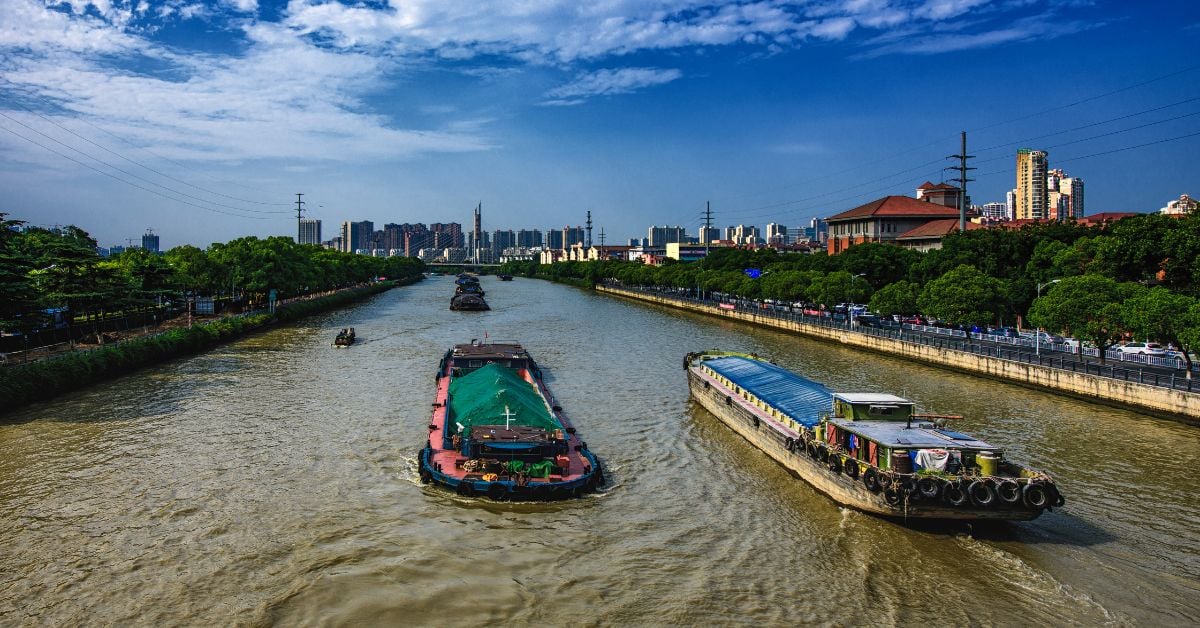
A one-of-a-kind river-to-sea canal, the Pinglu Canal, recently became operational in China, connecting the less prosperous, landlocked regions in the country’s southwest with the international markets through major trade lanes.
It also offers a trade shortcut to the Southeast Asian region as China wants to increase maritime trade with Asian countries, especially the ASEAN nations, which are Beijing’s biggest trade partner as a bloc.
The project began with an investment of 72.7 billion yuan, or 10.8 billion USD. Construction started in 2022 and ended in 4 years. It is the first artificial canal which links a river to the open sea built in China since its founding in 1949.
The 134.2-kilometre-long waterway connects Nanning, which is the capital of Guangxi, to the Gulf of Tonkin or the Beibu Gulf, as it is known in China, enabling cargo from the south and inland regions to reach the sea coast by cutting down an additional 560 kilometres that ships had to sail from Guangzhou.
This would also cut logistics expenses by 18-30%, boost local industries and strengthen inter-regional maritime trade. The canal divides vessel traffic into incoming and outgoing using a tiered navigation system, enabling cargo ships to sail without requiring ship-to-ship transfers.
After the canal became operational on Wednesday, two new trade routes also opened up, one connecting China’s Nanning with Vietnam’s Can Tho while the other is an inland route linking Nanning with Yangpu in China’s Hainan province.
The canal has been designed to handle ships weighing up to five thousand tonnes and would save over 5 billion yuan in total shipping costs annually.
Four new routes for passenger vessels had also been planned, and one of them has opened, according to Chinese news outlets.
On the inaugural day, 30 ships carrying thousands of tonnes of cargo, including construction materials, steel, coal, minerals, fertilisers, etc will sail through the waterway, with Qinzhou and Nanning Ports managing the operations.
The canal became operational after undergoing several tests and inspections. In August, 4 cargo ships weighing up to 5000 tonnes were used to conduct trials along its main channel to check the safety of the locks, service area and the anchorages.
In the same month, a patrol ship also completed its transit test through the Pinglu Canal. A few days later, the canal got its first management ship to handle emergency response and oversee safe navigation practices in the Pinglu Canal.
The ambitious project was also part of a wider effort to develop China’s inland waterways and connect them to other provinces such as Henan, Jiangxi, Hunan and Hubei.
With the canal’s opening, supporting infrastructure has also come up, such as additional berths to handle ships of up to 5000 tonnes at Nanning’s Liujing Operations Area and cross-border railway connections like the China-Laos route.
Read on the original site
Open the publisher's page for the full experience