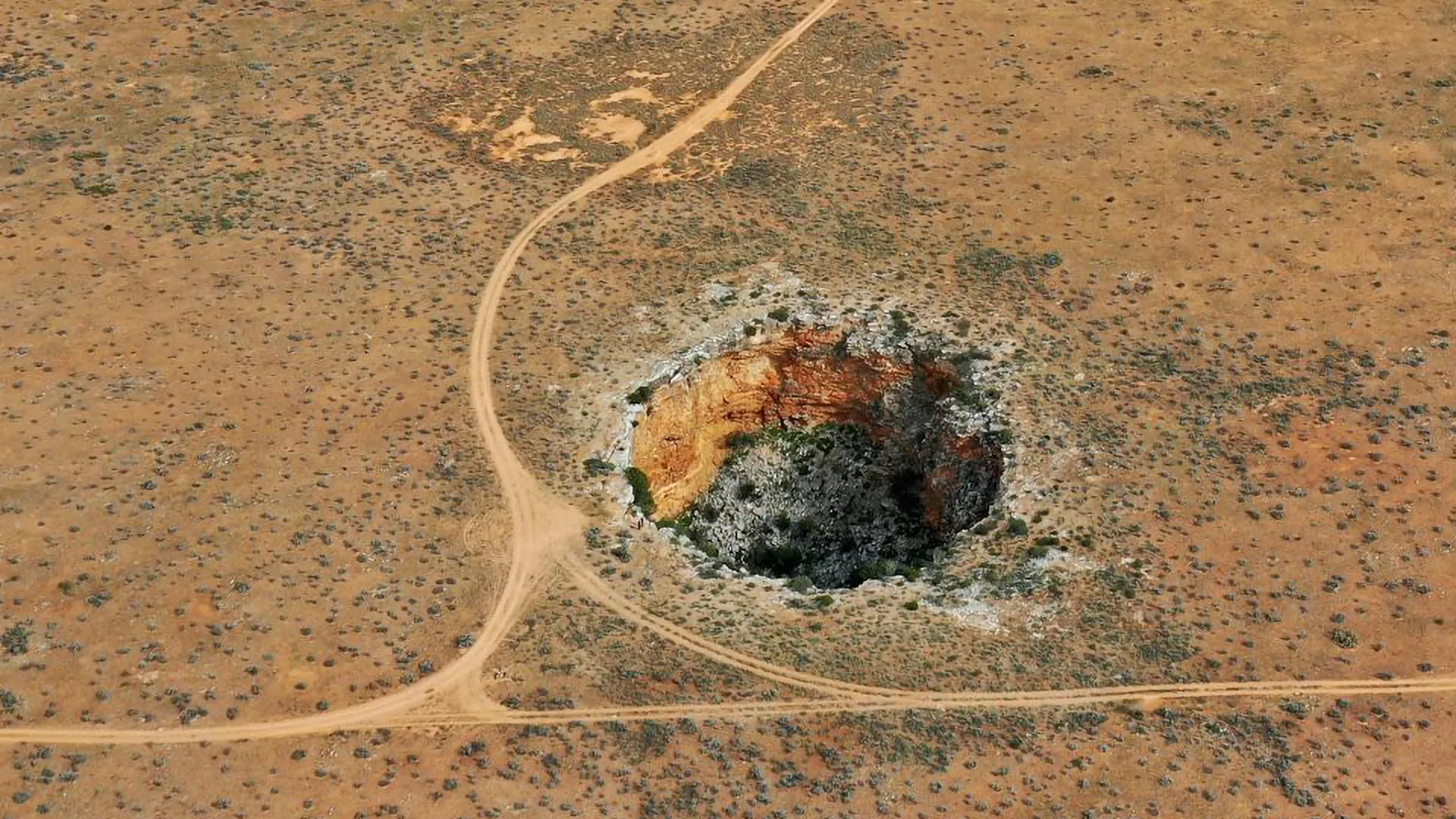
The Nullarbor Plain's collapsing caves are more than a geological curiosity; they are a new frontier for paleoclimate science. By solving the mystery of these subtle trenches, researchers have identified a method to locate buried cave systems that act as time capsules, preserving ancient environmental records and potentially unknown life forms. This is not just a discovery about Australia's past, it is a practical tool for reading Earth's climatic history, one that complements other recent breakthroughs in how we extract data from extreme environments.
The technique of using surface collapse patterns to map deep caves offers a low-cost, scalable way to access archives that have remained sealed for millions of years. These subterranean chambers can hold stalagmites, sediments, and trapped air that record rainfall, temperature, and atmospheric composition with a resolution rarely matched by ocean or ice cores. This matters because our understanding of past climate shifts, such as how the planet behaved during previous warm periods, directly improves the models we use to predict future change. It also echoes the logic behind the discovery of brine pools beneath the Red Sea, which researchers are using to study ancient ocean chemistry and life in extreme isolation. Brine pools beneath the Red Sea offer new windows into ancient oceans Both approaches rely on finding sealed geological features that have preserved conditions from eras long gone. Meanwhile, work on Antarctic ice cores has already shown how anthropogenic warming has interrupted natural glacial cycles, reinforcing the urgency of building a complete, empirical record of Earth's climate system. Ancient ice reveals glacial cycle interrupted by anthropogenic warming The Nullarbor caves offer a complementary, land-based archive that could extend that record into regions and time periods ice cannot reach.
Our take is clear: this discovery validates the principle that the most valuable climate data often lies in the least expected places. The Nullarbor's cave systems, formed over millions of years, have been slowly rising toward the surface through collapse, a process that now gives us a roadmap to find them. The practical consequence for researchers is immediate: instead of drilling blindly across the plain, they can target areas where trench patterns suggest intact chambers below. This integrated approach, combining satellite imagery, geomorphology, and field exploration, turns a solved mystery into a replicable methodology for other karst landscapes worldwide.
What remains to be watched is whether these caves contain biological samples that challenge our understanding of life's adaptability. The discovery mentions "unusual life forms," a detail that could have implications for astrobiology and the search for extremophiles on other planets. If the Nullarbor caves host organisms that have survived in isolation for millions of years, their metabolic pathways could reveal new biochemical strategies for surviving climate extremes. That question, what lives in the dark, sealed chambers beneath Australia, is the one we will be following most closely.