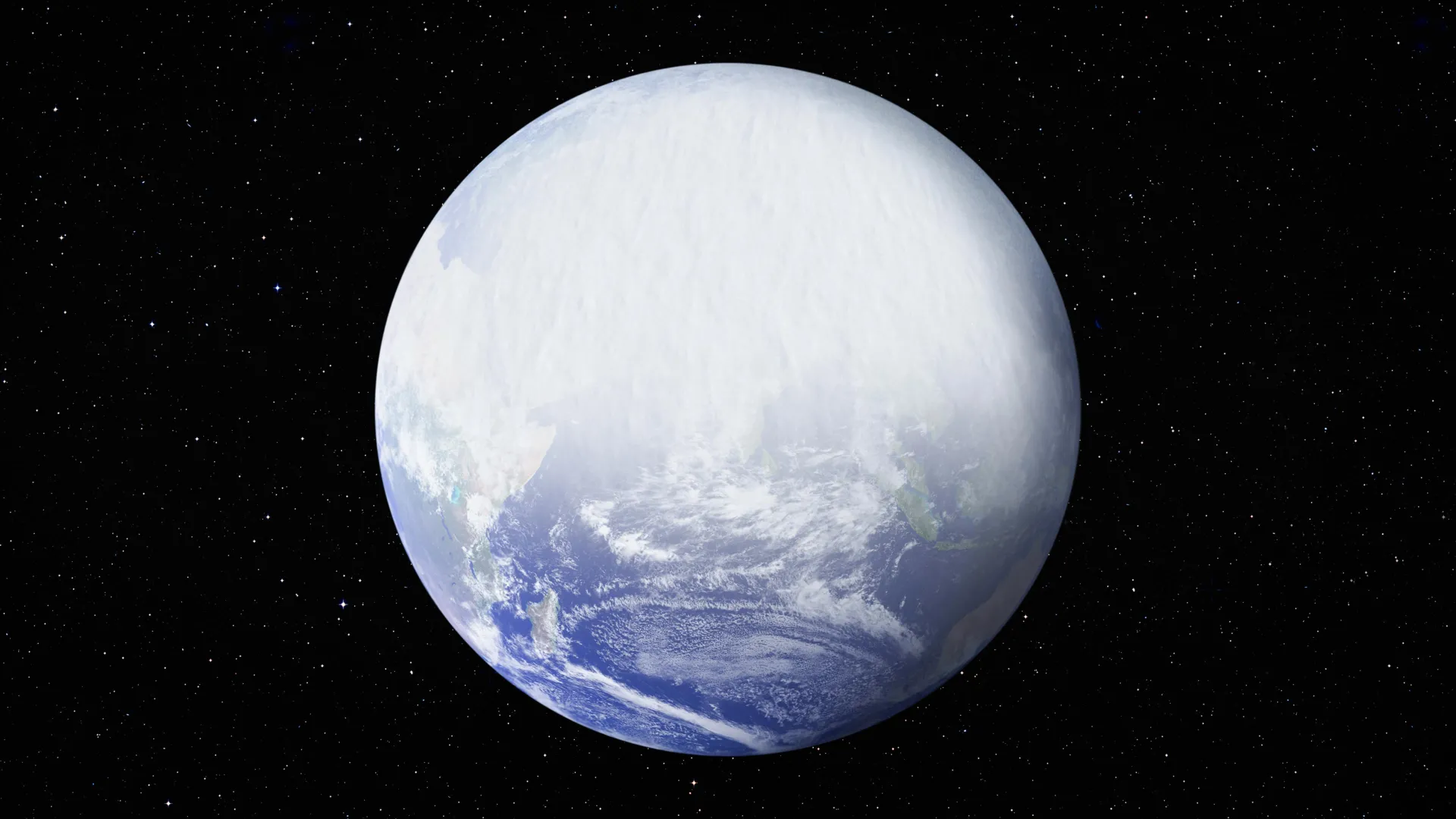
Earth's natural cycles are not easily interrupted, yet that is precisely what anthropogenic warming has done. The discovery that the Barnes Ice Cap in the Canadian Arctic had begun expanding again roughly 2,000 years ago, potentially initiating a new glacial period, only to reverse course by the 1960s as temperatures rose, is a stark empirical signal of our era's defining disruption. This is not a hypothetical future; it is a measured, real-time recalibration of planetary forces that we are now obligated to understand.
For researchers and policymakers, the implications are immediate. The plants preserved beneath the ice cap serve as a longitudinal record of a glacial cycle that was, by all geological precedent, proceeding as expected. That we have now overridden that cycle with warming driven by greenhouse gas emissions means we are no longer merely observing climate change, we are actively rewriting the planet's operating system. This finding connects directly to June 2026 Measured: Second-Warmest Global Temperatures, Hottest Ocean on Record, where ocean surface temperatures have reached their highest June levels ever recorded. The same warming that stopped an ice age in its tracks is also heating the ocean to unprecedented degrees, creating a compounding pressure on marine ecosystems and global weather patterns. Meanwhile, Racing data reveals decade-scale shifts in Southern Ocean hydrography shows that these changes are not isolated to the Arctic, the Southern Ocean is experiencing measurable hydrographic shifts over just a decade, further validating that the integrated data ecosystem of our climate is under coordinated strain.
Our opinion is plain: this is not a story about a missed ice age; it is a story about the velocity and scale of human influence on Earth's foundational rhythms. The Barnes Ice Cap evidence is a peer-reviewed confirmation that our emissions have already altered a cycle measured in millennia. For ocean enthusiasts and students who follow these developments, the practical takeaway is that the ocean and cryosphere are coupled in ways we are only beginning to calibrate. The retreat of Arctic ice is not a local phenomenon, it is a climate indicator that changes ocean circulation, albedo, and heat absorption. And as New Ocean Temperature Record Signals Escalating Climate Pressure documents, the ocean is absorbing the majority of this excess heat, pushing marine systems toward thresholds we cannot fully model.
The specific consequence to watch is the rate at which this anthropogenic interruption accelerates. If a natural cooling cycle was halted in just a few decades, what does that mean for the remaining ice sheets in Greenland and Antarctica? The Barnes Ice Cap data gives us a baseline, a before-and-after snapshot of a planet whose next glacial period has been indefinitely postponed by human action. The open question is whether our ocean intelligence systems can keep pace with the speed of this change, and whether the integrated data we collect will be enough to inform decisions before the next threshold is crossed.