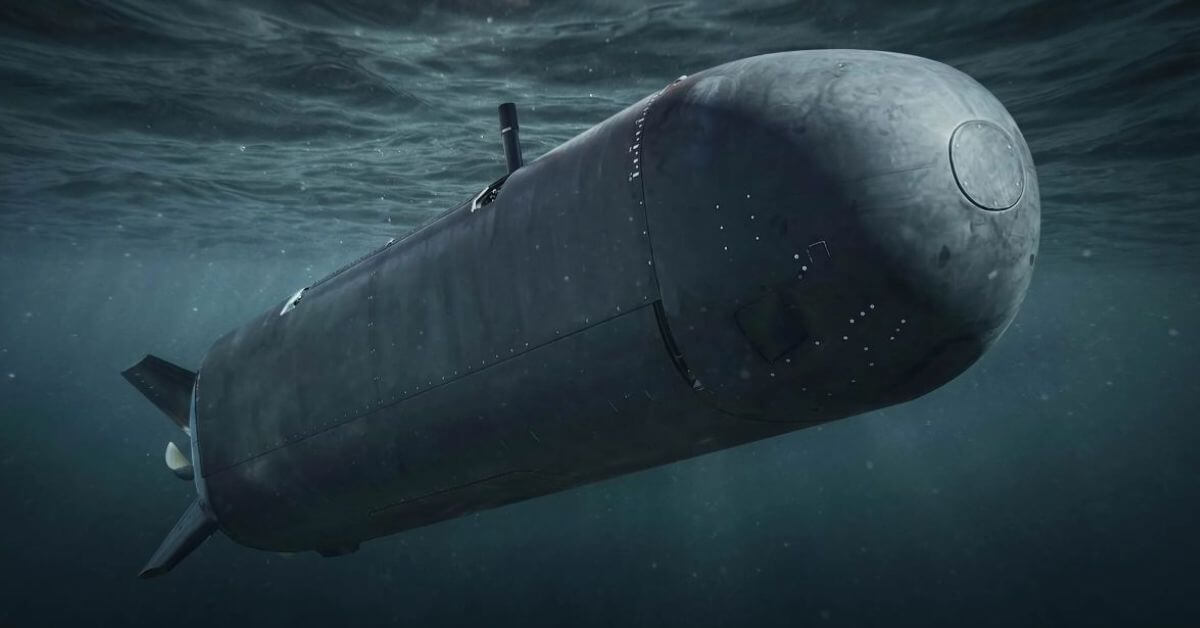
The first live firing of a heavyweight torpedo from an uncrewed underwater vessel, conducted jointly by the United Kingdom and the United States, is not a headline about a new weapon. It is a statement about operational doctrine. The test demonstrates that autonomous systems can now deliver ordnance with the same lethality as a manned platform, and the implications for naval strategy are immediate and measurable. For our readers, this is not a distant research exercise; it is a calibrated signal about how maritime power will be projected in contested environments.
This development does not occur in a vacuum. It sits alongside a broader pattern of states adapting their naval posture to new realities of pressure and access. Consider the recent reporting on Russian Maritime Activity Raises Concerns of Drone Operations in Mediterranean, where intelligence warnings point to the potential for uncrewed systems launched from commercial hulls. Or examine the economic calculations behind Russia Calibrates Export Revenue for Northern Sea Route Icebreaker Fleet, where state revenue is being redirected toward strategic naval assets. These are not disconnected data points. They form an integrated picture: the undersea domain is being reorganized around autonomy, persistence, and the ability to hold high-value targets at risk without placing a crew in the immediate blast radius. The torpedo test is the Western answer to that challenge, and it is a clear one.
Our take is straightforward. The technology is impressive, but the real story is the shift in risk calculus. When an uncrewed vessel can launch a heavyweight torpedo, the cost of entry for offensive maritime operations drops, while the pressure on defensive forces rises. This is not about alarmism; it is about practical preparation. For naval planners, the question is no longer whether autonomous platforms can perform these missions, but how to integrate them into existing command and control structures without creating new vulnerabilities. For policymakers, the question is about escalation dynamics: does a drone-launched torpedo lower the threshold for conflict because it removes the immediate risk to human life? We do not have an answer, but it is the question that should be on the table.
The specific detail to watch is not the torpedo itself, but the data trail it leaves behind. Every launch, every telemetry stream, every failure mode is being captured and fed into the broader ocean intelligence ecosystem. The next generation of undersea warfare will not be decided by who builds the quietest submarine, but by who can process the most accurate real-time data from the largest integrated sensor network. This test is a validation of that principle. For our readers, the takeaway is concrete: the era of uncrewed offensive naval power is not approaching. It is here, and it is calibrated. The question is whether the rules of engagement and the diplomatic frameworks, such as those being tested in the phased negotiations over the Strait of Hormuz, can keep pace with the capability now demonstrated in the world's oceans.