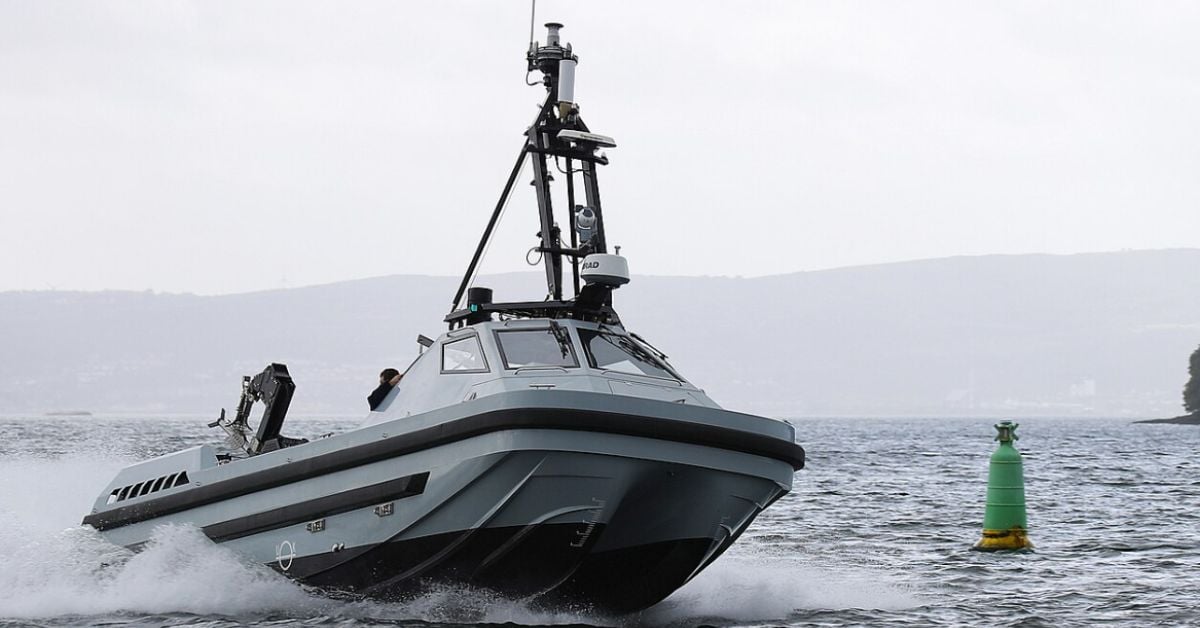
Seven months. That is the development timeline that deserves attention here, not just the refueling itself. A robotic system successfully transferred fuel to a drone boat at sea, eliminating the requirement to return to port. That single capability changes the operational calculus for ocean observation, and it did not take a decade of incremental iteration to achieve. It took one team, a clear mandate, and a focused effort. The implications extend far beyond convenience. Persistent presence on the water has always been a logistical constraint first, a technical one second. This development removes a significant layer of that constraint.
This is not a story about a clever gadget bobbing on the waves. It is about the integration of systems that have been maturing in parallel for years. Autonomous vessels have grown more capable, but their range was always bounded by energy. Now that boundary has moved. The related work happening in naval circles reinforces this trajectory. The Navy Accelerates Autonomous Systems Integration for Enhanced Maritime Operations points to a service branch reorganizing around these capabilities, while U.S. Navy Accelerates Submarine Production with Integrated Strategy shows a similar urgency applied to traditional platforms. What we are seeing is not a single breakthrough but a compounding of validated, measurable progress across the maritime domain. The refueling system is the latest data point in that curve.
For researchers, oceanographers, and anyone who relies on sustained marine data collection, the practical takeaway is direct. Missions that previously required careful scheduling around fuel reserves can now be redesigned. The question shifts from "how long can the vessel stay out?" to "what data do we need to collect, and for how long?" That is a meaningful change in how we approach ocean intelligence. It also raises operational questions that have no immediate answers. Who is responsible for the autonomous refueling platform in rough seas? What happens when the drone boat needs maintenance mid-mission? These are not reasons to hold back. They are the next set of problems to solve, and the pace of development here suggests they will be addressed with similar speed.
The connection to larger strategic trends is hard to ignore. The China’s New Nuclear Carrier Signals Extended Naval Operations Capability highlights how energy density defines operational reach at the high end of naval power. This refueling system is a smaller-scale echo of that same principle. Whether the platform is a carrier or a drone boat, endurance is power. The specific consequence to watch is whether this capability moves from demonstration to deployment within the next operational cycle. If it does, the next generation of ocean observation missions will not be designed around fuel. They will be designed around data. That is the shift worth measuring.