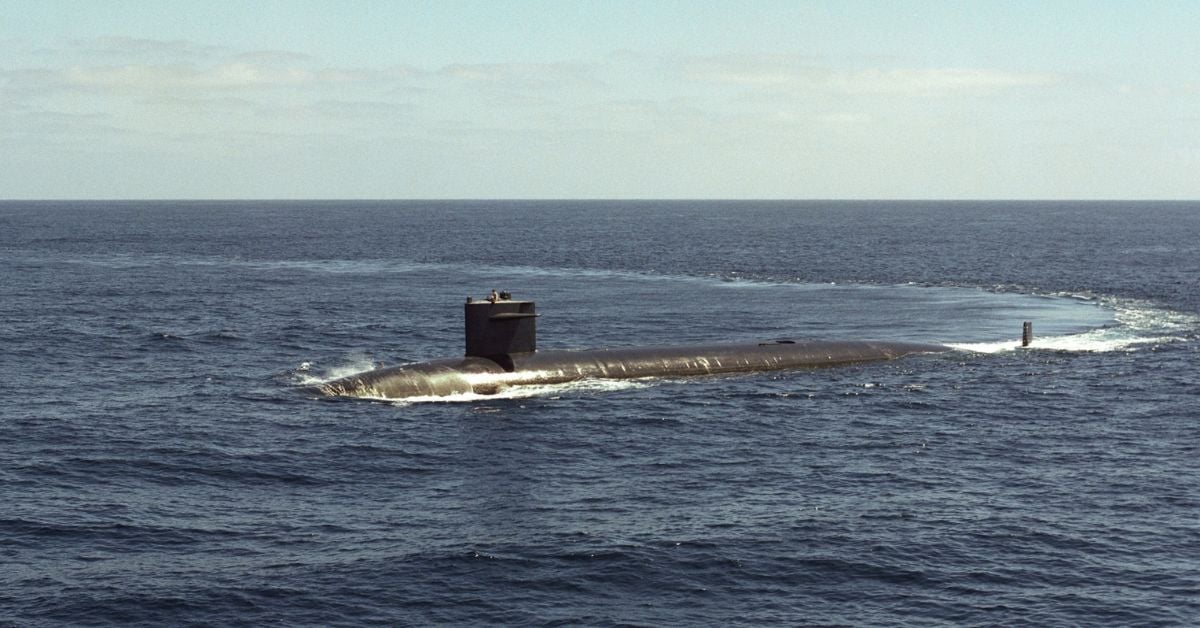
The U.S. Navy's new four-pillar strategy to accelerate submarine production is a rare admission that industrial timelines no longer match operational urgency. For decades, shipbuilding has moved at the pace of procurement cycles, not geopolitical reality. This initiative, focused on compressing construction schedules and speeding fleet integration, signals that the service is finally treating production capacity as a strategic asset equal to the vessels themselves. That is the correct diagnosis. Whether the execution follows through is another matter entirely.
Our readers know that the ocean is not just a body of water; it is an operating environment where data, logistics, and defense intersect. This move matters beyond shipyards. When the Navy builds submarines faster, it shortens the loop between technological development and maritime deployment. That has direct implications for ocean intelligence gathering, undersea surveillance, and the kind of persistent presence that peer competitors are currently contesting. Consider the contrast with China’s New Nuclear Carrier Signals Extended Naval Operations Capability, where a potential shift to nuclear propulsion promises longer endurance and greater power projection. The U.S. response is not a single vessel but a systemic overhaul of how hulls leave the ways. That is a different kind of competition, one measured in assembly lines rather than launch ceremonies.
The practical question is whether the four-pillar structure can overcome the bottlenecks that have plagued previous attempts. Labor shortages, supply chain fragility, and design changes have historically conspired against ambitious timelines. The Navy's strategy will live or die on its ability to stabilize the vendor base and lock in long-lead material purchases. This is where the connection to Port Alpha Shipyard to Build Navy Landing Craft, Boosting Ocean Data Access becomes instructive. That contract, executed under an OTA, demonstrates a willingness to move faster with flexible acquisition vehicles. If the submarine strategy adopts similar mechanisms for non-critical components, it could shave months off delivery schedules. If not, the pillars will remain theoretical.
We would tell any reader tracking this story to watch the supply chain, not the speeches. The Navy can announce integrated strategies all day, but the real indicator is whether the first hull in the accelerated pipeline arrives ahead of its original contract date. A single early delivery would validate the entire approach. A delay would confirm what many critics suspect: that the industrial base cannot scale without more radical intervention. Also watch how this interacts with force readiness in the Pacific. Faster submarine production does not just replace aging boats; it changes the calculus for forward-deployed deterrence. That is the point where naval strategy meets climate indicators, because both demand the same thing: sustained, measurable, and validated commitment to the maritime domain. The takeaway is simple. Production speed is now a warfighting metric, and the Navy has finally started treating it that way.