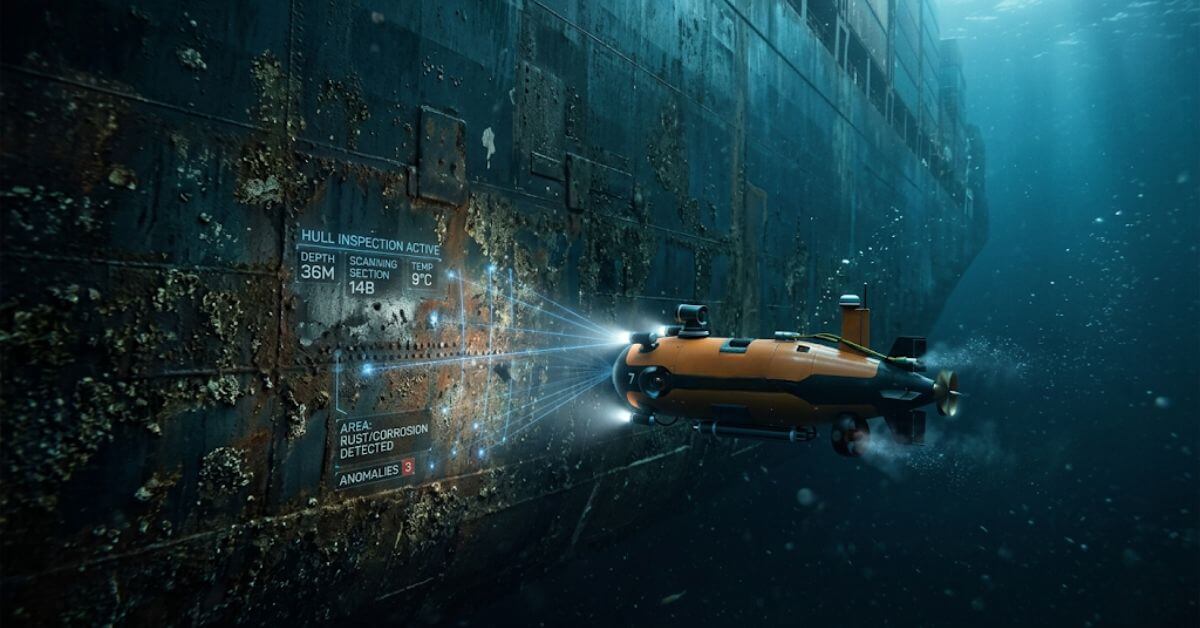
Our Take: Autonomous Inspections: Validating AUV Technology for Safer, Efficient Ship Hulls
The operational efficiency and safety of maritime vessels are paramount, and the integrity of ship hulls plays a critical role in both. Traditional methods of hull inspection, often reliant on human divers, present inherent risks and can be time-consuming and costly. World Data Ocean recognizes the imperative to advance these processes through technological innovation, and the ongoing validation of Autonomous Underwater Vehicle (AUV) technology for ship hull inspections represents a significant stride forward. This development is not merely about replacing human effort; it is about enhancing precision, mitigating risk, and building a more robust system for maritime asset management. The integration of AUVs promises a future where hull integrity is monitored with greater frequency and accuracy, contributing to safer voyages and optimized operational lifecycles for vessels worldwide.
The core of this advancement lies in the rigorous validation of AUV capabilities. Beyond simply deploying these vehicles, the focus on empirical data collection and measurable outcomes is essential. As the summary highlights, the exploration of 3D sonar technology to detect sudden changes in hull shape and refine navigation control demonstrates a commitment to precision and adaptability. This move towards more sophisticated sensing and control mechanisms underscores the innovative spirit driving this field. By providing a consistent, calibrated assessment of hull condition, AUVs can generate longitudinal data sets, enabling the identification of subtle degradation patterns that might be missed by less frequent or more subjective human assessments. This empirical approach is fundamental to building trust in autonomous systems and ensuring that the data they provide can be confidently integrated into broader maritime intelligence frameworks.
The broader implications of this technological validation extend to global collaboration and ocean stewardship. Safer and more efficient ship hulls contribute to reduced fuel consumption and minimized environmental impact from potential incidents. The development and deployment of these advanced AUV systems foster a spirit of shared knowledge and best practices across the maritime industry. As we move towards an era of integrated data ecosystems, the reliable, real-time data generated by these autonomous inspections will become a crucial component of comprehensive ocean intelligence. World Data Ocean champions this evolution, recognizing that understanding—through validated, measurable data—is the bedrock of effective protection and responsible management of our vital marine environment.