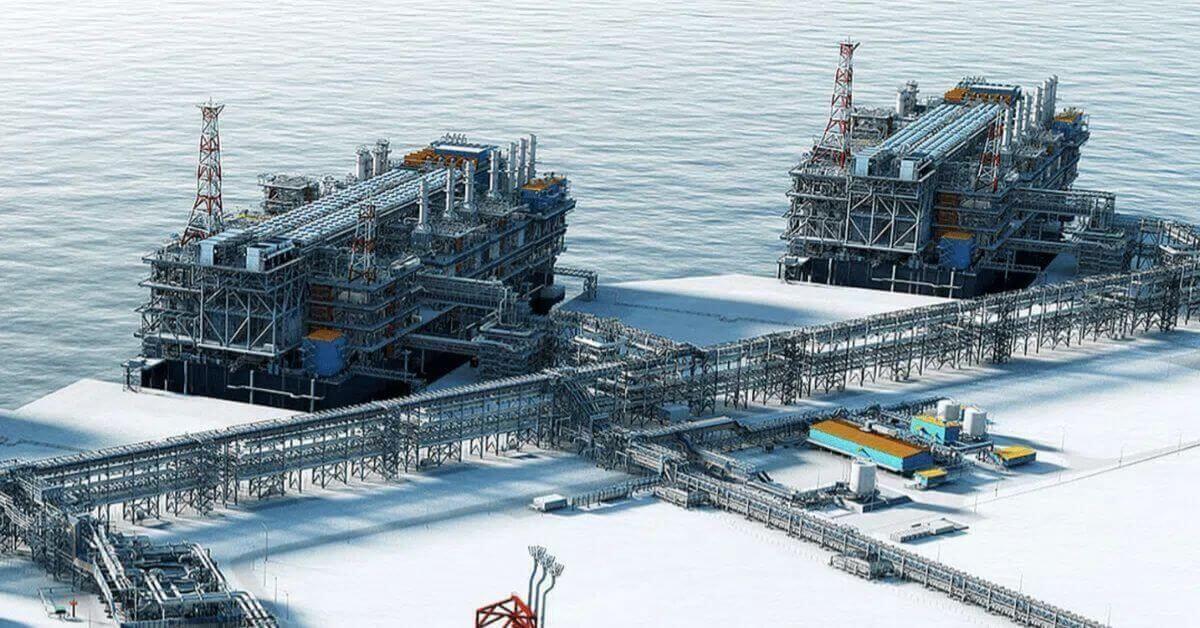
Arctic LNG 2 has filed a $1 billion arbitration claim with the Singapore International Arbitration Centre against Hanwha Ocean over a terminated shipbuilding contract. The dispute arises from cancelled contracts for vessels intended to support Russia's Arctic LNG 2 project, which has been under mounting pressure from Western sanctions. This legal action does not occur in isolation. It follows Russia's attempt to calibrate export revenue for a new icebreaker fleet, and it runs parallel to the Vostok project’s launch of Arctic oil exports amid the same geopolitical pressures. Together, these stories map a deliberate Russian strategy to sustain Arctic resource extraction despite a shrinking pool of international partners.
Our take is straightforward: this arbitration is less about one contract and more about the measurable breakdown of Arctic energy infrastructure under sanctions. For readers tracking ocean intelligence and climate indicators, the practical significance is clear. Every cancelled vessel contract, every rerouted supply chain, and every contested arbitration claim reduces the operational capacity of Arctic industrial projects. That has direct consequences for maritime traffic patterns, emissions monitoring, and the real-time data we rely on to understand polar climate dynamics. When a project like Arctic LNG 2 cannot secure its ice-class fleet, it does not simply disappear, it recalibrates, often with less transparent methods and riskier operational profiles.
What we would tell a reader who asks: do not treat this arbitration as a corporate footnote. The $1 billion figure is a validated measure of how sanctions are reshaping the Arctic maritime economy. Hanwha Ocean's decision to terminate the contract reflects a calibrated risk assessment by a South Korean shipbuilder facing secondary sanctions exposure. Meanwhile, Russia's parallel moves, collecting export revenue for icebreakers and launching Vostok oil exports, show a government that is integrated in its response, using state-controlled revenue mechanisms to offset private-sector withdrawal. The Northern Sea Route is becoming a test case for how sanctioned states operate when conventional commercial partnerships fail.
Watch for the arbitration's outcome as a climate indicator. If Hanwha Ocean prevails, it will signal that shipbuilders can exit Russian Arctic contracts without catastrophic legal liability, potentially accelerating a broader decoupling. If Arctic LNG 2 wins, it may embolden other Russian project operators to pursue claims, further entangling commercial law with Arctic geopolitics. Either way, the practical takeaway for our audience is that the Arctic's industrial footprint is now being determined as much in arbitration chambers as on the ocean floor. The vessels that do not get built are as important as the ones that do.