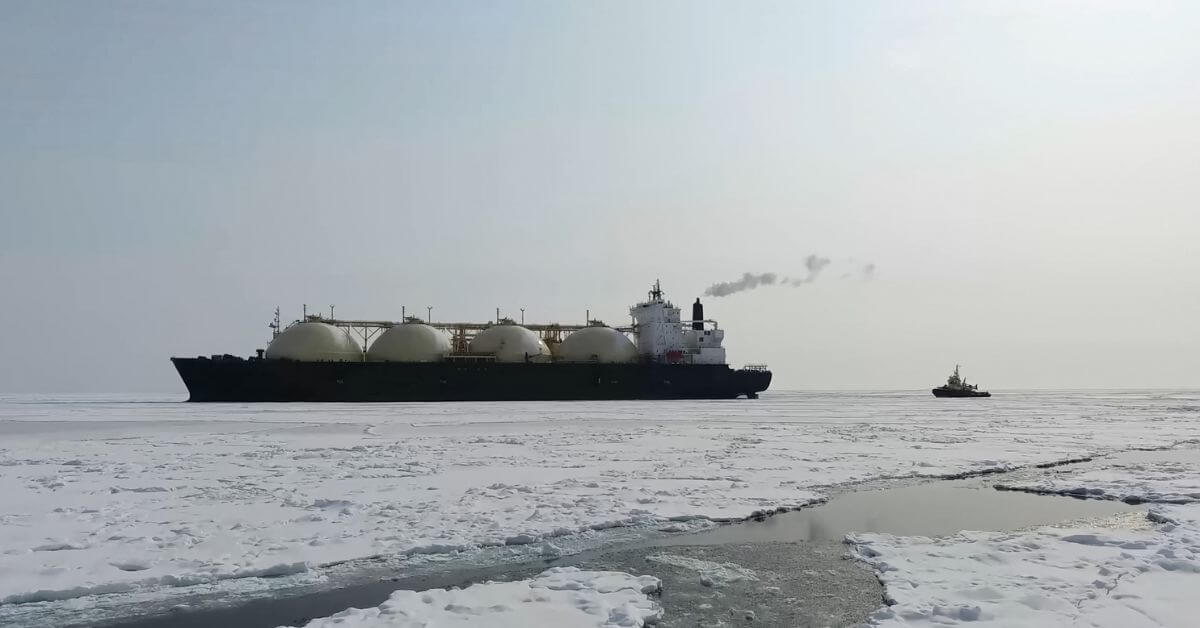
A new ice-class LNG carrier has joined the Arctic LNG 2 fleet, a Russian-operated project that continues to expand despite sanctions. The vessel is designed to transit Arctic waters year-round, a capability that is not incidental but central to the project's commercial logic. This is not just another hull in the water; it is a calibrated response to a specific constraint: the Northern Sea Route is open for only part of the year unless the tonnage is built for the ice.
For readers tracking maritime logistics, the pattern here echoes what we are seeing elsewhere. Ship-to-ship transfers in the Gulf of Oman have hit their maximum capacity amid rising Saudi oil exports, a reminder that infrastructure bottlenecks are now shaping trade flows as much as politics do. Meanwhile, Paradip Port Designated a Mega Port, Anchors Eastern India's Maritime Growth signals a different kind of expansion, one driven by state-backed investment in gateway capacity. The Arctic LNG 2 addition is the same story in a colder climate: when sanctions narrow the options, the response is not to retreat but to build more specialised, more expensive assets.
What stands out is the timing. Sanctions on Russian energy exports have been in place for years, and the assumption was that Arctic LNG 2 would struggle to secure both ice-class carriers and buyers. That assumption is being tested. The new vessel does not erase the project's challenges; it does, however, suggest that the logistical constraints are not as binding as some forecasts predicted. For policymakers and analysts, the takeaway is straightforward: sanctions are a tool, but they are not a static one. Every new asset class, whether an ice-class carrier or an alternative cable route, forces a recalibration of what is actually enforceable.
This is where the Integrated Subsea Infrastructure Shifts to Enhance Indian Ocean Connectivity becomes relevant. That story tracks internet cables moving away from China's route and toward the Indian Ocean, a shift driven by similar geopolitical pressures. In both cases, the physical infrastructure is being redesigned to reduce dependence on choke points controlled by rival powers. The Arctic is becoming a maritime version of that: a corridor that Russia wants to control, but one that requires both icebreaking capability and year-round vessel endurance to be commercially viable.
Our honest take is that this expansion is a signal worth watching, not because it upends the sanctions regime overnight, but because it demonstrates the limits of static policy. The vessel's ice-class designation is not a marketing label; it is a measurable engineering response to a specific operational requirement. That is the kind of detail that matters. When a project can field a fleet designed for year-round Arctic transit, it changes the risk calculation for insurers, charterers, and regulators alike.
The specific point to watch is the next quarter's loading schedule. If this new carrier begins making regular winter transits along the Northern Sea Route, it will validate the project's core assumption: that the ice is not a barrier but a feature. If it sits idle, the economics will speak for themselves. Either way, the vessel is a concrete data point in a debate that has been heavy on rhetoric and light on empirical evidence. We would tell a reader to track the vessel's actual transit history, not the press release. That is where the ocean intelligence lives.