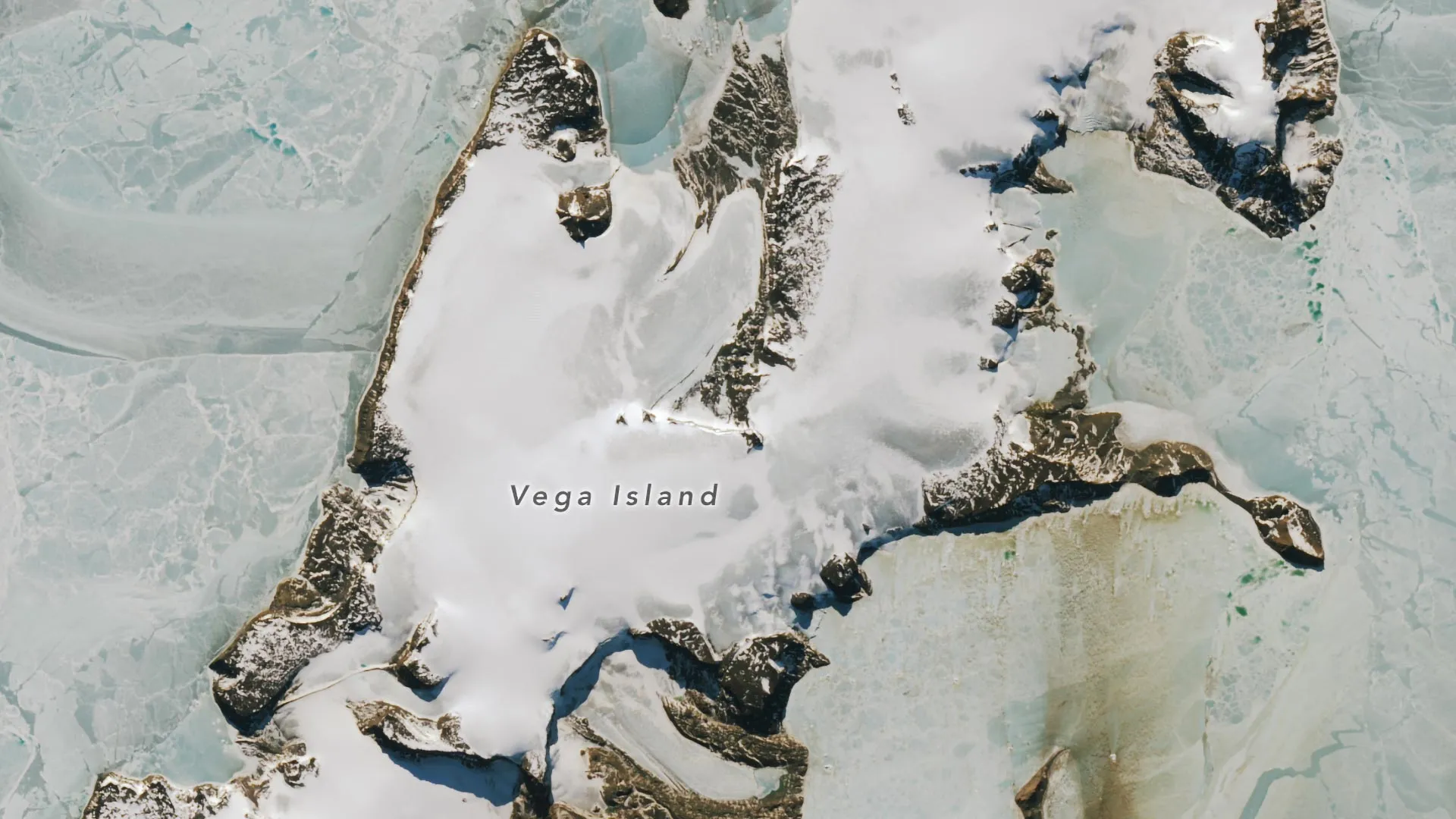
The skull-shaped ice formation staring back at NASA's satellites is not a curiosity; it is a measurable climate indicator we should treat with the same seriousness as a melting ice core or a shifting ocean current. What appears as a haunting face on a remote Antarctic island is actually a landscape of dark, exposed ice, the result of unusually warm winter temperatures that have stripped away protective snow cover. This is not an optical illusion to share for shock value; it is empirical evidence of a system under stress, and it demands that we connect this single image to the larger, integrated data ecosystem we rely on for climate understanding.
For our readers, researchers, policymakers, and engaged citizens, this event reinforces a practical truth: isolated observations gain their power when placed inside a broader framework. The same week this skull formation was documented, scientists announced that a Tibetan ice core extends climate record by 128,000 years, preserving an ancient atmosphere that allows us to calibrate today's changes against deep time. Meanwhile, a hidden ocean chain reaction linked Earth’s poles to trigger ice ages has revealed how polar systems communicate across hemispheres. When we place the Antarctic skull alongside these findings, a pattern emerges: the planet's cryosphere is not changing in isolation. The warm winter that darkened that ice is not a local anomaly, it is a signal in a global system where melting begets more melting, and where historical records tell us the stakes have never been higher.
Our opinion is clear: treat this image as a data point, not a headline. The dark ice exposed by warm temperatures creates a feedback loop, less reflective surface means more solar absorption, which accelerates further melting. That process is measurable, and it is precisely the kind of longitudinal variable that belongs in every climate model. The skull's features will transform as the melt progresses, and tracking that transformation offers real-time validation of our predictions. This is the kind of observable, calibrated evidence that moves us from speculation to action.
The specific consequence to watch is the rate at which this dark ice spreads across adjacent glaciers. If the exposed area expands during the next Antarctic winter, it will confirm that the feedback loop is accelerating faster than current projections account for. That is a detail worth monitoring, not because it is eerie, but because it is empirical. Understanding drives protection, and in this case, understanding begins by reading the skull not as a ghost story, but as a graph.