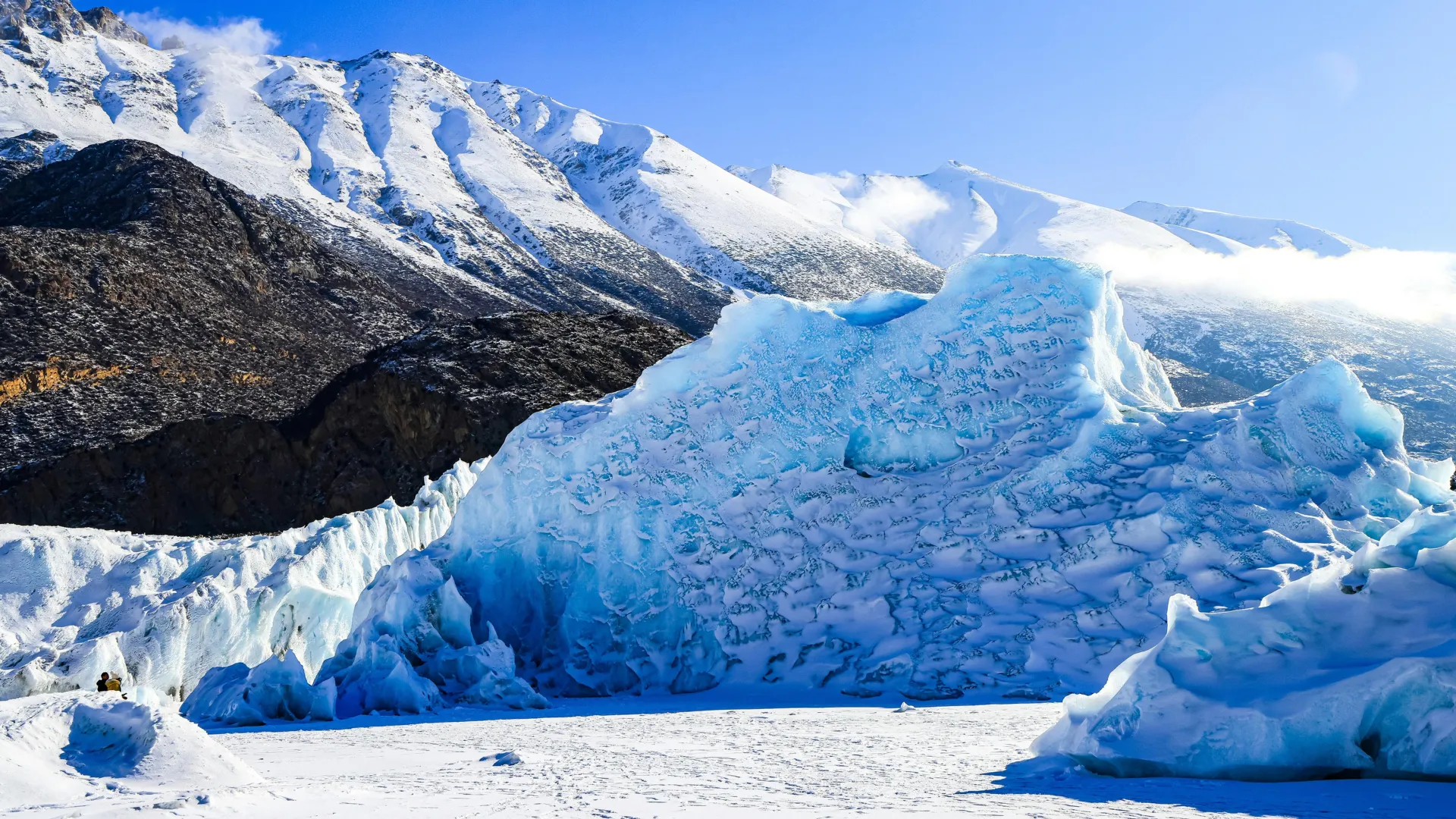
Understanding drives protection. The discovery of ancient ice in Tibet, preserving a climate record stretching back over 128,000 years, is a profound validation of how much we still have to learn from the planet's own archives. This is not merely a curiosity; it is a calibrated, empirical data point that fills a gap scientists had resigned themselves to losing. For researchers and policymakers alike, this core offers a rare, direct window into the last ice age, providing a measurable baseline against which our current, rapidly shifting climate indicators can be compared.
This find does not exist in isolation. It speaks directly to the urgency captured in our recent reporting on Switzerland's glacier loss accelerates to nearly 20% in five years. While the Swiss data reveals a devastatingly rapid retreat in the present, the Tibetan core forces us to ask: how do these ancient ice masses, which have survived interglacial warming periods, respond to the unprecedented rate of change we are now driving? The answer is not yet written, but the data from Tibet gives us a longitudinal context that is otherwise absent. It is an integrated data ecosystem of the past, and it challenges the assumption that glaciers are simply passive victims of warming. Some, it seems, are far more resilient, and far more ancient, than we ever modeled.
The practical consequence for our audience is a direct challenge to existing climate models. Many simulations for glacier longevity and sea-level rise are built on assumptions about ice sheet behavior that this discovery may invalidate. If ice can persist in a stable state through a period as warm as the last interglacial, our timelines for certain thresholds may need recalibration. This is not a reason for complacency; rather, it is a call for more precise, peer-reviewed research. As we saw with the validated by accident: a replicable method to restore coral health in weeks, serendipitous findings can reshape our approach to intervention. The Tibetan core is a similar gift: a natural, validated archive that forces us to refine our questions.
The specific detail to watch is the chemical composition of that 128,000-year-old ice. It will contain trapped air bubbles and isotopic signatures from a world that was both warmer and more stable than our own. Analyzing those samples for greenhouse gas concentrations will yield a peer-reviewed, empirical benchmark for what a functioning climate system looks like without human forcing. That number is not academic. It is a concrete, measurable target for what our integrated data ecosystem must help us restore. The ice has spoken; our job is to listen with the rigor it demands.