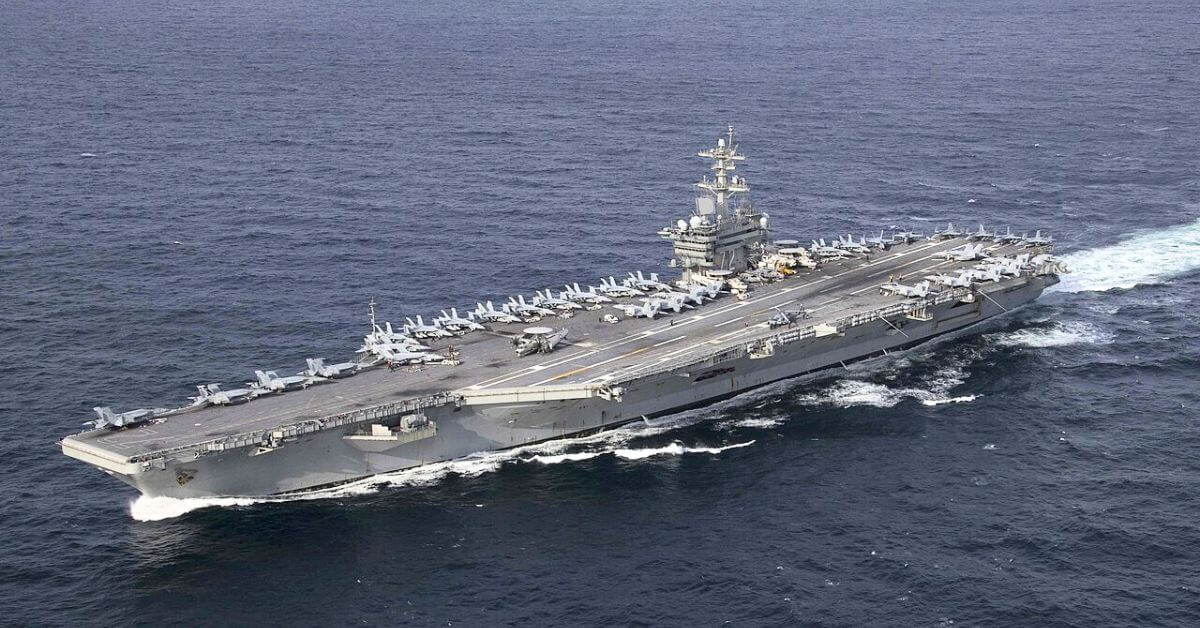
The USS Abraham Lincoln's recent port visit to Thailand is more than a crew's brief respite; it is a calibrated data point in a strained maritime system. After months of Middle East operations, the carrier's recovery period signals something practical: the human and mechanical cost of sustained presence in waters where Gulf of Oman STS Transfers Max Out Amid Rising Saudi Oil Exports are already at capacity. When a carrier group pauses, it is not downtime; it is a recalibration of readiness metrics that analysts and allied navies should be tracking with the same rigor as a climate indicator.
Our take is straightforward: this is not a story about a ship docking. It is a story about operational tempo meeting its physical limits. The crew's recovery is a measurable variable in a larger equation that includes the Navy Accelerates Autonomous Systems Integration for Enhanced Maritime Operations. That new integration center is not a distant future project; it is a direct response to the kind of wear this deployment exposed. If autonomous systems can absorb some of the repetitive patrol and surveillance duties, they extend the time between crew exhaustion events. The Lincoln's pause gives leadership a real-world benchmark for how much human endurance actually costs in a high-tempo theater.
We would tell a reader who asks, "What does this mean for me?" that the carrier's break is a leading indicator. When a major naval asset requires a five-day port visit to reset, it implies that the current rotation cycle is near its ceiling. This connects directly to the Phased Negotiations Aim to Ease Restrictions on Strait of Hormuz. If those talks produce even a partial reopening, the demand on carrier groups could shift from combat operations to presence patrols, changing the kind of recovery cycles needed. The crew's rest is not just humane policy; it is strategic data. The Navy should publish fatigue metrics and port visit frequency as openly as it reports fuel consumption. That would give researchers and policymakers empirical ground to plan rotations, rather than reacting to strain after the fact.
The concrete point to watch is the interval between this visit and the next deployment cycle. If the Lincoln's crew returns to operations within a shortened window, we will know the system is overdrawing on its people. If the Navy extends the maintenance period, it confirms that autonomous integration is not replacing sailors but buying them time. For a publication that tracks ocean intelligence, the takeaway is clear: the human element remains the most sensitive sensor on any ship, and we should treat its recovery as seriously as we treat the calibration of sonar. The next time you see a carrier at anchor, you are looking at a decision, not a schedule.