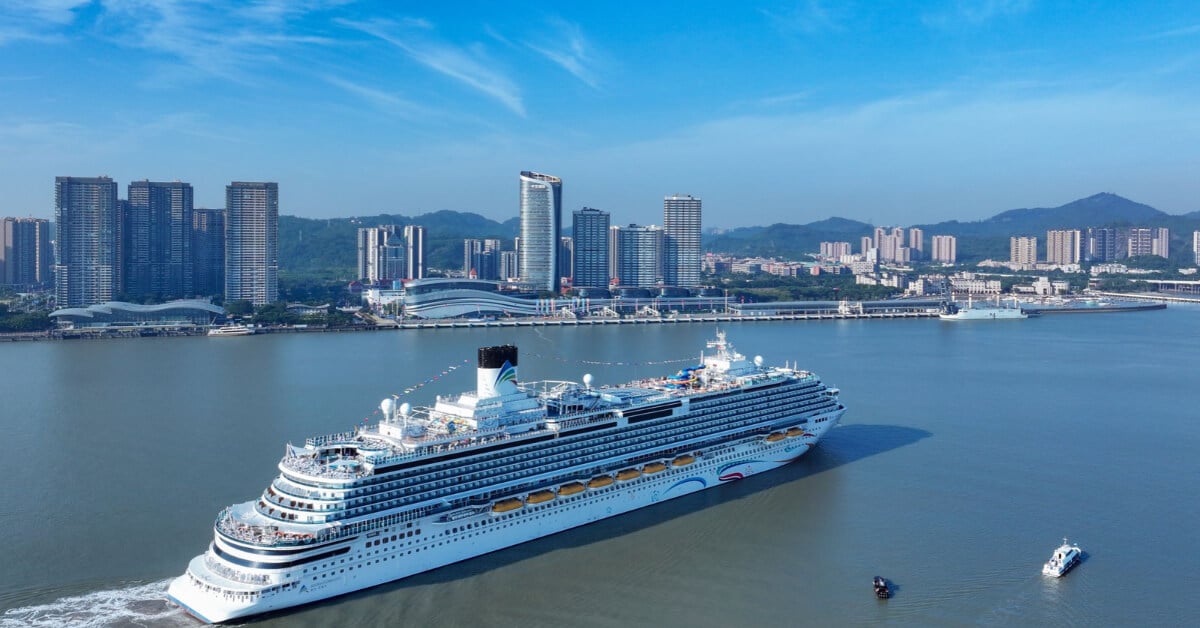
The second domestically built large cruise ship to emerge from a Chinese shipyard is now in service, and this marks a measurable step forward for maritime engineering, not just for one nation, but for the global industry's ability to build complex vessels at scale. Adora Flora City departed Guangzhou on November 22 with more than 3,800 passengers, bound for Hong Kong and Vietnam, and its construction at Shanghai Waigaoqiao Shipbuilding achieved a 20 percent efficiency gain over its predecessor, Adora Magic City. That kind of empirical improvement matters. It tells us that the shipyard is learning, iterating, and compressing the learning curve in a sector where experience has traditionally been concentrated in a handful of European yards. This vessel is not merely a copy; it is a calibrated advance.
For readers tracking the intersection of maritime innovation and global mobility, the practical consequence is clear: the supply of large cruise ships is no longer tethered to a single industrial base. Adora Flora City is 17.4 metres longer than its sister ship, with a 37.2-metre-wide hull designed to improve stability in rough seas, an engineering choice that reflects real operational data. The use of augmented reality during construction, allowing workers to compare 3D models with physical structures on mobile devices, points to a broader trend we have seen in other vessel programs. Consider how Allseas recently launched the offshore construction vessel Echo, built at Wuchang Shipbuilding, to expand capacity for ocean data infrastructure. Both projects demonstrate that Chinese shipyards are integrating digital tools into production workflows, not just assembling steel. That integration has implications for delivery timelines, cost structures, and the kinds of vessels that become feasible to build at scale.
The commercial schedule for Adora Flora City is equally telling. The ship is expected to operate more than 50 international voyages from Guangzhou in 2027, ranging from short getaways to longer Southeast Asia itineraries. That volume of departures requires a dependable maintenance and crewing pipeline, and it also signals that the cruise operator, Adora Cruises, sees sustained demand from southern Chinese ports. This dovetails with other developments in the region. Hong Kong recently signed its first green shipping corridor with Greece's Port of Piraeus, a corridor that will rely on coordinated port infrastructure and verified emissions data. A cruise ship sailing from Guangzhou to Hong Kong and Vietnam is not a green vessel by current standards, but the existence of a corridor framework means the regulatory and logistical groundwork for cleaner operations is being laid alongside the hardware. The two tracks, shipbuilding capability and port-side decarbonisation, are advancing in parallel, and both require the kind of longitudinal, peer-reviewed tracking that our publication prioritises.
What to watch next: the third ship. Preliminary conceptual design work on China's next large cruise vessel has already started, according to a senior shipyard official. If the efficiency gains continue, that third hull could close the remaining gap in outfitting quality and interior sophistication that still separates these ships from legacy European-built tonnage. The question is not whether China can build large cruise ships, it clearly can, but whether the operational data from Adora Magic City and Adora Flora City will be fed back into the design process quickly enough to make the third vessel competitive on the global charter market. That is the concrete point to track: the feedback loop between real-world voyages and next-generation blueprints.