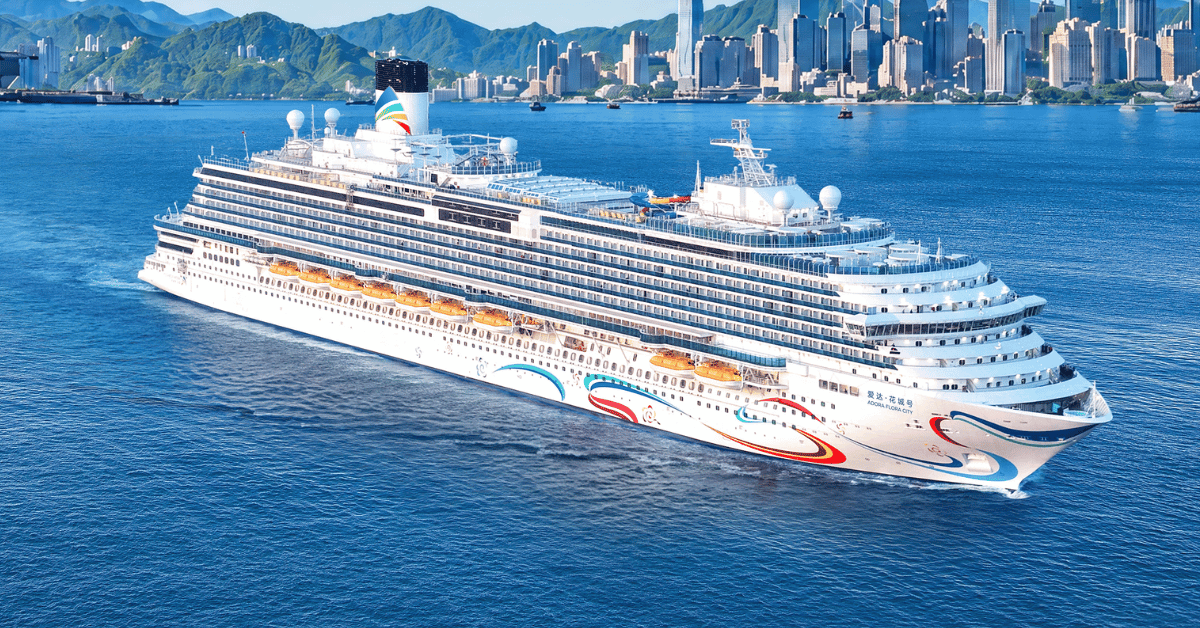
The second domestically built large cruise ship to emerge from a Chinese shipyard, Adora Flora City, has begun sea trials off Shanghai, marking another calibrated step in the nation's expanding maritime capabilities. This is not merely a milestone for the shipbuilding industry; it is a measurable signal of how rapidly integrated industrial capacity is reshaping global ocean transit. As the vessel heads toward Guangzhou ahead of a November 22 inaugural season, we should watch closely what this means for the empirical data on maritime logistics, port infrastructure, and the operational readiness of new fleets. This story connects directly to our earlier coverage of China Delivers Second Large Cruise Ship Ahead of Schedule, Expanding Ocean Transit and the enduring lessons of maritime risk highlighted in A historical policy surfaces, an enduring marker of maritime risk.
For our readers, researchers, policymakers, and ocean stakeholders, the takeaway is grounded in validation. Adora Flora City, at 341 meters with 2,130 cabins and a capacity of 5,232 passengers, is 6,400 gross tons larger than its predecessor, Adora Magic City. That is not just a number; it represents a longitudinal trend in China's ability to replicate and scale complex marine engineering. The current trial voyage is a rehearsal for commercial operation, testing maritime operations, navigation safety, ship-shore coordination, and onboard information systems under simulated conditions. This is the kind of empirical, peer-reviewed-like process that builds confidence in a vessel's readiness. The operator, Adora Cruises, has scheduled a second trial voyage from November 14 to 16 before the maiden commercial sailing from Guangzhou on November 22, a six-day, five-night trip to Hong Kong and Chan May in Vietnam.
Our opinion is plain: this development matters because it demonstrates that homebuilt cruise ship production is no longer a one-off experiment. It is an integrated data ecosystem of supply chains, labor, and regulatory alignment being stress-tested in real time. The delivery on November 6 at Shanghai Waigaoqiao Shipbuilding, ahead of schedule, suggests that the industrial learning curve is accelerating. For those tracking climate indicators and ocean intelligence, the operational footprint of these vessels, fuel consumption, emissions, port turnaround times, will become a new dataset to monitor. The ship's crew is also testing cabin service, dining, entertainment, and shopping under simulated conditions, which means the human element of this system is being calibrated as rigorously as the mechanical one.
The specific consequence to watch is how Guangzhou handles its role as a new home port. The ship will prepare there for berthing and maiden voyage procedures after arriving on November 12. If this port can absorb a vessel of this scale smoothly, it signals a broader shift in regional maritime infrastructure. Conversely, any friction in ship-shore coordination during these trials will yield valuable data for future deployments. The open question is whether the pace of construction and testing can sustain the growing demand for ocean transit without compromising safety or environmental standards. Keep an eye on the second trial voyage's outcomes, they will tell us whether this vessel is truly ready for the long haul.