maiden voyage
World Data Ocean keeps maiden voyage in one place: 6 stories so far. The section currently leads with “Ammonia-Fueled Bulk Carrier Opens First Voyage With 210,000-Tonne Payload”, “First Ammonia-Powered Bulk Carrier Validates Real-World Ocean Readiness”, and “A Titanic Lifejacket’s Enduring Legacy: A Rare Maritime Find.”. The world's first ammonia-fueled bulk carrier has opened its maiden voyage with a 210,000-tonne payload, built at China's Qingdao Beihai Shipyard. The *Mineral Europa*, the world's first ammonia-fueled dry bulk carrier, has completed sea trials and is heading for Australia. A Global Hub for Ocean Intelligence 4 World Data Ocean is a centralized digital platform where researchers, scientists, and ocean enthusiasts converge to… The list below is every maiden voyage story on World Data Ocean, newest first.
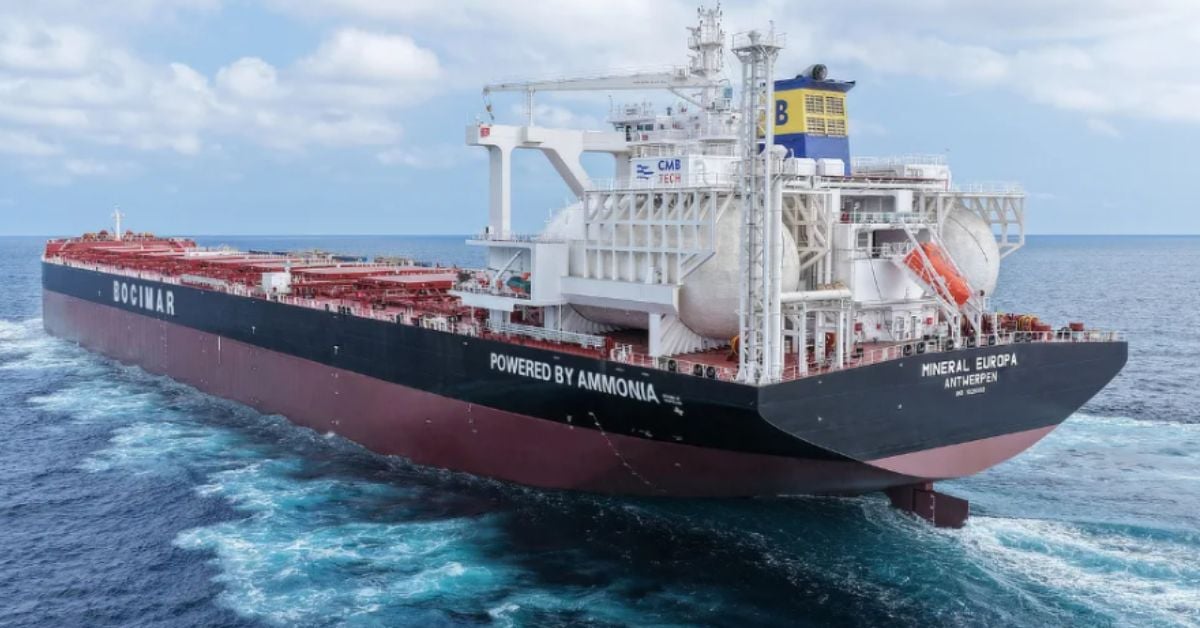
Ammonia-Fueled Bulk Carrier Opens First Voyage With 210,000-Tonne Payload
The world's first ammonia-fueled bulk carrier has opened its maiden voyage with a 210,000-tonne payload, built at China's Qingdao Beihai Shipyard. This is a calibrated step toward measurable decarbonization in heavy maritime shipping, not a symbolic gesture. Real-world operation of such a vessel validates a tangible alternative to traditional fuel pathways. For deeper context on port resilience, see our related piece on calibrating port resilience against measurable cyclone-driven economic loss.
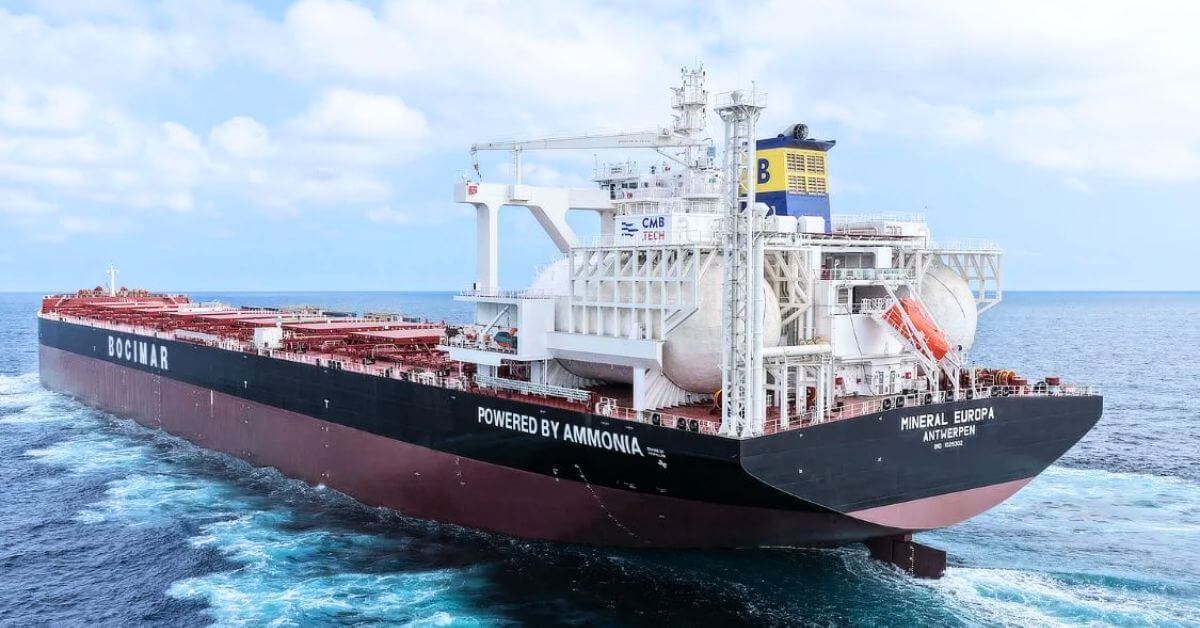
First Ammonia-Powered Bulk Carrier Validates Real-World Ocean Readiness
The *Mineral Europa*, the world's first ammonia-fueled dry bulk carrier, has completed sea trials and is heading for Australia. This is not a lab test. This is a ship, loaded with ore, crossing an ocean on a fuel that emits no CO₂. Validation at this scale matters. Measured, real-world performance is what turns ambition into a viable path forward. For more on how empirical data drives decarbonization, see our piece tracking the measured decline in solar costs.

A Titanic Lifejacket’s Enduring Legacy: A Rare Maritime Find.
A 114-year-old lifejacket from the Titanic has sold at auction, a rare piece of maritime history finding a new custodian. The flotation device, offered by Henry Aldridge & Son auctioneers in Devizes, went to an unidentified telephone bidder. Such artifacts ground an abstract tragedy in tangible reality, reminding us that the human story behind ocean disasters endures. For broader context on contemporary maritime challenges, our related coverage, including "Reduced Canal Transits: Drought Impacts Global Shipping Routes," examines how today's seas present their own pressing tests.

A Titanic Passenger's Account: Life Aboard Before Disaster
On April 10, 1912, Henry Price Hodges put pen to paper aboard the Titanic, capturing a moment suspended between promise and peril. His handwritten account offers a rare, unvarnished glimpse into daily life before disaster rewrote history. We find value in such primary documents; they ground our understanding of maritime heritage in human terms. For readers tracking how ocean transit shapes our world, our coverage on reduced canal transits underscores similar fragility.

Titanic's Grand Piano Found: A Century-Old Echo in the Atlantic.
Nearly a century after the Atlantic claimed the Titanic, maritime historians have identified the surviving remains of its grand piano. This is not merely an artifact recovery; it is a rare, physical connection to a voyage that has become a benchmark for ocean risk. The find underscores how empirical evidence, like that gathered in our related coverage of citizen science, continues to refine our understanding of this vast, under-observed frontier.

Glovis Lighthouse: Record-Breaking Vehicle Carrier Arrives at Southampton.
A new chapter in maritime logistics began as the Glovis Lighthouse, a record-breaking vehicle carrier, arrived at Southampton's Solent Gateway facility. The vessel's maiden voyage and first European port call signal a practical step forward in global shipping efficiency. This arrival reflects the kind of measured progress that keeps supply chains moving. For broader context on how ports are adapting to shifting trade demands, our coverage of Russian Terminals Adapt for Grain Export Surge offers a useful comparison.