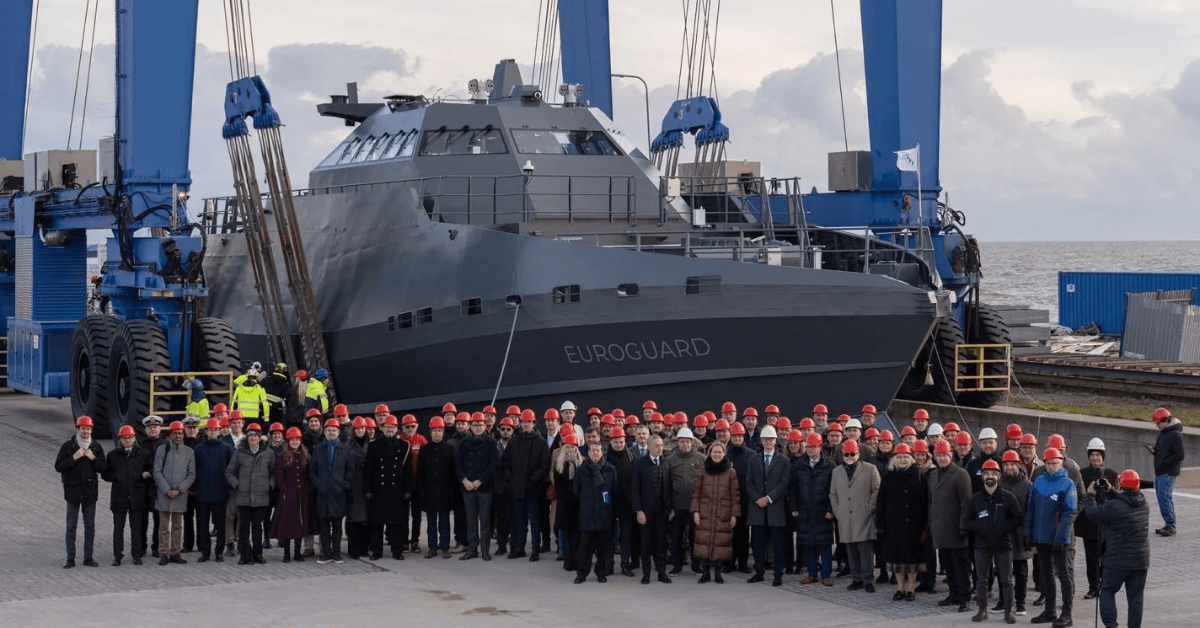
The launch of the EUROGUARD prototype in Estonia is a pragmatic, necessary step in securing the Baltic Sea's critical seabed infrastructure, and it deserves more attention than the headlines it has received. This is not just another naval vessel; it is a €95 million, semi-autonomous platform designed specifically to hunt mines and guard the submarine cables that underpin Europe's digital and economic stability. For our readers, whether you are a policymaker tracking the Readiness 2030 agenda, a researcher studying maritime security, or an enthusiast following the shift toward uncrewed systems, the takeaway is clear: Europe is moving from reactive protection to proactive, calibrated surveillance of its underwater networks. This shift is underscored by recent events in other theaters, such as the Sea drone strike capsizes Russian Navy corvette in Benghazi, which demonstrated how rapidly autonomous maritime threats can alter naval power balances. Similarly, the Coastal Sentinel Honors WWII Coxswain with Newest Sentinel-Class Cutter reminds us that while tradition honors past service, the future demands vessels that can operate without a crew in high-risk environments.
The EUROGUARD project, coordinated by Baltic Workboats and backed by 29 organizations from 10 countries, represents a validated, integrated data ecosystem for maritime defense. Its 45-metre hull is designed for interchangeable mission modules, from mine clearance to search and rescue to cable protection, meaning it can be reconfigured in real time as threats evolve. The vessel's ability to sail fully uncrewed or with a crew onboard is not a gimmick; it is a direct response to the vulnerability of the Baltic's seabed infrastructure, which has been the subject of growing concern since suspected sabotage events in recent years. The European Commission's investment of €65 million from the European Defence Fund, matched by €30 million from national and corporate partners, signals that this is a long-term, empirical commitment to ocean intelligence rather than a one-off prototype. This stands in stark contrast to the human cost of conventional naval operations, as highlighted by the Search widens for missing seafarer after Strait of Hormuz tanker attack injures 11, where crewed vessels remain at risk in contested waters.
What matters most is not the vessel's specifications but its operational logic. The EUROGUARD is designed for persistent, measurable surveillance of the Baltic Sea's Eastern flank, a region where undersea cables carry data traffic worth billions and energy pipelines are part of the EU's climate indicators. By embedding autonomous navigation and secure communications into a modular platform, the project aims to reduce the gap between threat detection and response from hours to minutes. This is not alarmist messaging; it is a practical calibration of defense capabilities to match the reality of hybrid warfare. The prototype will be tested with the Estonian Navy through 2027, and its validation will produce peer-reviewed data on how semi-autonomous systems perform in real-world conditions.
The open question for our audience is whether the EUROGUARD model can be replicated for other critical maritime zones, such as the North Sea or the Mediterranean, where cable and energy infrastructure faces similar risks. If the Baltic trials prove the concept, the integrated data ecosystem behind this vessel could become a template for global ocean stewardship. Watch for the results of those tests in 2027: they will tell us whether Europe's Readiness 2030 ambitions are built on solid empirical ground or remain a prototype without a fleet.