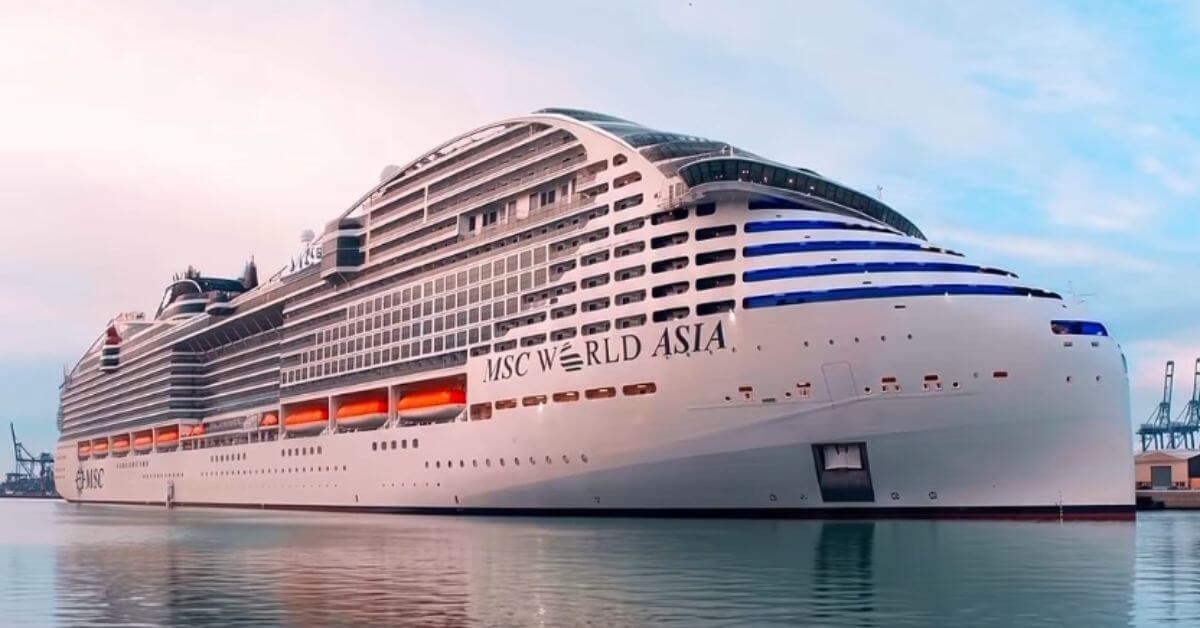
MSC World Asia is not just another large cruise ship; it is a measurable step toward reconciling scale with accountability. With a capacity of 6,758 passengers and an Energy Efficiency Design Index 50% below the IMO reference, this vessel forces the industry to ask whether genuine decarbonization can keep pace with growth. The cruise line's claim that each World Class ship advances its net-zero-by-2050 goal deserves scrutiny, but the integrated data this vessel generates, from its prototype LNG engine to its steam turbine recovering 1.5 MW of heat, offers something the sector has long lacked: calibrated, empirical evidence of progress.
For researchers and policymakers tracking maritime emissions, the real story here is not passenger counts but the operational data MSC World Asia will produce. The ship's dual-fuel LNG engines, including a newly developed prototype designed to reduce methane leaks, and its onboard heat-recovery system, create a longitudinal dataset that can validate whether efficiency gains hold across diverse routes and seasons. This matters because the cruise industry has historically operated on aspirational targets rather than verifiable metrics. As we noted in our coverage of Singapore homeport deal extends cruise industry's measurable climate data footprint, port-level agreements are beginning to demand real-time environmental reporting. MSC World Asia's integrated energy systems should be capable of delivering exactly that kind of peer-reviewed data, provided the company makes it publicly accessible.
The ship's deployment also raises a practical question about global mobility. After summer 2027 in the Mediterranean, MSC World Asia will reposition to the South Caribbean for the 2027/2028 winter season. That shift means the vessel's emissions profile will be tested in two very different regulatory and ecological contexts. The Mediterranean, with its Emission Control Area designation, imposes stricter fuel and scrubber requirements than Caribbean waters currently do. How the ship's performance changes across these zones will offer a direct, comparative measure of what "50% below IMO reference" actually means in operation, not just in design. The recent entry of a new vessel charts measurable progress in maritime innovation and global mobility into Chinese service shows that other builders are also pursuing efficiency gains, but none have yet published the kind of open, longitudinal data that would allow independent verification.
The concrete point to watch is the prototype LNG engine's methane-slip performance. Methane leaks can offset the climate benefits of LNG combustion by a factor of several times over a 20-year horizon. MSC Cruises has not yet disclosed whether the new prototype reduces methane leakage to a level that actually improves the ship's net climate impact. If the company releases those measurements, calibrated, peer-reviewed, and comparable across its fleet, then MSC World Asia will be more than a tenth-largest ship. It will be a floating laboratory that proves whether the industry's efficiency claims hold water. Until then, the burden of proof remains on the data.