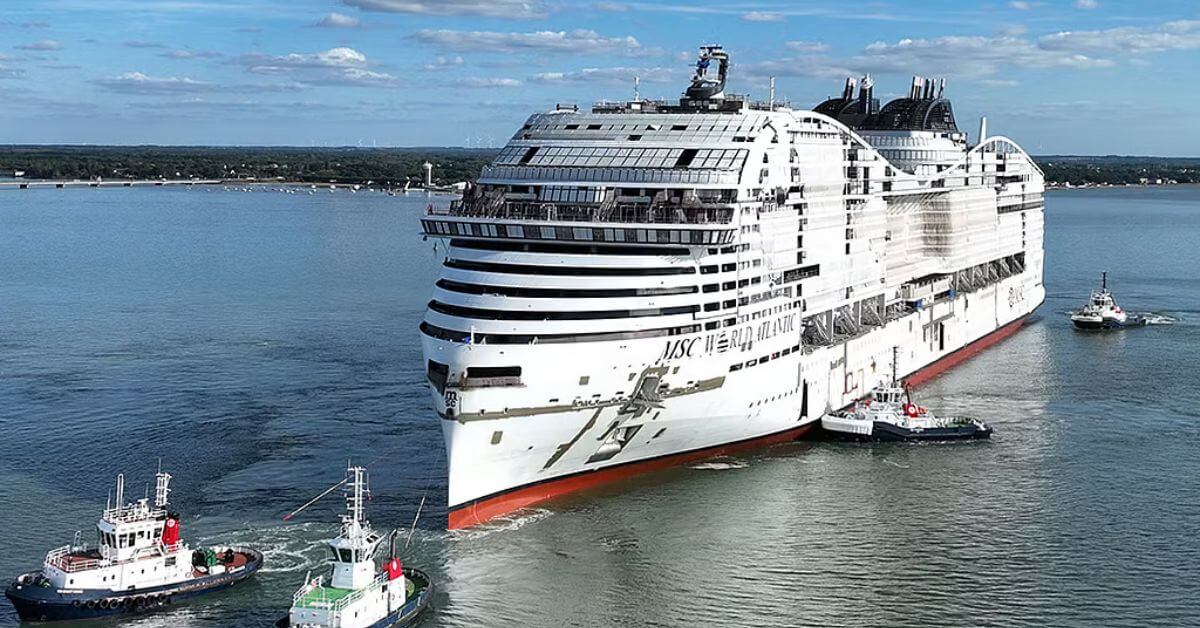
The float-out of MSC World Atlantic at Chantiers de l'Atlantique marks a moment when liquefied natural gas as a marine fuel moves from theoretical promise to a validated, measurable phase in the cruise industry. This is not merely a construction milestone; it is a calibrated data point in the long-term transition of maritime propulsion. For an industry often criticized for its emissions profile, this vessel represents an empirical step forward, one that deserves scrutiny as much as recognition.
LNG combustion does not eliminate greenhouse gas emissions, but it does reduce sulphur oxides, nitrogen oxides, and particulate matter compared to conventional heavy fuel oil. The practical consequence for our readers, whether they are policymakers evaluating fuel standards or oceanographers tracking atmospheric deposition, is that this ship will generate a longitudinal dataset on real-world LNG performance. The operational data from MSC World Atlantic can be integrated into broader climate indicators, helping to validate or challenge current emission models. This is the kind of empirical evidence the shipping sector has lacked for too long. Compare this to the urgent, reactive nature of the Coast Guard Response Validates Real-Time Rescue Coordination Off Odisha, where validated real-time coordination saved lives under pressure. Here, validation comes from deliberate engineering and years of planning, not from crisis. Both demonstrate that measured systems, whether for rescue or propulsion, produce reliable outcomes when they are properly calibrated and executed.
Yet LNG is not a final answer. It is a bridge fuel, and the bridge's length is unknown. The float-out confirms that the integrated data ecosystem of modern shipbuilding can deliver on design specifications, but the vessel's actual emissions performance will only be confirmed through peer-reviewed monitoring once it enters service in 2027. This is where ocean intelligence becomes critical. We need independent, empirical tracking of methane slip and total lifecycle emissions from LNG carriers, not just industry-reported figures. The stakes are clear: a single miscalculation in fuel transition pathways could lock in infrastructure that delays adoption of zero-emission alternatives. The River Floods Displace Cruise Ship Into Nepal's Narayani Bridge reminds us that even well-designed vessels are subject to forces beyond their control, nature does not negotiate with propulsion systems. Climate change will intensify those forces, making every ton of avoided CO₂ a measurable investment in operational resilience.
The specific takeaway for our audience is this: MSC World Atlantic's float-out is not a conclusion but a baseline. Watch for the first published emissions data from its maiden voyages. That dataset will either validate LNG as a meaningful transitional technology or reveal gaps that demand faster innovation in alternative fuels like ammonia or hydrogen. The ocean does not respond to intentions; it responds to empirical outcomes. We should hold this vessel, and every one like it, to that standard.