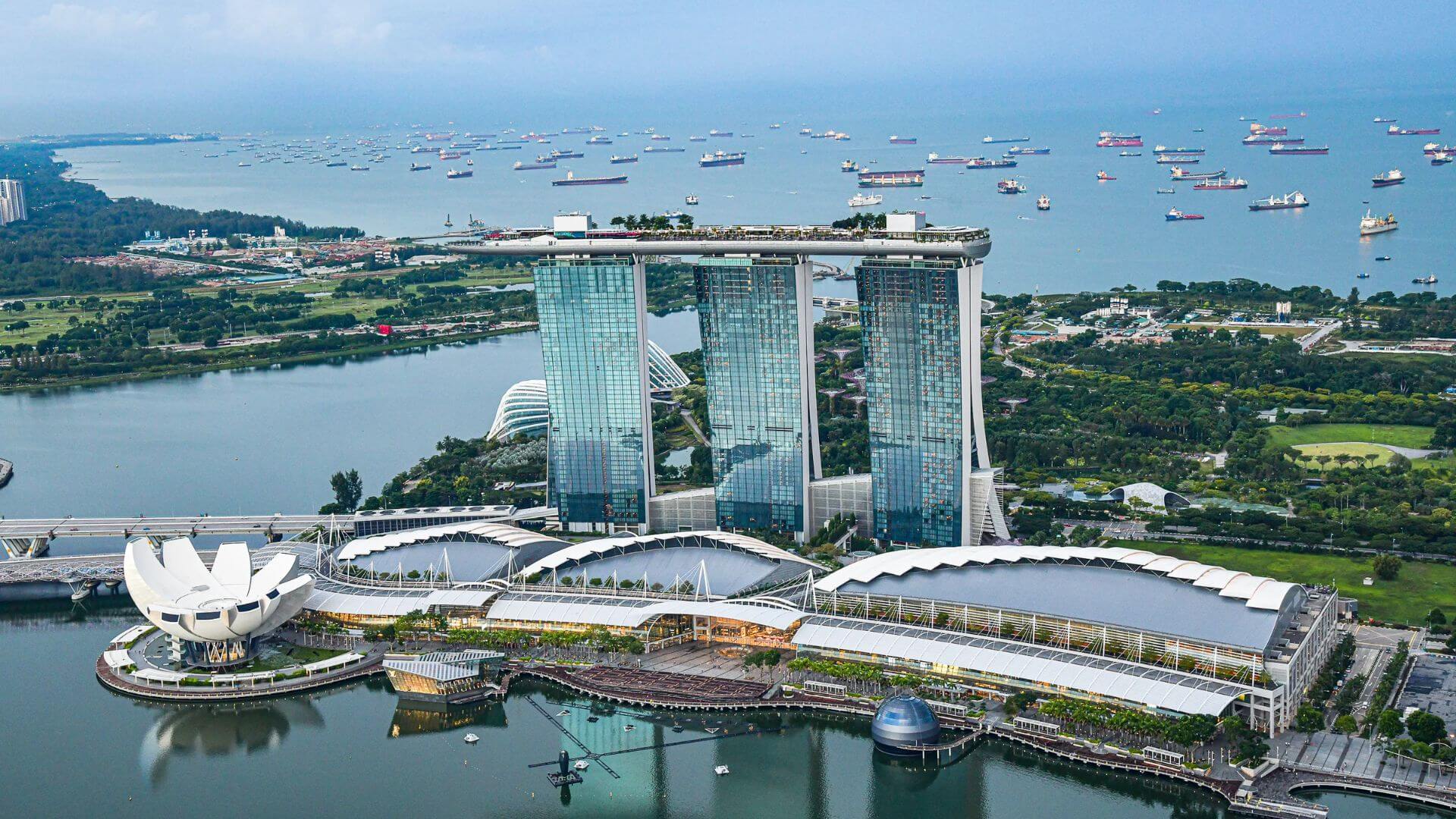
A measurable, long-term commitment to a single port is a rare signal in the cruise industry, and it is one that deserves close attention from anyone tracking the sector's environmental and operational footprint. MSC Cruises' three-year homeporting deal with the Singapore Tourism Board, anchored by the refurbished MSC Orchestra beginning winter 2028, extends the company's presence in Asia and, more importantly, creates a sustained data stream from a fixed geographic node. This is not merely a route expansion; it is an opportunity to collect empirical, longitudinal data on emissions, fuel consumption, passenger flows, and waste management from a vessel operating the same itineraries across multiple seasons. When paired with the company's parallel push into LNG marine fuel, as seen with the float-out of MSC World Atlantic and the broader fleet transition toward lower-emission propulsion, the Singapore deal becomes part of a larger, integrated data ecosystem. MSC World Atlantic floated: LNG marine fuel enters a validated phase and LNG-Powered Cruise Ship Joins Fleet, Advancing Sustainable Ocean Travel both underscore that MSC is investing in measurable shifts in marine energy. The Singapore arrangement offers a real-world laboratory to validate those technologies under repeatable conditions.
For researchers and policymakers, the value here is in the calibration. A three-year window allows for the collection of climate indicators, fuel burn per nautical mile, shore-power usage, waste diversion rates, that are far more reliable than single-season snapshots. The Singapore Tourism Board's emphasis on longer 8-to-12-night itineraries across Southeast Asia further strengthens the dataset, because extended routes generate more comprehensive operational profiles than short turnaround loops. This is the kind of integrated, peer-reviewed evidence that moves the conversation beyond marketing claims and into actionable ocean intelligence. The fact that MSC is also bringing Explora Journeys to Singapore in 2027 means two brands will be generating comparable data from the same port infrastructure, enabling cross-fleet analysis that could inform broader industry standards.
What this does not do, however, is resolve the fundamental tension between growth and stewardship. MSC will have two ships in the region from winter 2028, and the Orchestra is being upgraded with the MSC Yacht Club concept and new dining venues, investments that signal confidence in rising passenger demand. More ships and more passengers mean more data, but they also mean more cumulative emissions, even if per-passenger metrics improve. The open question is whether the industry's appetite for measurable data will translate into binding operational constraints, or whether it remains a reporting exercise. The FBI Investigation Opens After Fatal Incident on MSC Cruise Ship in Galveston reminds us that operational data alone does not guarantee safety or accountability; it must be paired with oversight.
The concrete point to watch is the post-winter deployment. MSC Orchestra will head to Japan, South Korea, and Greater China after the Southeast Asia season. If the company shares the calibrated fuel and emissions data from those transitional voyages alongside the Singapore homeport data, the industry will have a rare comparative baseline for tropical versus temperate operations. That would be a genuinely validated contribution to ocean intelligence.