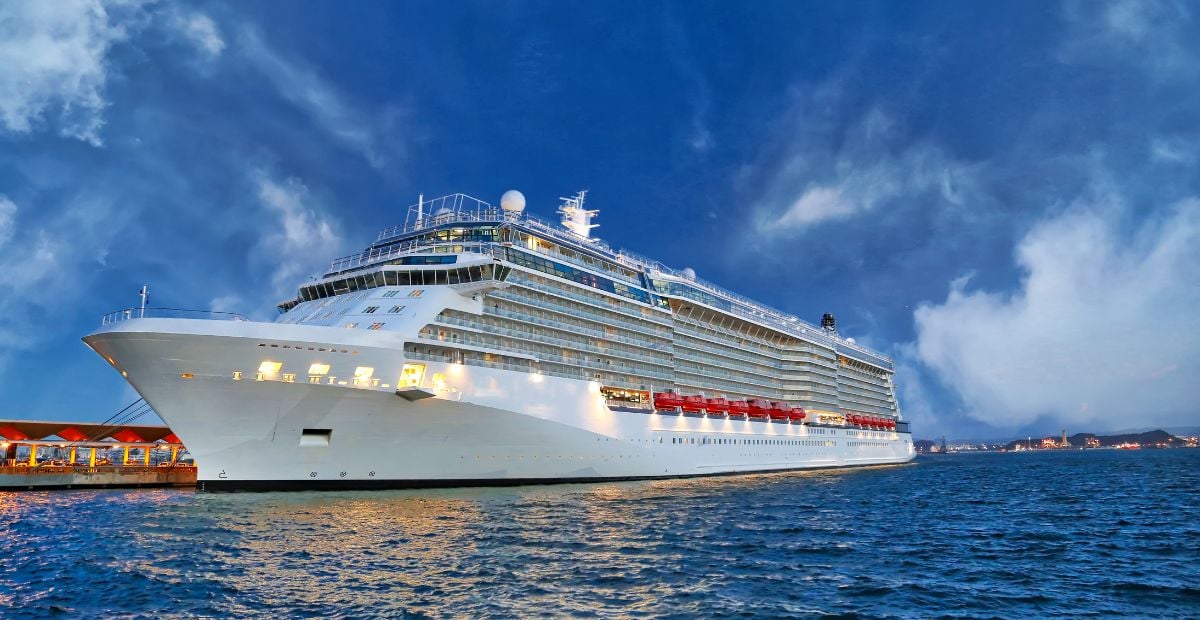
The launch of Cordelia Sky in Mumbai marks a moment when the cruise industry in India stops being a niche experiment and begins to resemble a measurable sector of the travel economy. The choreographed display of 1,500 drones over the Mahalaxmi racecourse was not just a spectacle; it was a calibrated signal that Cordelia Cruises is betting on scale, and the numbers justify that confidence. Doubling passenger capacity to 3,596 at double occupancy is a logistical commitment, not a publicity stunt, and it changes the practical options available to Indian travellers who have long treated cruising as an overseas luxury rather than a domestic alternative.
For a market that has historically lacked indigenous cruise infrastructure, the addition of a 77,104 GT vessel with 1,798 combined staterooms across two ships is a substantive shift. The itineraries announced, two-night sea cruises, three-night Goa runs, four-night Lakshadweep voyages, are designed for weekend and short-break travellers, which speaks to a realistic understanding of how Indians actually take holidays. The decision to move Cordelia Empress to Kochi by October 25 is equally pragmatic, extending access to southern travellers who have been underserved. This is the kind of integrated planning that turns a single vessel launch into a network expansion. It echoes the endurance and operational foresight seen in 265 days at sea: validated data from a record naval deployment, where long-haul readiness depended on precise resource management rather than optimism.
What stands out is the attention to passenger diversity in the onboard offering. Ten dining venues, dedicated vegetarian and Jain meal options, and a 930-seat theatre are not afterthoughts; they are responses to a demographic that has specific cultural and dietary requirements. Cordelia Cruises has welcomed over 800,000 passengers since 2021, and that empirical base likely informed these choices. The company's stated goal, making cruising a preferred option for the Indian masses, will be tested not by the drone show but by whether these details convert first-time cruisers into repeat customers. The challenge is similar to the one faced by the crew in Persistent Lifebelt Signal Guides Cargo Ship to Rescue After 20 Hours at Sea: visibility is useful, but survival depends on sustained, reliable function when conditions are less than ideal.
The next data point to watch is the October 23 commercial sailing from Mumbai. If Cordelia Sky fills its staterooms consistently across the Goa and Lakshadweep routes, the argument for a third vessel, Cordelia Sun, by November 2027, becomes credible. If occupancy lags, the expansion will reveal itself as capacity ahead of demand. The company's track record of 800,000 passengers suggests a base exists, but the leap from one ship to two, and soon three, requires that the new vessel perform not as a flagship novelty but as a dependable asset. The drone formations were temporary; the real question is whether the operational rhythm of Cordelia Sky can sustain the same precision over years of sailings. That is the metric that will define whether this launch was a milestone or merely a moment.