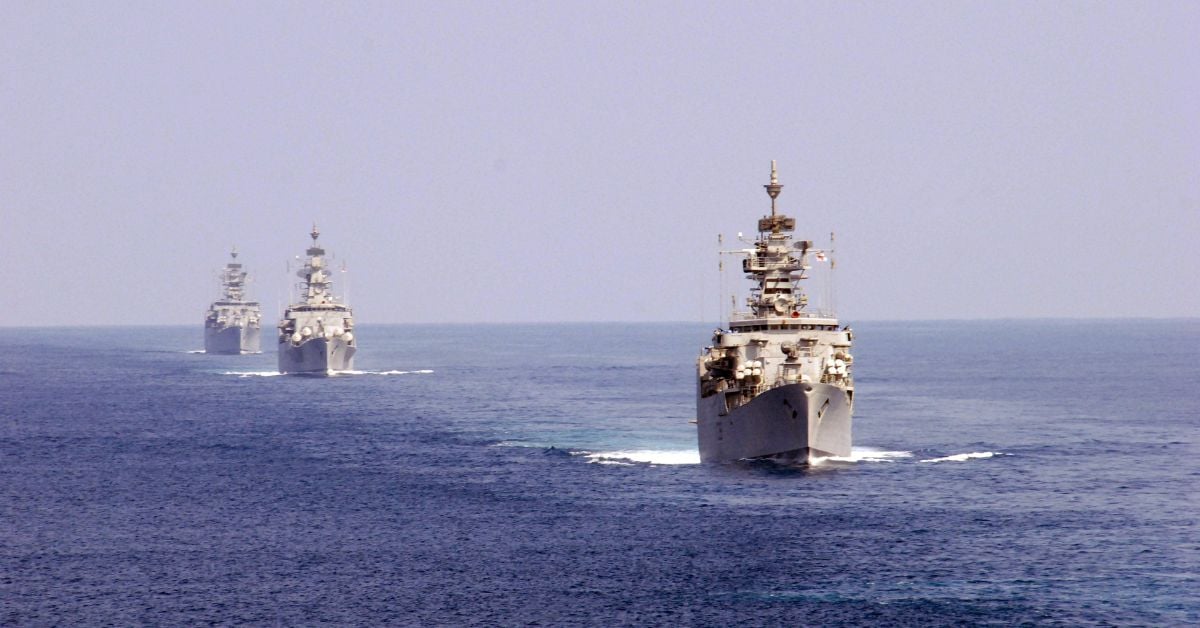
The U.S. Navy's $1.2 billion contract for 30 medium unmanned surface vessels (MUSVs) is not merely a procurement milestone; it is a calibrated shift in how maritime power will be validated and measured in the coming decade. This investment signals a clear departure from crewed-centric naval operations toward an integrated data ecosystem where autonomous platforms collect, relay, and process ocean intelligence at unprecedented scale. For our readers, whether researchers tracking climate indicators, policymakers assessing regional security, or engineers building the next generation of marine technology, this development demands attention not for the hardware alone, but for what it enables: persistent, empirical observation of the world's most contested waters.
The contracts awarded to Galliano Marine Services, Saronic, and Huntington Ingalls Industries will deliver 10 vessels each at $40 million per hull, with deliveries beginning before the end of 2027. This follows at-sea trials that tested the vessels' ability to scan for threats, operate without human intervention, and remain deployed for extended periods. The Navy's plan to expand from 4 to 30 unmanned surface ships by 2030, primarily for the Indo-Pacific, parallels the scale of investment we recently reported in the $6.6 Billion Maryland Shipyard Largest U.S. Maritime Investment Since WWII, which will build the infrastructure to support such fleets. It also follows the historic deployment of an autonomous surface vessel with a carrier strike group, demonstrating that unmanned systems are no longer experimental adjuncts but integral components of naval operations. These are not isolated events; they form a coherent, forward-thinking strategy to modernize maritime capabilities through validated, real-time systems.
What this means in practical terms is a fundamental change in how ocean data is collected and applied. Each MUSV is designed to cover 2,500 nautical miles at 25 knots while carrying 25 tons of payload, essentially a mobile, autonomous sensor platform capable of sustained deployment. For the ocean science and policy community, this represents a new source of longitudinal, peer-reviewed quality data from regions that are currently under-sampled. For defense analysts, it provides a measurable deterrent capability that does not risk human lives in the initial contact zone. Secretary of the Navy Hung Cao has framed this as a priority to rapidly modernize the fleet with advanced autonomous naval systems, a response to a Government Accountability Office report in June that urged faster upgrades to counter emerging threats, particularly China's growing maritime influence in the Indo-Pacific. The parallel development of China's mothership for underwater drones underscores the urgency: this is a race to deploy integrated, autonomous ocean intelligence networks, not just ships.
The open question remains whether the procurement process itself will stand up to scrutiny. Other companies that participated in phase I trials, including Birdon, PacMar Technologies, and Sea Machines, received $15 million for their testing but were not selected for construction. Some have sued the Navy, alleging unfair exclusion. Top officials have stated they will accept the court's decision. This is a detail worth watching: the integrity of the marketplace model, announced in March as a replacement for the Modular Attack Surface Craft initiative, depends on transparent, empirically grounded selection criteria. If the process holds, it sets a precedent for how autonomous systems are acquired at scale. If it falters, it risks slowing the very modernization it aims to accelerate. The specific consequence to track is whether these 30 vessels, once deployed, generate the kind of integrated, real-time ocean intelligence that justifies the investment, or whether the focus on speed compromises the calibrated, peer-reviewed standards that make such data actionable.