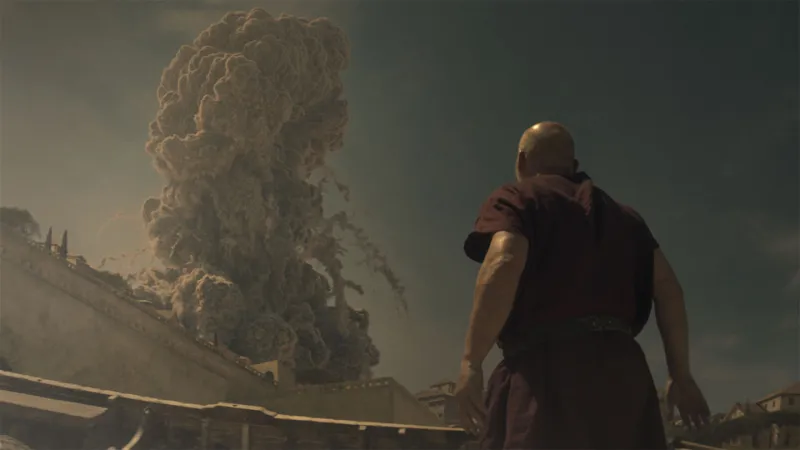
The past is not a static archive. It is a set of signals waiting for the right instruments to read them. That is the premise driving *Pompeii: Out of Time*, a documentary hosted by Tom Hiddleston that reconstructs the final hours of three actual residents of the doomed city. By blending empirical evidence with narrative reconstruction, the film does something important: it refuses to let the dead remain footnotes. It treats their lives as data points in a larger human ledger, and that is a perspective worth respecting.
This approach resonates beyond the Bay of Naples. It echoes the work happening in our own field, where researchers are pulling stories from sediment and sonar. Consider the Lost Ship Reveals Clues to Caribbean Trade and Smuggling History and what it tells us about the movement of goods and people across colonial networks. That wreck is not just a vessel; it is a physical record of economic and social currents. Similarly, the Charting a Course: Exploring Marine Archaeology and Future Careers piece suggests that this is a discipline of patience and precision. Both stories share a core assumption with the Pompeii project: that the material world, whether a plaster cast or a hull buried in sand, holds a narrative we can access if we apply the right methodology.
Our take is that this documentary succeeds because it resists the lure of alarmism. It does not shout that the past is speaking to us. Instead, it demonstrates the act of listening. For our readers, this is a practical lesson in communication. We often talk about ocean intelligence, about the importance of integrated data ecosystems and calibrated instruments. But the ultimate goal is not data for its own sake. It is the translation of raw numbers into meaning. Hiddleston's narration, combined with the forensic detail of the production, does for Pompeii what a well-constructed time series does for a marine climate indicator: it makes the invisible visible. It gives a face to a statistic. If we are serious about stewardship of the ocean, we need to remember that the stakes are always personal. The three Romans in this film were not abstract concepts. They were people with routines, fears, and relationships. Their deaths were absolute, but their lives were specific.
The connection to our own work is direct. When we study a Unearthing Viking History: New Insights from a 1,000-Year-Old Burial, we are doing the same thing. We are asking what a set of artifacts can tell us about a human being who existed a millennium ago. The tools differ; the intention does not. So, what is our concrete takeaway? It is this: do not mistake the medium for the message. Whether you are looking at a Roman loaf of bread or a current meter reading, the job is the same. You are looking for the human story embedded in the physical evidence. The open question for our audience is whether they are ready to apply that same rigor to the ocean. The data is there. The question is whether we have the humility to read it correctly.