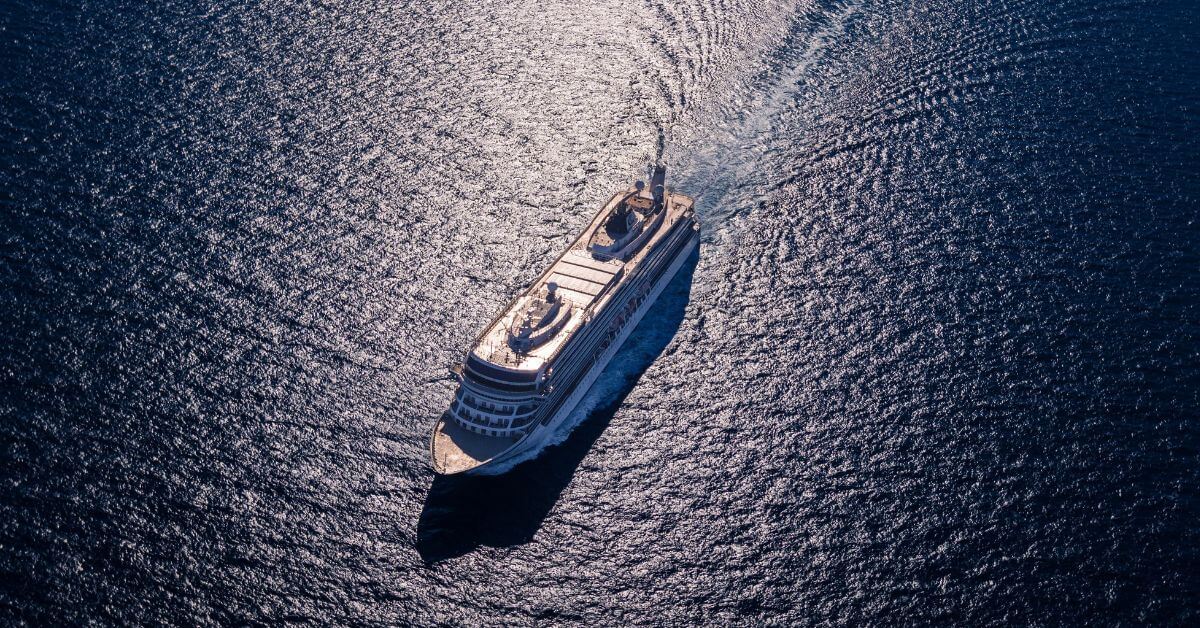
The delivery of Viking Libra is not merely a ship handover; it is a validated proof point for an industry that has long talked about hydrogen but rarely delivered it at scale. Viking and Fincantieri have now placed a 54,300-tonne vessel in the water with a liquefied hydrogen fuel system and a six-megawatt PEM fuel cell array, and that changes the practical conversation about zero-emission cruising from theoretical to operational. For our readers tracking the intersection of maritime engineering and ocean stewardship, this is the kind of calibrated, empirical milestone that matters more than any press release.
This vessel matters because it is not a concept. The hydrogen is stored in containerized units aboard a 998-guest ship designed to reach environmentally sensitive areas where new regulations are already restricting fossil-fueled traffic. The fuel cell system, built by Isotta Fraschini Motori, a Fincantieri subsidiary, integrates directly into the ship's hybrid propulsion and onboard electrical grid. When Viking Libra begins hydrogen operations in 2027, alongside its sister ship Viking Astrea, it will produce zero emissions while navigating the Mediterranean and Northern Europe. That is a measurable, real-world deployment, not a laboratory demonstration. Compare this to the scale of A new vessel charts measurable progress in maritime innovation and global mobility, which involves China's second home-built large cruise ship carrying over 3,800 passengers. While that vessel represents impressive construction capacity, Viking Libra represents a different kind of breakthrough: a deliberate re-engineering of the energy system itself.
The practical implication for policymakers, port authorities, and cruise operators is straightforward: the infrastructure question is now urgent. Hydrogen bunkering, storage standards, and supply chains are no longer hypothetical. If a 239-metre ship can load and store liquefied hydrogen in first-of-its-kind containers, then the maritime industry must accelerate the shore-side systems to support it. Viking's CEO has called this the company's most environmentally friendly vessel yet, and that claim is backed by a specific, peer-reviewable technical configuration. The fuel cells are not an add-on; they are embedded in the ship's core design, and that is the difference between a retrofit experiment and an integrated solution.
What remains to be watched closely is the operational data once Viking Libra enters service. How will the hydrogen storage system perform under real voyage conditions? Will the six-megawatt output cover the full hotel load and propulsion needs as promised? The New vessel Echo expands offshore construction capacity for ocean data infrastructure demonstrates that specialized vessels are being built for precise offshore tasks; Viking Libra now demands the same precision from the hydrogen supply chain. The open question is whether the fuel logistics can match the engineering. That is the concrete detail to track: not the ceremony, but the bunkering records from the first season of Mediterranean voyages.