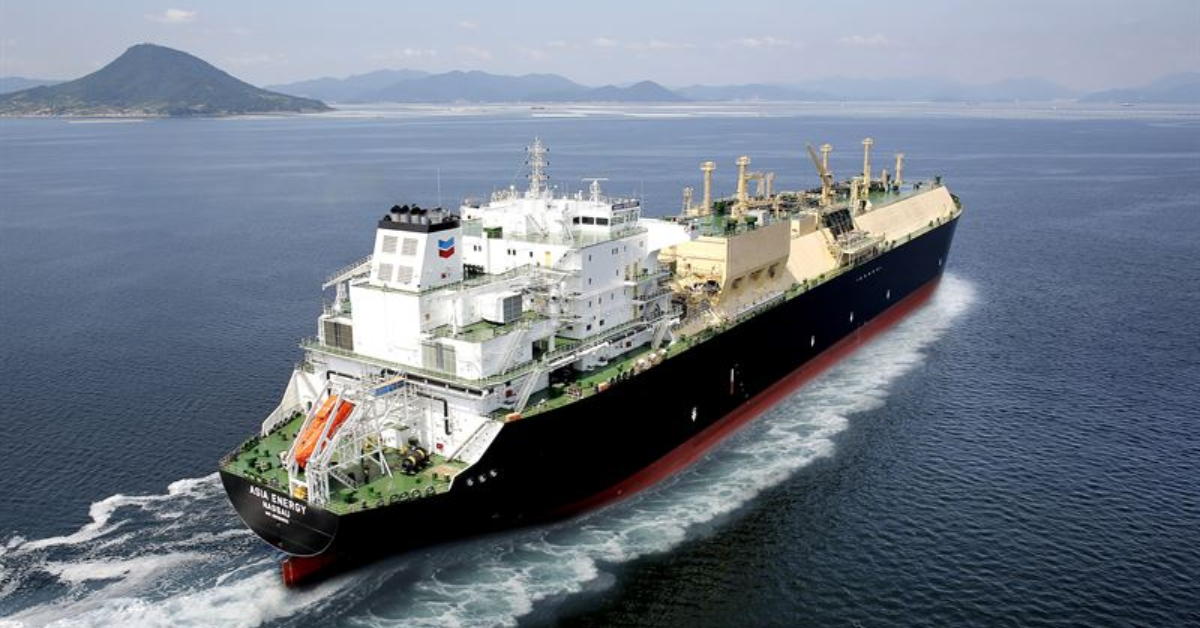
Methane slip has long been the blind spot in liquefied natural gas's claim to be a lower-emission marine fuel. This conversion project proves the gap can be closed with existing hardware. Wärtsilä's retrofit of three Chevron LNG carriers from dual-fuel to spark-gas operation cuts methane emissions to 1.1 percent of fuel use on the IMO weighted average, a validated, measurable reduction that addresses the single largest climate liability of LNG propulsion. This is not a future concept; it is an engine-room modification available today for the majority of LNG carriers already running Wärtsilä 50DF engines. The fact that three more vessels are already scheduled suggests Chevron and Wärtsilä see operational and regulatory value in scaling the fix quickly. As the Dual-Fuel Fleet Surpasses 500 Vessels in Measurable Shift Toward Lower-Emission Shipping, the industry needs retrofit pathways that keep existing tonnage relevant rather than waiting for a newbuild-only solution. This project provides one.
What matters for the broader decarbonization timeline is that the conversion uses spark ignition instead of diesel pilot fuel. That change alone optimizes the combustion process enough to reduce methane slip without requiring a full engine replacement or a switch to a different fuel type. Barbara Pickering of Chevron Shipping framed the effort correctly: advancing lower-emission shipping requires both technology innovation and industry collaboration. The retrofit generates operational data that can inform future designs, much as the Validating marine decarbonization: four ammonia carriers to cut over 1.2 million tons of CO₂ project will do for ammonia. Both efforts treat real-world demonstration as the essential step between laboratory efficiency and fleet-wide adoption. The difference here is that the engine architecture is already proven in service; the risk lies in the integration of the pre-combustion chamber valve and the long-term reliability of the spark-gas system under continuous operation. Wärtsilä's three decades of LNG engine experience should reduce that risk, but the proof will come from the vessels' performance over multiple voyages.
The practical implication for fleet operators is straightforward. Retrofitting existing dual-fuel engines to spark-gas operation avoids the capital expenditure of new engines while delivering a measured emissions improvement that aligns with tightening IMO regulations. The conversion does not eliminate methane slip entirely, 1.1 percent is still a non-zero number, but it brings the vessel's profile much closer to the performance of a dedicated spark-gas engine. For the six Chevron vessels, the cumulative reduction in greenhouse gas emissions will be significant, and the data from those conversions will help the wider industry decide whether the retrofit economics work for their own fleets.
One open question remains. The press release states the conversion is available for vessels with Wärtsilä 50DF engines used in diesel-electric propulsion, the majority of which are LNG carriers. That leaves out the substantial number of LNG carriers with different engine makes or mechanical-drive configurations. The industry will need parallel retrofit solutions for those fleets if methane slip is to be addressed at scale. For now, the Chevron-Wärtsilä project offers a calibrated, empirical template. The next step is to see whether the six converted vessels sustain the promised 1.1 percent average across a full year of trading, and whether other operators choose to follow.