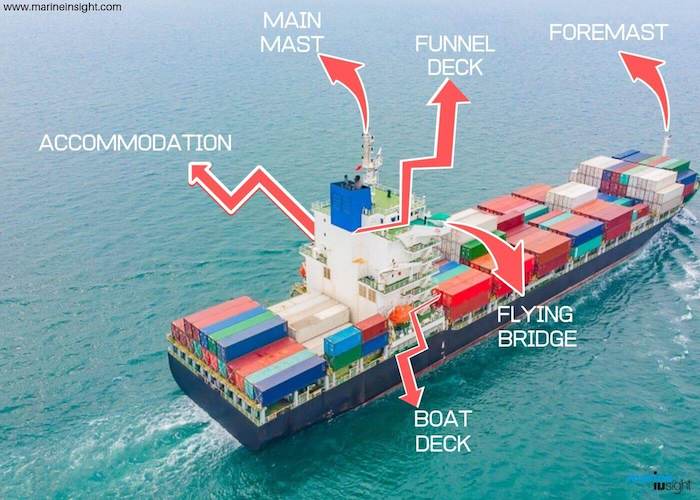
The hull, the bow, the stern, the deck: these are the nouns of a working language spoken across every ocean on the planet. An article that catalogues the anatomy of a ship is doing more than listing steel and rivets; it is decoding the vocabulary of a global system that moves ninety percent of what we consume. For the uninitiated, this is a glossary. For those of us tracking maritime risk and innovation, it is the baseline from which every serious conversation about the sea begins. You cannot discuss a Fatal Attack on Bulk Carrier Near Oman Highlights Maritime Security Risks if you cannot distinguish the forecastle from the poop deck, nor can you weigh the economics of a Saudi Arabia Refutes Tanker Acquisition Claims Amid Rising Shipping Costs without understanding the physical constraints of the very tankers in question.
Our take is straightforward: this primer is not a beginner's detour; it is a professional's checkpoint. In an era where satellite tracking and machine learning dominate the discourse on ocean intelligence, we risk treating the vessel as a black box. That is a mistake. The empirical reality of shipping is still measured in draft marks and deadweight tonnage. When we read about the approval of an Ammonia Bunkering Vessel Design Receives Approval, Advancing Sustainable Maritime Fuels, the innovation only matters if we grasp where the fuel tanks sit, how the hull form shifts with new weight distributions, and what the mast and funnel deck actually house in terms of venting and control systems. The terminology is not academic trivia; it is the calibration tool for understanding what is changing and what is staying stubbornly constant.
What would we tell a reader who asks why this matters now? We would say that the maritime industry is entering a decade of forced reinvention, driven by climate indicators and security threats. Yet the foundational vocabulary of the ship remains a constant. That tension between the old and the new is exactly where the real work happens. You cannot retrofit a vessel for ammonia or defend a crew against a drone attack near Oman if the people making the decisions cannot read the ship itself. The practical consequence is that fluency in this language is a career differentiator, not a classroom requirement. It separates those who can speak precisely with engineers and surveyors from those who can only repeat press releases.
The specific detail to watch in the coming months is not the next headline about a new fuel or a new conflict, but whether the industry's investment in training keeps pace with its investment in hardware. We are building more sophisticated ships, but we are also asking fewer people to understand them. That is a risk we cannot measure in gross tonnage. The takeaway we would offer is simple: learn the parts of the ship, because the ship is not changing as fast as the world around it, and the people who know the difference will be the ones navigating the rough water.