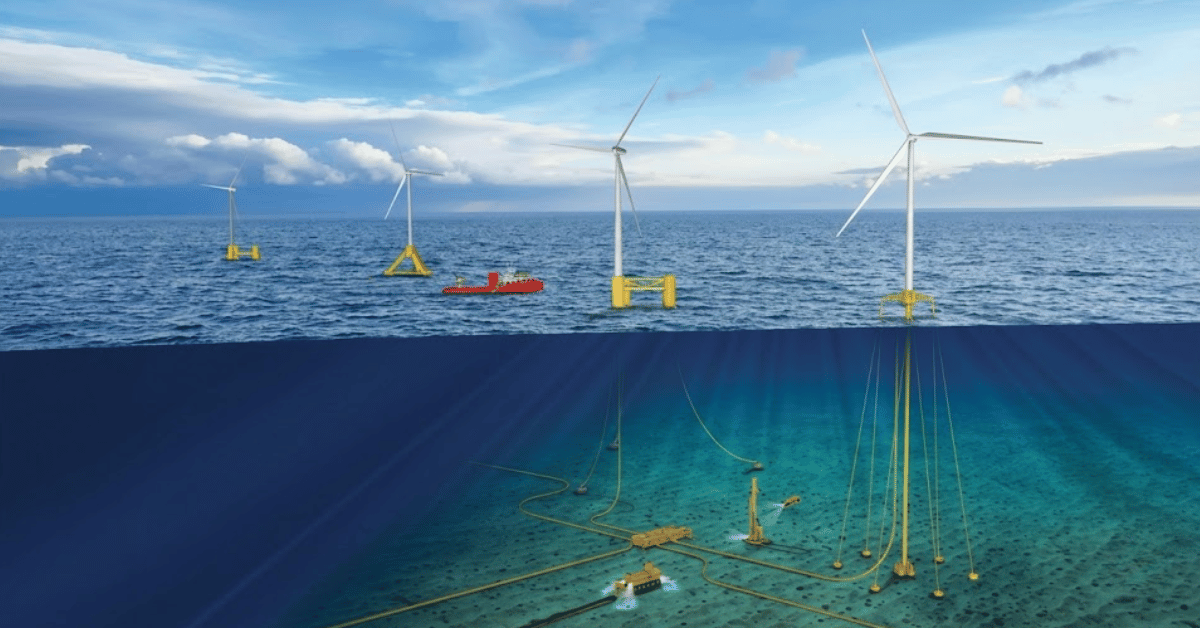
The UK's £3 million investment in DeepWind is a calibrated step toward solving a problem that empirical data has already defined: the technologies needed for deepwater offshore wind cannot be validated in shallow test sites. UK Research and Innovation has funded EMEC to develop a national floating and deepwater wind test site that bridges the gap between laboratory-scale innovation and commercial deployment. This is not a vague R&D grant; it is a deliberate investment in infrastructure designed to produce measurable, peer-reviewed evidence of performance before bankable projects are built. As Empirical ocean data powers the measurable path to energy transition makes clear, the ocean's role in the energy transition depends on data that can be validated and scaled. DeepWind is the physical counterpart to that data ecosystem.
For developers and supply chain companies, this funding signals that the UK intends to de-risk deepwater technology through real-world testing rather than through models alone. EMEC's track record in marine energy means the site will be built around integrated, real-time monitoring and environmental baselines that investors require. The contrast with recent policy volatility in other markets is instructive. While Offshore Wind Lease Reversal: Administration Offers $4 Billion Reimbursement describes a US administration canceling offshore wind leases in favor of fossil fuels, the UK is committing public funds to the testing infrastructure that makes commercial-scale floating wind insurable. The strategic difference is not rhetorical; it is structural. DeepWind's plug-and-play infrastructure will generate the longitudinal, calibrated performance data that lenders and insurers demand, data that no amount of desktop modeling can replace.
The practical consequence for researchers and policymakers is that by 2030, the UK will have a national asset capable of validating next-generation turbines, mooring systems, and dynamic cables in metocean conditions that are representative of the commercial leases already awarded. This directly addresses a bottleneck identified in earlier industry engagement: existing European test sites lack the wave and current profiles of UK deepwater zones. EMEC's work through The Crown Estate's Supply Chain Accelerator has already established the technical requirements and identified potential sites. The £3 million now funds the engineering, environmental, and regulatory work needed to reach a Final Investment Decision. For those tracking Precision at sea advances Asia-Pacific offshore wind by 2029, the parallel is clear: both regions are investing in the vessel and testing infrastructure that turns floating wind from a prototype challenge into a bankable industry.
The specific detail to watch is how EMEC structures the governance and cost-sharing model for DeepWind by the end of this two-year phase. The funding builds the foundation for that decision, but the real test will be whether developers commit to using the site once it is built. If the commercial terms align with the technical readiness, DeepWind will become the integrated data ecosystem that accelerates the entire sector. If they do not, the UK risks having a world-class test site that no one uses. The answer will be visible in the stakeholder input EMEC collects over the next 24 months.