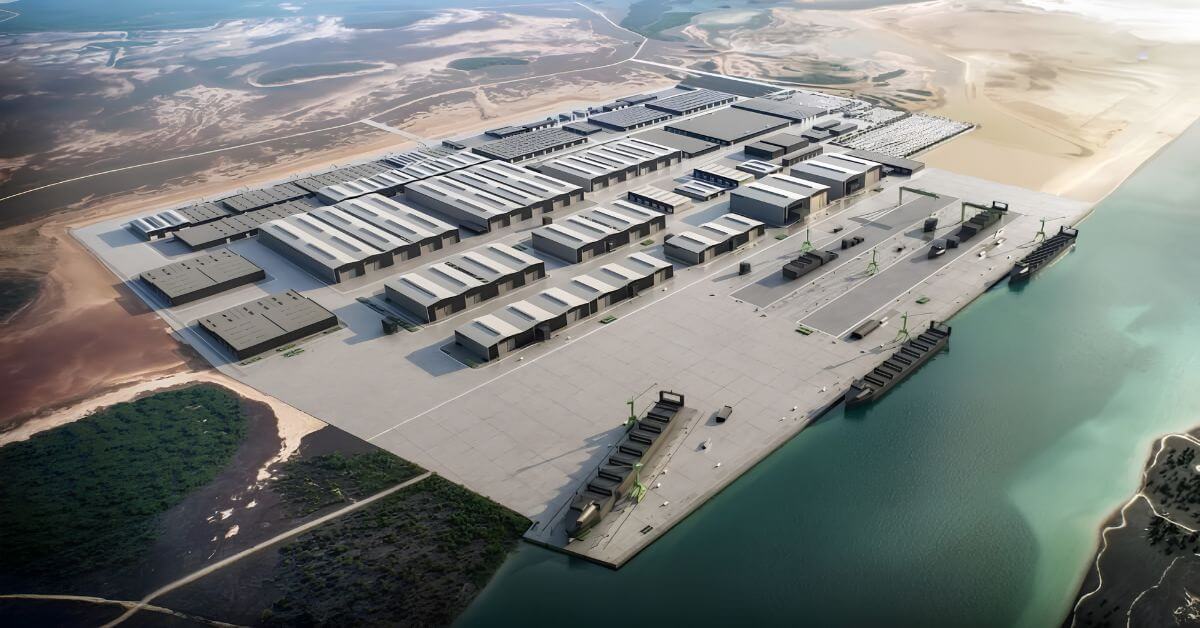
The U.S. Navy's contract with Port Alpha Shipyard to build landing craft utility vessels is not just a procurement milestone; it is a quiet admission that naval platforms and ocean data collection are converging into a single strategic imperative. The firm fixed-price agreement, awarded under an OTA, marks the first vessel built at the Texas yard. That alone is notable. But the deeper signal is that the Pentagon is treating maritime mobility as a data acquisition problem, not just a logistics one. This is consistent with the trajectory we see elsewhere, such as the collaborative shipbuilding initiative advancing ocean data capabilities in India, where commercial and defense shipyards are being pulled into the same integrated data ecosystem.
Our take is straightforward: this is a practical step, not a headline-grabbing one. Landing craft utility vessels are not glamorous. They are workhorses designed to move equipment and personnel from ship to shore. But when you place them inside a network of sensors, communication relays, and calibrated instrumentation, they become mobile nodes in a larger ocean intelligence framework. The fact that this is Port Alpha's first naval build matters because it signals capacity expansion in the domestic shipbuilding base, a constraint that has long limited both defense readiness and scientific logistics. For researchers and policymakers who depend on ship time, this is not a distraction from ocean data collection; it is a means of enabling it.
We would tell a reader who asked about this: watch the integration, not the hull. The vessel's utility will be measured by whether it is wired for real-time data relay, whether it can support modular sensor packages, and whether the Navy and NOAA can share the platform without bureaucratic friction. The related coverage of China's new nuclear carrier, which points to extended naval operations capability, underscores the competitive pressure. If the U.S. is to maintain credible ocean intelligence in contested waters, it cannot rely on a small number of high-end research ships. It needs a distributed fleet of capable, adaptable, and data-enabled platforms. This contract is a small but concrete bet in that direction.
The open question is whether Port Alpha can deliver on schedule and whether the vessel's design will accommodate the kind of empirical, peer-reviewed ocean monitoring that our audience expects. The takeaway worth quoting: the next generation of ocean data collection will not come from a single flagship program but from ordinary vessels retrofitted and built with intelligence in mind. For now, we are watching Port Alpha's execution closely. The contract is signed; the real test begins at launch, when we see whether this landing craft is just a transport or a true contributor to the integrated data ecosystem.