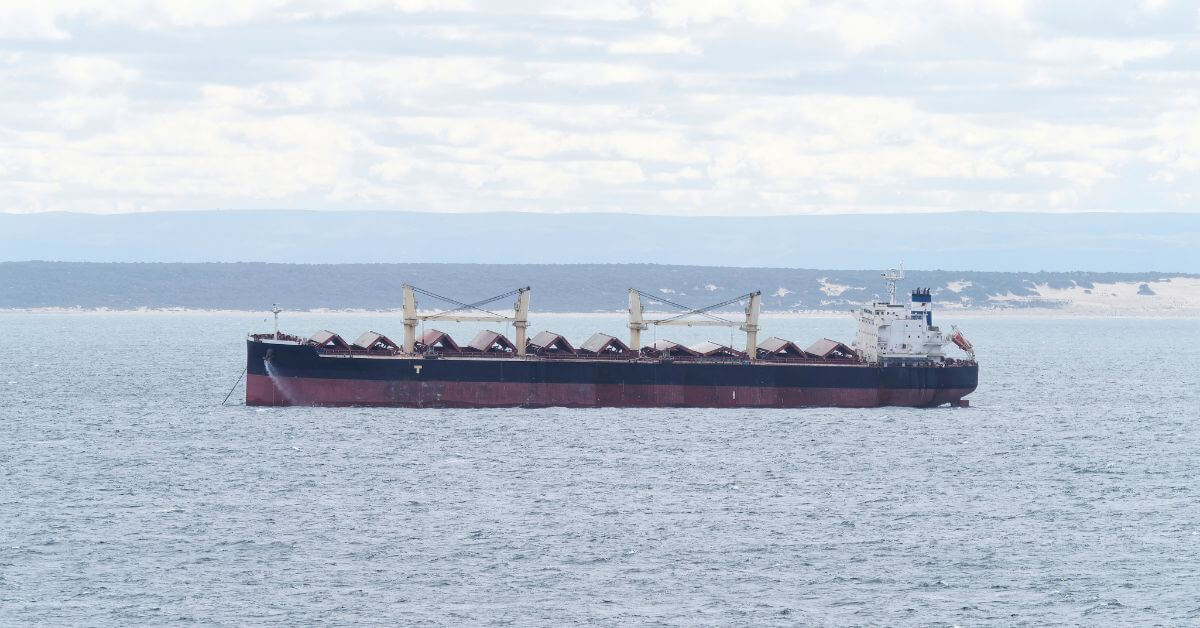
Collisions at anchorage are not anomalies; they are data points in a pattern we are failing to read. The recent incident at Chittagong's Kutubdia anchorage, where the Panama-flagged bulk carrier MV APJ Shirin and the Liberia-flagged MV HG Sydney collided, is a measurable signal that maritime risk management must evolve beyond reactive reporting. We see two vessels, both flying flags of convenience, meeting in a congested anchorage, and the resulting damage is not simply a logistical delay; it is a failure of integrated situational awareness. As incidents like this accumulate, the question is no longer whether the system is strained, but whether we are collecting the right data to prevent the next one.
This collision arrives alongside other troubling events in our maritime coverage. Consider the Captain of Russian-controlled bulker charged over 54,000 tonnes of Ukrainian grain, a case where a single vessel's movement carries geopolitical and criminal weight. Or the Fourth Filipino Maritime Worker Attack Case Proceeds in UK Court, which underscores how crew safety remains a persistent vulnerability. And the River Floods Displace Cruise Ship Into Nepal's Narayani Bridge reminds us that environmental extremes are reshaping where vessels can safely operate. These are not isolated stories; they are empirical evidence of a system under multiple pressures, regulatory gaps, human factors, and climate-driven instability. Each incident, from Chittagong to Nepal, calls for an integrated data ecosystem that connects vessel movements, crew welfare, and environmental conditions in real time.
Our take is direct: the maritime industry must treat anchorage collisions as climate indicators of operational strain, not as random mishaps. When two vessels collide in a busy anchorage, it reflects a failure in calibrated risk assessment, too many ships, too little space, and insufficient longitudinal tracking of congestion patterns. The Chittagong incident should prompt port authorities and fleet operators to ask whether their decision-support systems are validated against real-time traffic data and peer-reviewed safety models. Without that empirical foundation, we are simply waiting for the next collision to confirm what we already know.
The specific takeaway for our readers, whether you are a policymaker, a marine insurer, or a vessel operator, is this: demand longitudinal data on anchorage congestion in high-traffic zones like Chittagong, and integrate it with crew safety records and environmental forecasts. A single collision is a data point. A pattern of collisions is a mandate for action. The question we are left with is not whether the system is broken, but whether we have the collective will to measure it honestly.