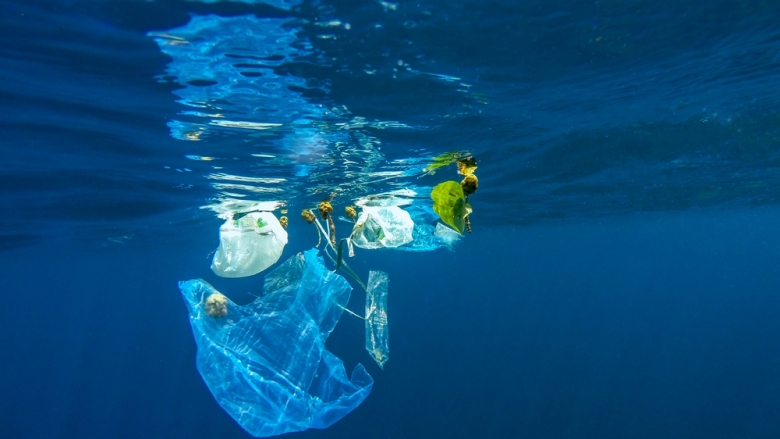
Two billion dollars is a number that demands attention, but what matters more is what that capital has built. The World Bank's sustained investment in waste infrastructure has moved the needle from abstract policy to measurable, validated outcomes across the globe. This is not a pilot program or a pledge; it is an integrated data ecosystem of projects that have registered nearly ten thousand waste reclaimers in South Africa, diverted over 163,000 metric tons of plastic packaging waste in the Philippines, and driven a sustainability-linked loan breakthrough in Brazil's waste sector. For readers tracking the intersection of finance and ocean health, this represents a calibrated, real-world proof point that infrastructure investment, when paired with policy reform and community engagement, can produce longitudinal impact. It also raises an urgent parallel question: how do we measure the waste that never reaches the shoreline? Our recent coverage of Quantifying the annual burden of fishing gear lost to our ocean reminds us that the ocean's pollution burden is not limited to land-based sources; lost gear remains a chronic, unmeasured input that demands similar empirical tracking.
Our take is straightforward: this is the kind of empirical, peer-reviewed progress that should inform every future climate indicator tied to marine debris. The World Bank's work in Cambodia, Laos, Senegal, and across ASEAN and South Asia demonstrates that integrated solutions, linking waste management, tourism, and water sectors, are not theoretical. They are producing registered workers, enforceable producer responsibility, and refillable dispenser systems in Sierra Leonean hotels. The shift from single-use plastics to circular business models, supported by mentorship for micro and small enterprises, shows that purpose-driven impact can scale without alarmist messaging. This is not about panic; it is about calibrated action. Meanwhile, as we watch naval capabilities evolve in India validates naval air power with Rafale Marine trials aboard INS Vikrant, it is worth noting that ocean intelligence, whether for defense or environmental stewardship, depends on the same principle: validated, real-time data driving strategic decisions.
The concrete takeaway for our audience is this: the sustainability-linked loan to Orizon in Brazil, the first of its kind in an emerging market waste sector, sets a precedent. It signals that financial instruments can be calibrated to reward measurable recycling capacity increases, not just intentions. Readers should watch how this model spreads. If the World Bank's two-billion-dollar portfolio can pioneer such instruments while simultaneously registering waste reclaimers as formal economic actors, then the path from pollution to measurable global impact is no longer aspirational, it is operational. The open question remains whether the global community can replicate this integrated approach fast enough to match the scale of the problem, and whether the data from these projects will be shared openly as ocean intelligence for all.