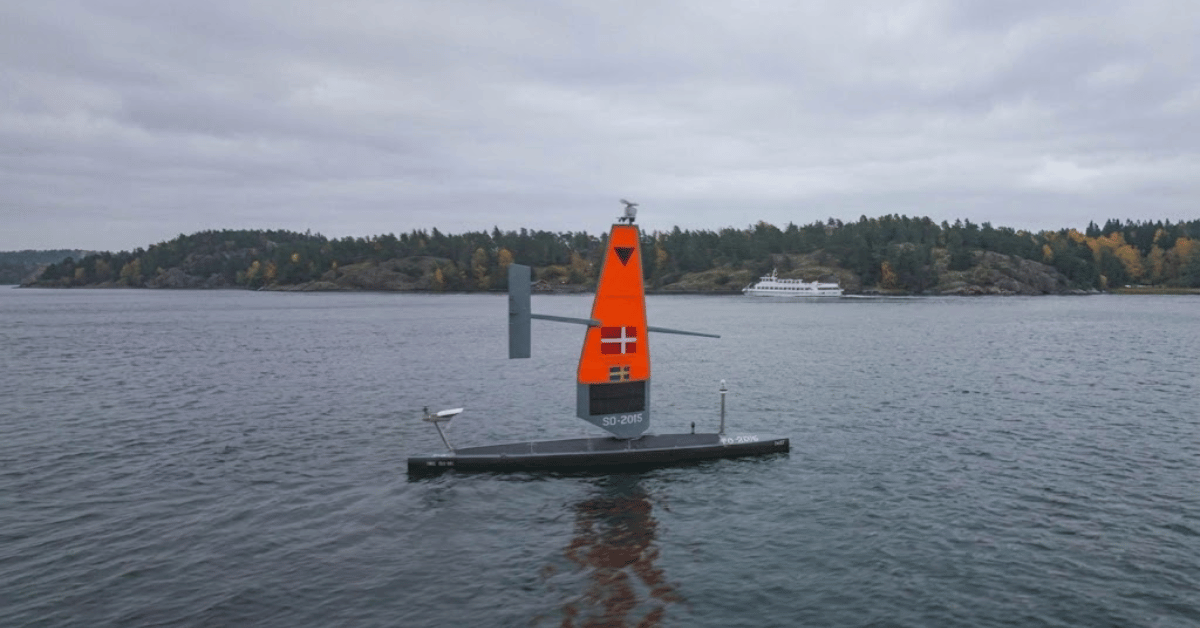
Sweden's year-long deployment of four autonomous Saildrone Voyagers in the Baltic Sea is a measured, practical step toward persistent maritime intelligence, and it signals a maturation in how nations think about ocean observation. This is not a pilot program or a short-term experiment; it is a 1,440 vehicle-day commitment to continuous, real-time data collection in contested waters. The Swedish Armed Forces are effectively purchasing a surveillance service, not just hardware, and that distinction matters for how we evaluate the return on investment in ocean technology.
For researchers and policymakers who track the intersection of defense and environmental monitoring, this deployment reinforces a critical principle: the same integrated data ecosystem that supports maritime security can also deliver validated climate indicators. The Saildrone Voyagers will patrol Sweden's territorial waters and exclusive economic zone, feeding real-time ocean intelligence to the navy. But the data they collect, on surface currents, temperature, salinity, and atmospheric conditions, is the kind of empirical, longitudinal information that connects directly to broader questions about ocean energy potential and climate dynamics. As our related coverage on Validated currents: AI data centres probe ocean energy potential shows, the ability to measure and model ocean behavior at scale is becoming a prerequisite for both security and sustainable energy planning. The Nordic Defence Cooperation (NORDEFCO) framework that enabled this deal provides a replicable procurement model, but the real takeaway is the operational shift: nations are beginning to treat persistent ocean data as a baseline capability, not a luxury.
This mission also highlights a deeper need for traceability in ocean observing. When a Saildrone Voyager sends back a current measurement or a temperature reading from the Baltic, its scientific and policy value depends on knowing exactly how that data was collected, calibrated, and validated. Our piece on Connecting ocean data to its methods for measurable traceability makes the case that metadata and methodological rigor are what turn raw observations into actionable intelligence. Sweden's year-long commitment creates a natural test bed for that principle: with 360 days of continuous operation, the fleet will generate enough data to assess not just the health of the Baltic, but the reliability of the measurement system itself. The question to watch is how the Swedish Armed Forces and their partners will manage data provenance and interoperability across the full mission duration.
What stands out most is the concrete, contractual nature of the arrangement. Saildrone is registering its Voyagers under the Danish flag, establishing a clear legal framework for international operations. The company will maintain, deploy, and task the vessels as a managed service, while Sweden receives persistent maritime domain awareness without tying up crewed ships. That is a specific, measurable outcome, and it sets a precedent for other Nordic nations under NORDEFCO to follow with their own deployments. The open question is whether the data from this mission will be shared beyond defense circles, and whether it can feed into the peer-reviewed, publicly accessible ocean intelligence that climate science and marine policy increasingly demand.