USV
World Data Ocean keeps USV in one place: 3 stories so far. The section currently leads with “Sweden Deploys Four Autonomous Saildrones for Year-Long Baltic Sea Watch”, “Coordinating uncrewed surface and underwater vehicles for extreme ocean sampling”, and “Uncrewed systems unlock co-located air-sea sampling in extreme storm conditions”. Four autonomous Saildrones will spend 360 days patrolling Sweden's Baltic waters, delivering persistent maritime surveillance that was previously impossible at this scale. Pairing uncrewed surface and underwater vehicles in the heart of a hurricane is a formidable challenge. A Global Hub for Ocean Intelligence 4 World Data Ocean is a centralized digital platform where researchers, scientists, and ocean enthusiasts converge to… The list below is every USV story on World Data Ocean, newest first.
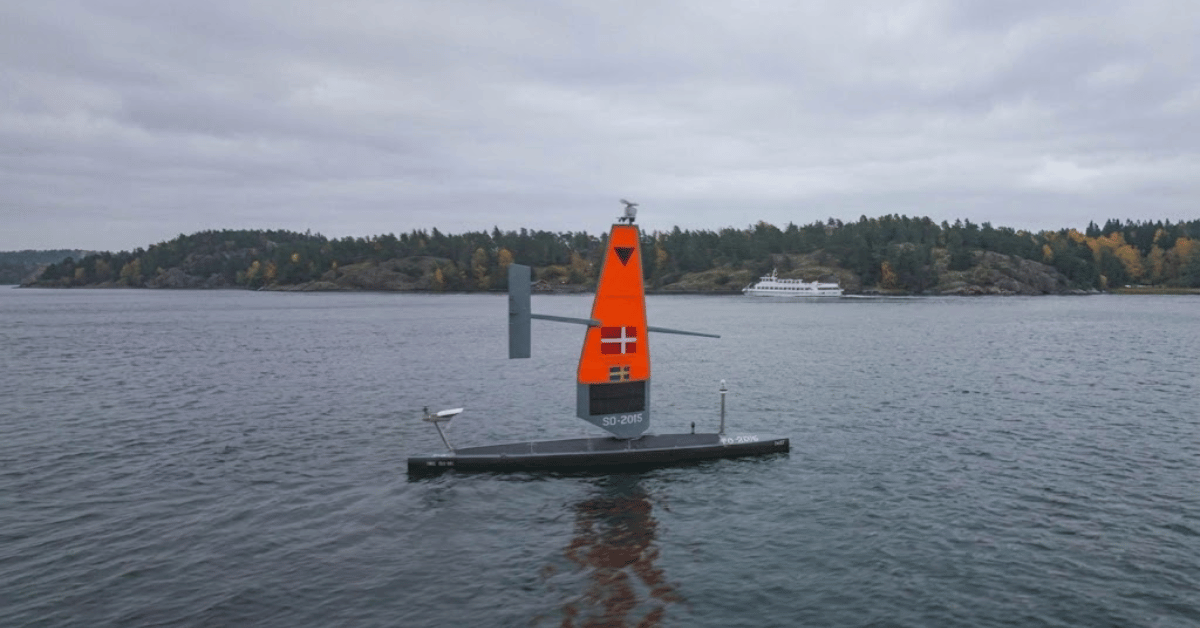
Sweden Deploys Four Autonomous Saildrones for Year-Long Baltic Sea Watch
Four autonomous Saildrones will spend 360 days patrolling Sweden's Baltic waters, delivering persistent maritime surveillance that was previously impossible at this scale. This deployment transforms how we monitor a region where climate indicators and human activity converge. Understanding drives protection. For deeper context on how such ocean intelligence systems maintain measurable traceability, see our related piece, "Connecting ocean data to its methods for measurable traceability." The Baltic Sea now has an integrated data ecosystem, one that operates in real time, not on quarterly reports.

Coordinating uncrewed surface and underwater vehicles for extreme ocean sampling
Pairing uncrewed surface and underwater vehicles in the heart of a hurricane is a formidable challenge. Our simulation of Hurricane Fiona (2022) tested two co-located sampling strategies, loitering and speed-bleeding, within a fully-coupled atmosphere-wave-ocean model. Both proved feasible, improving measurement agreement for sea surface temperature and salinity. Yet the scale at which that agreement degrades depends on both the environment and the variable observed. This is a first, empirical step toward coordinated ocean intelligence in extreme conditions.
Uncrewed systems unlock co-located air-sea sampling in extreme storm conditions
Coordinating uncrewed vehicles in extreme storm conditions has been a persistent challenge, but a new physics-based simulator for a rigid-wing, wind-powered USV marks a measurable step forward. Calibrated and validated using NOAA Atlantic Hurricane mission data, it reproduces surge, sway, and yaw under real-world wind and current forces. This tool enables repeatable virtual experiments for co-located air-sea sampling, critical for understanding climate indicators. For deeper coverage, see our related article on China's wind-powered data hub monitoring ocean health in real-time.