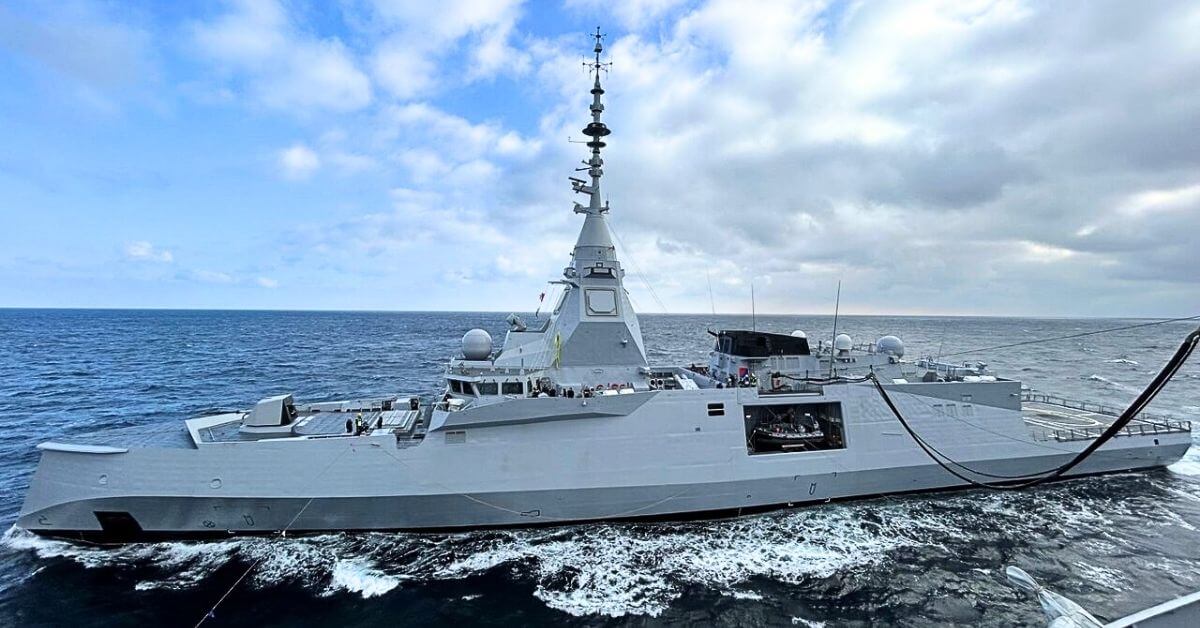
Sweden's decision to acquire four advanced frigates, with the first delivery slated for 2030, is a measured response to a Baltic Sea that has become harder to read. These will be the largest vessels in the Swedish navy, which is a statement in itself: not just about tonnage, but about a shift from coastal defense to open-water presence. The investment signals that Stockholm is planning for a future where maritime security is defined by persistent, credible force, not symbolic patrols. For our readers tracking naval procurement, the takeaway is straightforward, this is a long-term commitment to a more complex operational posture, and 2030 will arrive before the strategic landscape finishes changing.
This move does not exist in isolation, and that is where the picture gets more interesting. We are watching a broader pattern of states recalibrating their maritime assets for a more contested environment. Consider Cochin Shipyard Expands Design Capabilities with Conoship Equity Stake, which shows India investing in design expertise rather than just hull numbers. That is a different kind of capability building, but it shares a logic with Sweden's frigate program: both are bets on self-reliance and strategic depth. Meanwhile, Russia Calibrates Export Revenue for Northern Sea Route Icebreaker Fleet reminds us that Moscow is also expanding its naval footprint, albeit through a financing model that ties commercial shippers to state security goals. Sweden's frigates are not a response to any single Russian asset, but they are part of the same equation: who controls the sea lanes, and at what cost.
What we would tell a reader asking about this deal is to watch the integration, not just the launch. A frigate is a platform, but its value lies in the sensors, weapons, and data links it carries. The real question is whether these ships will be connected to the broader NATO and Nordic defense networks in a way that multiplies their effect, or whether they will operate as impressive but standalone assets. The acquisition does not specify the combat system or sensor suite, but that omission is telling. In an era where Russian Maritime Activity Raises Concerns of Drone Operations in Mediterranean highlights how asymmetric threats are emerging from commercial platforms, Sweden's new vessels will need to excel at more than traditional surface warfare. They will need to track, classify, and counter a spectrum of threats that includes unmanned systems and hybrid tactics.
Our honest take is that this acquisition is a solid, if predictable, step. It is not a revolution, but it is a necessary recalibration. The specific consequence to watch is how Sweden integrates these ships with its existing corvettes and submarines over the next decade. If the frigates become the backbone of a networked, multi-domain force, they will justify the investment. If they remain isolated platforms, they will be expensive symbols. The detail to track is the contract's provision for future upgrades, whether the design allows for new sensors and weapons as threats evolve. That will tell us if Sweden is buying a ship or a system. For now, the delivery in 2030 is the date to mark. What happens between now and then, in the shipyards and in the Baltic, will define whether this program meets its promise.