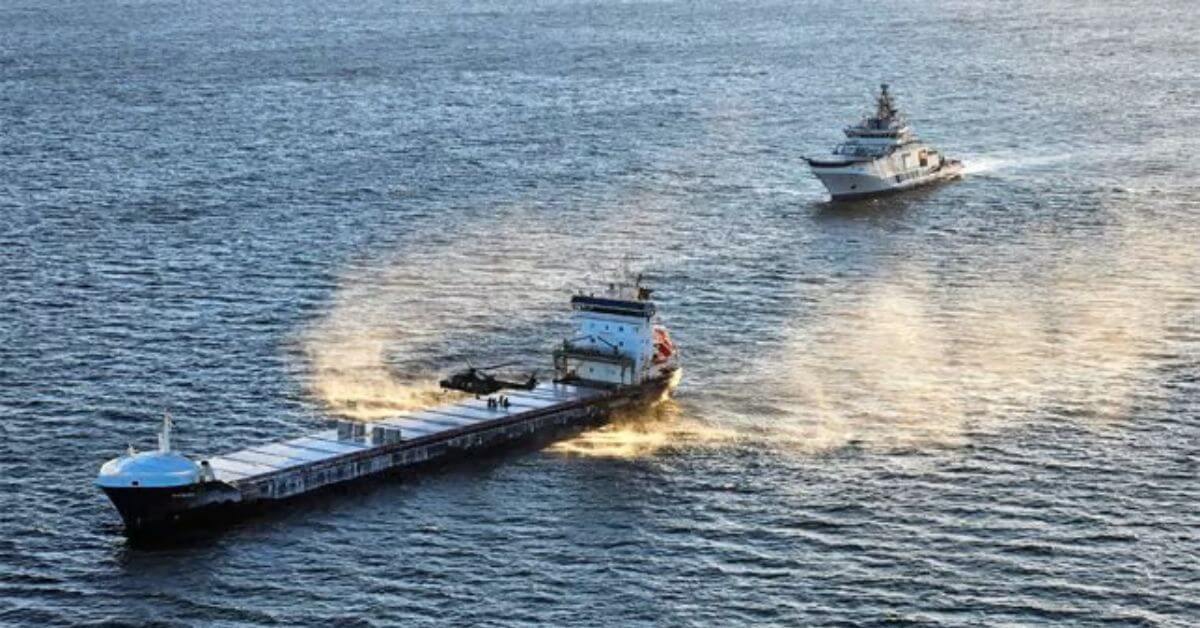
The trial unfolding in a Finnish court over the deliberate damage of subsea cables is a moment that demands clarity, not alarm. Prosecutors are seeking prison sentences of at least two years and six months for the ship's crew, a penalty that reflects the seriousness of tampering with the physical infrastructure of our global data ecosystem. This is not an abstract legal proceeding; it is a direct challenge to the integrated data ecosystem that researchers, policymakers, and industry rely on for everything from real-time climate indicators to secure communications. As we have noted in our coverage of Vindnes and Vestnes: New Fallpipe Vessels Advance Subsea Rock Installation, the engineering behind subsea operations is precise and intentional. The contrast with an act of cable damage is stark: one builds resilience; the other undermines it.
For our readers, whether you are a marine scientist tracking ocean intelligence or a logistics manager planning subsea infrastructure, this case should serve as a measured warning. The cables on the seabed are not just conduits for internet traffic; they are the backbone of the empirical data streams that underpin modern oceanography and climate forecasting. When a cable is severed, the loss is not merely a connectivity outage. It represents a gap in the longitudinal datasets that allow us to measure ocean temperature, pressure, and current shifts. The Finnish court's consideration of criminal penalties signals that nations are beginning to treat these acts as what they are: attacks on a shared, calibrated resource. This aligns with the broader geopolitical tensions seen in our reporting on Naval Standoff: Tensions Rise as Pakistan Accuses India Near EEZ, where maritime boundaries and naval presence become flashpoints. The seabed is no longer a neutral space.
Our take is straightforward: we need to move beyond treating subsea cable protection as a niche technical concern. It is a matter of global stewardship. The penalties sought in Finland should be a benchmark, not an outlier. The charge sheet's demand for a minimum two-and-a-half-year sentence is a validated starting point for international norms. Yet, legal deterrence alone is insufficient. The industry and scientific community must accelerate efforts to build redundancy and monitoring into our subsea networks. As the New Zealand Vessels Traverse Taiwan Strait En Route to Philippines Exercise demonstrates, naval presence in strategic waterways is increasing, and that same vigilance must extend to the cables beneath them.
The specific detail to watch in this trial is whether the court establishes a precedent for holding state-linked actors accountable through national legal systems. If the crew's actions were deliberate, as charged, the verdict will send a measurable signal about the cost of disrupting our ocean intelligence infrastructure. Readers should track the outcome not as a news headline, but as a data point in the evolving governance of the seafloor. Understanding drives protection, and this case is a test of whether our legal frameworks are calibrated to the reality of a connected ocean.