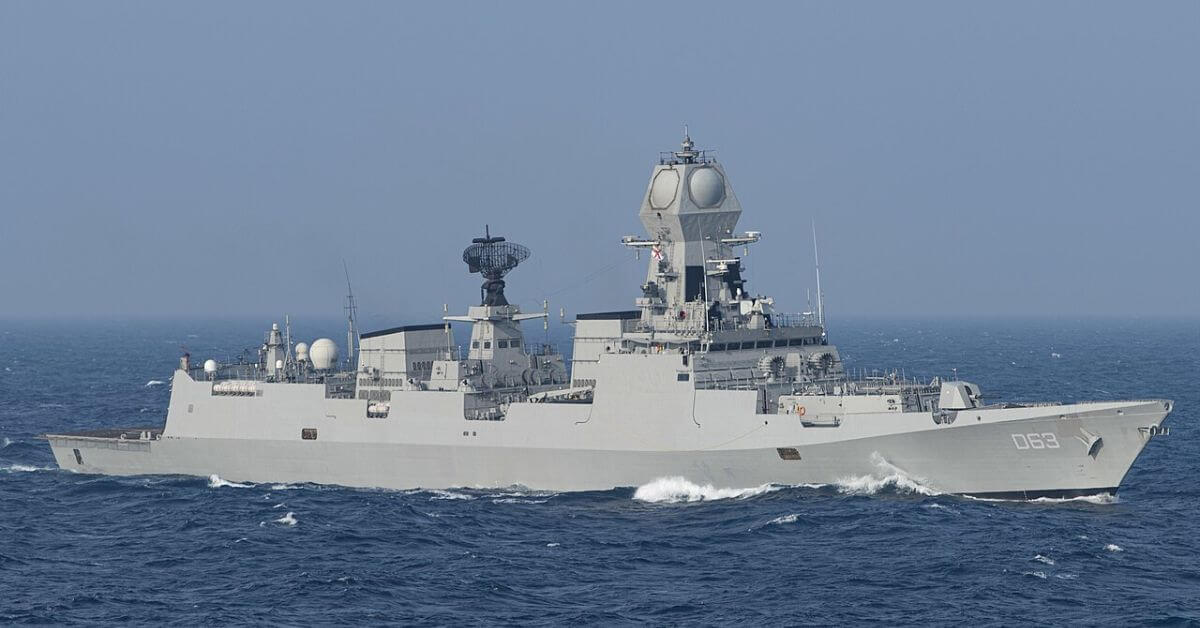
The first open military confrontation between Pakistan and India since their four-day conflict in May 2025 has arrived not in the mountains or along a disputed border, but at sea. Pakistan's accusation that the Indian warship INS Kolkata conducted "dangerous manoeuvres" inside its Exclusive Economic Zone, culminating in a collision with a Pakistani naval vessel, is a stark reminder that maritime boundaries remain the most volatile frontier of all. This incident is not isolated; it follows India Projects Expanded Naval Fleet to Navigate Evolving Maritime Landscape and comes alongside Indian Navy Explores Domestic Innovation for Amphibious Fleet Expansion, both of which signal a deliberate, long-term build-up. The collision is the first test of whether that expanding capability will be met with equivalent restraint or reckless escalation.
For our readers, the practical takeaway is that the ocean is no longer a passive buffer between nuclear-armed states; it is an active arena of risk. The Indian Navy's own projections of roughly 230 ships by 2040-2045, as reported in our earlier coverage, are not just about power projection. They are about establishing a presence in waters where a single miscalculation, a misunderstood signal, or a sudden course change can trigger a kinetic response. This incident demonstrates that the rules of engagement are being written in real time, under pressure, and with the added complexity of civilian and military traffic sharing the same waters. What happened near the EEZ is precisely the scenario that maritime strategists have warned about: a low-level encounter that spirals because neither side has a clear, calibrated protocol for de-escalation in confined, contested spaces.
We would tell a reader who asks what to watch next that the collision itself is less important than the aftermath. Both navies will now face domestic political pressure to appear resolute, and that is when the risk of further incidents rises. The Indian Navy's focus on domestic innovation, including the RFI for six new Landing Craft Utility vessels, suggests a force designed for sustained local operations, not just distant blue-water missions. That means more ships, more patrols, and a higher statistical probability of encounters. The question is whether either side will use this moment to establish a dedicated maritime hotline or a set of agreed-upon "collision avoidance" rules that go beyond the existing international norms, which clearly proved insufficient in this case.
The specific, concrete point to watch is whether Pakistan will now seek to internationalise the incident through a formal protest at the UN or the International Maritime Organization, or whether it will quietly accept a diplomatic resolution. If it chooses the former, we can expect a broader debate about EEZ rights, innocent passage, and the legal definition of "dangerous manoeuvres," a term that is dangerously subjective in practice. Our position is that this incident is a symptom of a deeper failure: the absence of a shared, verifiable framework for managing naval encounters in South Asia. Until that gap is closed, every ship launched, every new vessel commissioned, and every patrol extended is not a guarantee of security, but a potential flashpoint. The ocean will not forgive a second mistake.