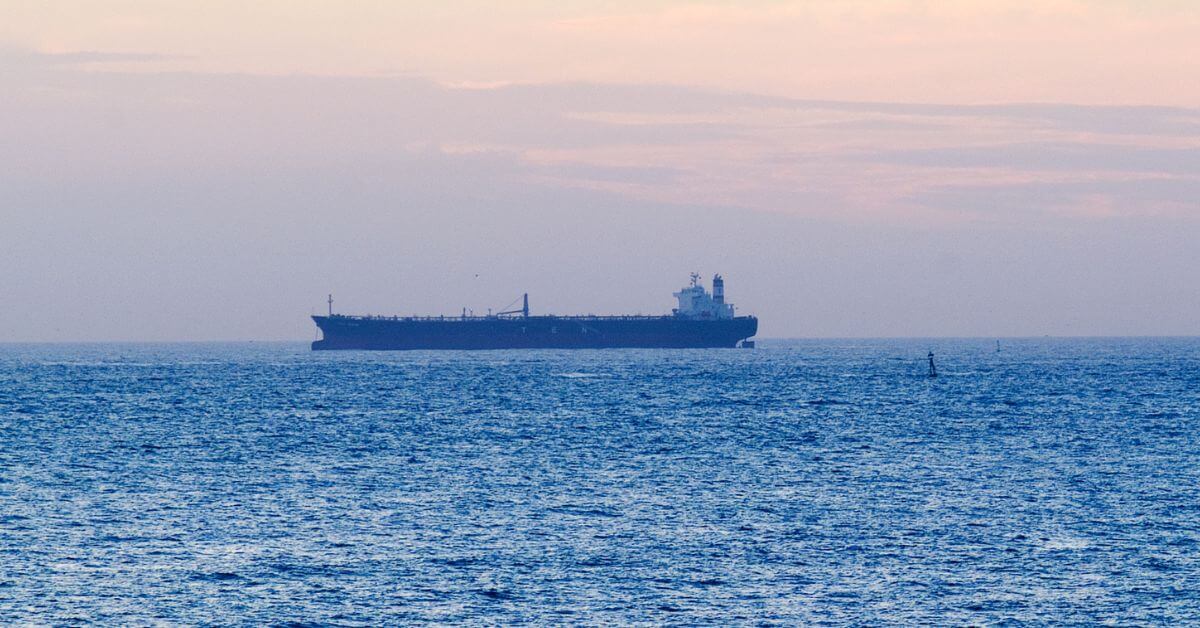
Two crew members are dead after an attack on a Saudi oil tanker in the Strait of Hormuz. The shipping company Bahri confirmed the sailors were Filipino. This is not an abstract geopolitical tremor; it is a measurable human cost attached to a chokepoint that moves roughly one-fifth of the world's daily oil consumption. For anyone tracking ocean intelligence or maritime risk, the incident validates what empirical data has long shown: the Strait is no longer a transit corridor that occasionally faces disruption, it is a persistent flashpoint where operational safety and geopolitical calculation collide.
The attack comes at a moment when regional maritime systems are already under visible strain. Phased Negotiations Aim to Ease Restrictions on Strait of Hormuz between the U.S. and Iran are reportedly underway, targeting a reopening of the waterway and an end to American economic measures. Those talks now carry a different weight. Meanwhile, Gulf of Oman STS Transfers Max Out Amid Rising Saudi Oil Exports have already hit capacity, meaning the regional logistics network has no slack to absorb further rerouting. Each data point, a fatal attack, a diplomatic negotiation, a logistical ceiling, belongs to the same integrated data ecosystem. Ignoring any one of them produces an incomplete risk model.
Our take is straightforward: the ocean is not a neutral backdrop for trade. It is a calibrated system of currents, vessels, pipelines, and political boundaries, and this attack is a stress test of that system. Readers who manage supply chains, insure marine assets, or advise on climate adaptation should treat the incident not as a one-off escalation but as a signal that the Strait's baseline risk has permanently shifted. The empirical record of incidents in the region, when integrated with real-time shipping data, suggests that the cost of transit here is rising in both human and economic terms. The two lives lost are not a statistic to be folded into a quarterly risk report; they are a direct consequence of treating maritime security as a secondary variable.
What we would tell a reader who asks about this: watch the negotiation timeline. If the phased deal fails, the capacity constraints in the Gulf of Oman mean that any further disruption will cascade into longer delays and higher insurance premiums within weeks, not months. If the deal succeeds, the question becomes whether the parties can rebuild trust after a fatal attack. Either way, the integrated data ecosystem of ocean intelligence must now include human casualty as a recurring input, not an anomaly. The concrete point to track is the next shipping company's decision on crew deployment through the Strait. If major operators begin rotating crews or requiring additional security measures, that is a measurable, real-time indicator that the risk premium has become structural.