sea surface temperature
sea surface temperature at World Data Ocean is a file of 15 stories. The newest of them: “Coordinating uncrewed surface and underwater vehicles for extreme ocean sampling”, “Two weeks after launch, Sentinel-3C delivers calibrated first views of a changing ocean”, and “Projected Climate Shifts Intensify Upwelling Along Southeast China Coast”. Pairing uncrewed surface and underwater vehicles in the heart of a hurricane is a formidable challenge. Two weeks after launch, Sentinel-3C has already delivered calibrated first views of a changing ocean, from the frozen Arctic to the Caribbean. A Global Hub for Ocean Intelligence 4 World Data Ocean is a centralized digital platform where researchers, scientists, and ocean enthusiasts converge to… The list below is every sea surface temperature story on World Data Ocean, newest first.

Coordinating uncrewed surface and underwater vehicles for extreme ocean sampling
Pairing uncrewed surface and underwater vehicles in the heart of a hurricane is a formidable challenge. Our simulation of Hurricane Fiona (2022) tested two co-located sampling strategies, loitering and speed-bleeding, within a fully-coupled atmosphere-wave-ocean model. Both proved feasible, improving measurement agreement for sea surface temperature and salinity. Yet the scale at which that agreement degrades depends on both the environment and the variable observed. This is a first, empirical step toward coordinated ocean intelligence in extreme conditions.
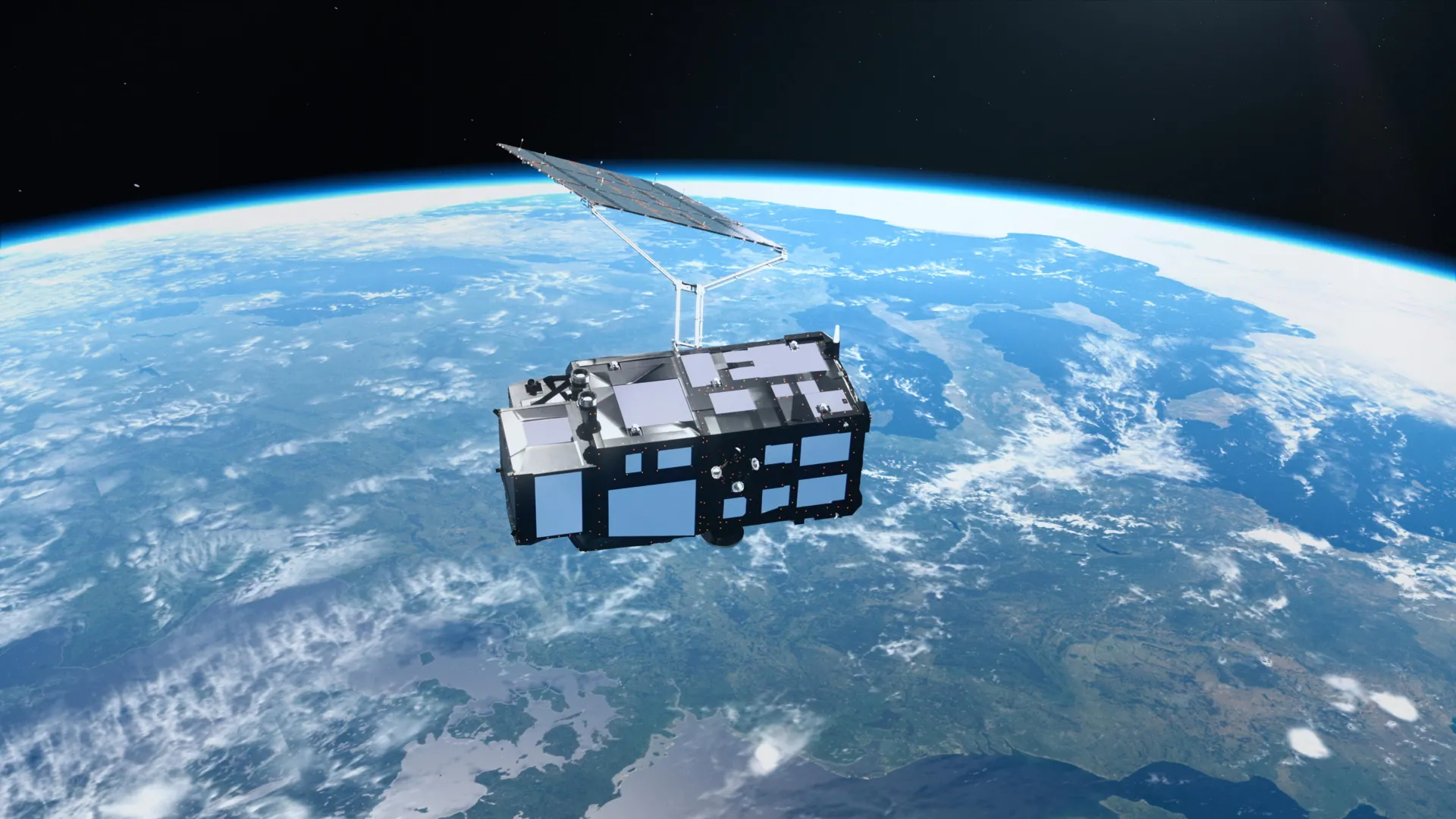
Two weeks after launch, Sentinel-3C delivers calibrated first views of a changing ocean
Two weeks after launch, Sentinel-3C has already delivered calibrated first views of a changing ocean, from the frozen Arctic to the Caribbean. These early measurements validate the satellite's capacity to track rising seas and melting ice with empirical precision. Understanding drives protection, and this instrument is now part of an integrated data ecosystem. For context on how such observations support coordinated maritime action, see our coverage of Europe's COASTEX 2026 trial.
Projected Climate Shifts Intensify Upwelling Along Southeast China Coast
Coastal upwelling along the southeastern coast of China is projected to intensify markedly under a high-emissions scenario, with vertical velocity increasing 0.755 meters per day each century and upwelling area expanding by over 1.8 million square kilometers. Enhanced Ekman transport drives most of this shift, while marine heatwave metrics appear moderated near the coast, an effect worth rigorous attribution. For context on how ocean warming plays out elsewhere, see our coverage of "Honduran Reefs Show Context-Dependent Shifts During Fourth Global Bleaching Event."

2024 Follows 2023, a Second Record Year of Rising Climate Indicators
2024 has followed 2023 as a second consecutive record-breaking year for climate indicators, a pattern that demands our attention. The data is measurable and validated, confirming the oceans are sending us early warnings that are growing more urgent. Our related coverage on the accelerating ocean signals is a natural next step. This is not an anomaly; it is a trend that empirically links warming seas to rising atmospheric CO₂. Scientific clarity, not alarm, will guide the response.
Front lines recede as ocean warming reshapes chlorophyll trends
Front lines of ocean productivity are shifting, and not toward recovery. A new study in *Nature* reveals that as the ocean warms, chlorophyll trends are being reshaped, with frontal boundaries receding in response. This is measurable, empirical evidence that climate indicators are rewriting marine ecology in real time. Understanding these patterns drives better protection. For deeper context on how we track these planetary signals, see our coverage of atmospheric CO₂ reaching record highs in 2024, validated by global data from the WMO.

Calibrated search reveals ocean intelligence from seafloor to surface
From seafloor to surface, a calibrated search reveals ocean intelligence that is both validated and measurable, this is what NOAA's new discovery platform delivers. It transforms raw depth data into integrated, real-time insights we can trust. Understanding drives protection, and this tool makes that possible. For deeper context on why such calibrated monitoring matters, read our coverage of the proposed US cuts that risk leaving the world "flying blind."
Southern Ocean’s Carbon Absorption Capacity Faces Uncertainty Under Climate Scenarios
The Southern Ocean has long acted as Earth's quiet carbon sink, but new research in *Science Advances* suggests its capacity to absorb emissions is not guaranteed under shifting climate scenarios. This uncertainty carries measurable weight for global climate modeling. We cannot assume stability where the system itself is changing. Understanding these dynamics is essential, not optional. For broader context on how ocean systems respond to pressure, our related coverage of Atlantic Circulation Weakens: Global Climate Reshaping Predicted offers a useful parallel.
Warming East Sea Disrupts Squid Spawning and Recruitment Patterns
The East Sea is warming two to four times faster than the global ocean, and the squid fishery built on *Todarodes pacificus* has collapsed by over 90 percent. Yet, as this study makes clear, the catch record alone cannot explain why. By shifting focus to a 26-year reconstruction of spawning habitat and a fishery-independent larval survey, the authors deliver a baseline that is both rigorous and honest.
Optimizing Arctic Oil Spill Response with Integrated Data and Simulation
In Arctic oil-spill emergencies, the margin for error is measured in hours and ecological cost. A hierarchically hybrid scheduling framework, coupling decision tiers from resource call-ups to on-site adjustments, directly confronts this complexity. The Barents Sea case study proves the model's mettle: a balanced solution achieving a 25.1-hour response time with an 84.6% recovery rate, cutting composite performance loss by over 59% against static planning. This is the integrated data ecosystem operational, not theoretical.

Record Sea Surface Temperatures Highlight Urgent Ocean Monitoring Needs
A new daily global sea surface temperature record, as reported by Copernicus Climate Change Service, signals that 2024's heat has carried into the present. This is not a distant anomaly; it is a measurable shift demanding sharper vigilance. We see this as a direct call for robust, real-time ocean intelligence, not passive observation. For those seeking practical pathways in this field, our related piece on "Expanding Oceanography Career Options" offers a grounded look at professional entry points. Monitoring must match the pace of change.

Record Sea Surface Temperatures Signal Urgent Ocean Change.
The daily global average sea surface temperature has now surpassed every record since modern tracking began, exceeding the previous high set in March 2024. This is not a subtle shift; it is a measurable signal that the ocean's heat capacity is responding faster than many models anticipated. We treat these numbers as empirical evidence, not speculation. The urgency is real, and the data demands action.
Ocean Temperatures Reach Record High, Validating Climate Change Indicators.
August's ocean temperatures set a new record, and the data is unambiguous. This isn't a fleeting anomaly; it's a measurable signal that aligns with established climate indicators. We track these shifts because they carry consequences far beyond the surface. For those seeking to understand the mechanisms at play, our coverage of how magma and microbial activity may rewrite a 2-billion-year-old carbon signal offers a deeper, peer-reviewed perspective. The ocean is speaking in records; our role is to listen with calibrated, scientific rigor.
North Atlantic Warming Hole: Understanding Ocean Dynamics and Climate Impacts
The North Atlantic warming hole south of Greenland is often flattened into a single alarming headline. This six-minute explainer resists that. It carefully separates sea-surface temperature change from total ocean heat content, and it clarifies how freshening can strengthen stratification near the surface. The video also warns against generalizing modeled subsurface warming near Greenland to the entire subpolar North Atlantic. The cold blob may hint at shifting ocean heat transport, but it is not proof of imminent AMOC collapse. That distinction matters.
East Sea Fish Communities Converge as Warming Waters Reshape Habitats
Two decades of standardized surveys around Dokdo and Ulleungdo reveal a quiet but significant shift: neighboring fish communities are becoming more alike. Bray-Curtis dissimilarity between the islands dropped from 0.478 to 0.210 over the shared study period, driven by species turnover rather than chance. This convergence aligns with rising sea-surface temperatures around both islands. What stands out is that the change involves broad taxonomic shifts, not just warm-affinity species.
Record Sea Surface Temperatures Highlight Urgent Climate Indicators.
The ocean is running a fever, and the latest readings from Copernicus Marine and Copernicus Climate Change confirm it: daily global sea surface temperatures have shattered records for this time of year. These aren't just numbers; they are empirical, climate indicators we can no longer ignore. The data is clear, so we must turn this measurable urgency into action.