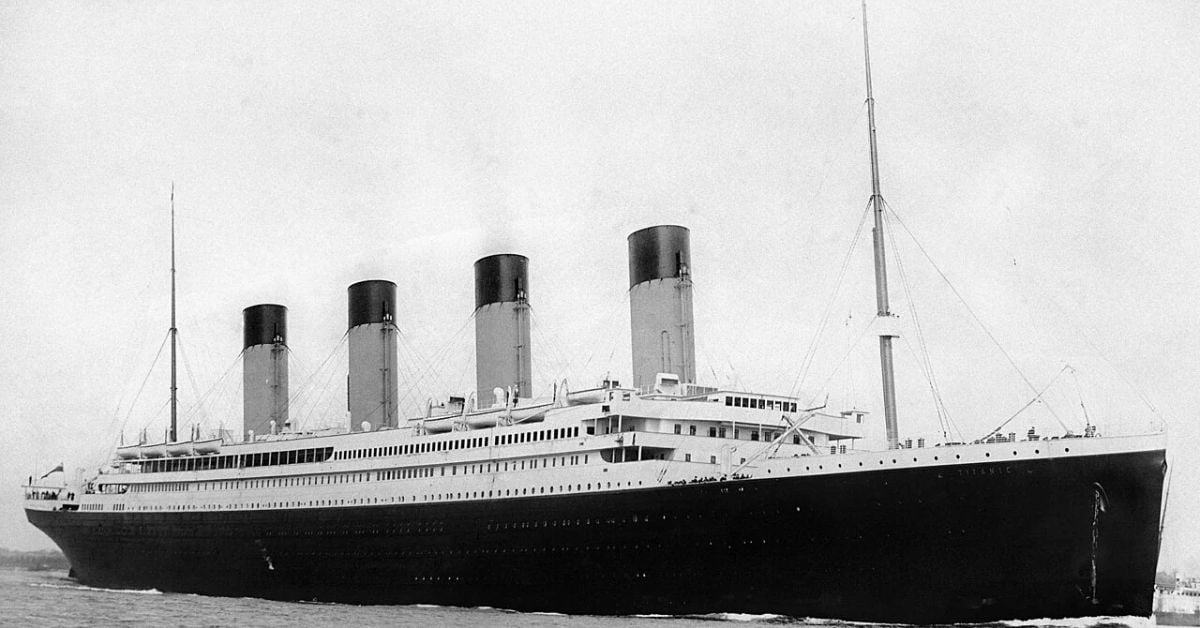
A century after the Titanic's hull was torn open by an iceberg, the original insurance policy that compensated its owners for the ship's "total loss" is a stark reminder that maritime risk has always been measured in dollars, not lives. That document, signed just two weeks before the maiden voyage and now headed for auction in Devizes, England, on November 21, 2026, tells a story we should not gloss over: the owners collected the full $5 million (roughly $173 million today) within thirty days, while the families of the more than 1,500 victims waited four years to receive a total of $663,000 in negligence settlements. This is not ancient history; it is a calibrated data point on how the industry has historically valued assets over people. As we track 22 Maritime Fatalities on EU-Registered Vessels Reported in 2025 and watch the US Seabed Mineral Rights Auction Opens New Frontier for Ocean Intelligence reshape our relationship with the ocean floor, the Titanic policy forces us to ask whether our modern frameworks for risk and liability have truly evolved, or merely shifted into more complex forms of the same imbalance.
The policy itself is a marvel of empirical risk distribution: 77 insurers each took a share of the exposure, with Atlantic Mutual covering $100,000, a sum it paid out after the sinking, equivalent to $3.5 million today. Andrew Aldridge, Managing Director of the auction house handling the sale, noted that the "total loss" clause appears "slightly prophetic" given the timing. But what is more telling is the speed of the payout. Within a month, the Oceanic Steam Navigation Company received the full insured value, whereas the legal process for victim compensation dragged on for years. This asymmetry is not a footnote; it is a structural feature of maritime insurance that persists. When we compare that to the 22 maritime fatalities on EU-registered vessels reported in 2025, we see that the gap between corporate indemnification and human accountability remains measurable, and measurable data is what drives real change.
Our take is direct: this document is not merely a collector's curiosity. It is a validated record of a systemic failure that the ocean industry has yet to fully correct. The auctioneers estimate the policy could fetch around $67,000, but its real value lies in what it reveals about the prioritization of capital over crew and passengers. That same logic underpins many of today's debates about liability in deep-sea mining, autonomous shipping, and climate-induced maritime hazards. The Seabed lease auction opens new frontier for ocean exploration is a reminder that we are entering uncharted regulatory waters, where the risk models are still being written. If we do not embed human safety and environmental accountability into those models from the start, we risk repeating the same pattern: swift compensation for operators, delayed justice for everyone else.
The concrete point to watch is this: when the gavel falls in Devizes, the price tag on that policy will be reported as a novelty. But the question it raises is not about its auction value. It is about whether, in the next century, we will still be reading about insurance payouts that outpaced victim compensation. The answer depends on whether we treat this document as a warning or just a relic.