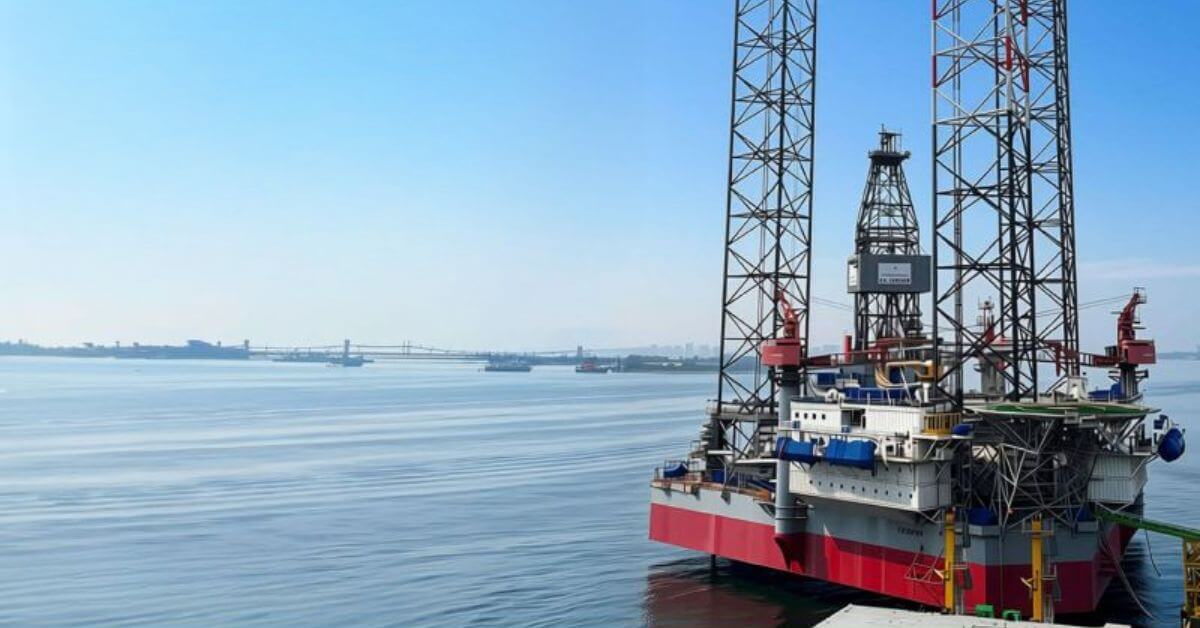
Seatrium's agreement to complete four unfinished offshore drilling rigs for RigCo is a pragmatic step, but it is not a cause for celebration. It is a necessary, measured move to unlock value from assets that were left in limbo after the merger that created Seatrium in 2023. The real story here is not the construction work itself, but the disciplined financial engineering that underpins the broader S$3.7 billion Keppel Offshore Fund monetisation plan. For our readers, whether they are investors tracking capital flows, operators assessing future rig availability, or policymakers watching industrial strategy, this deal signals a clear preference for structured, long-term asset management over speculative market plays.
The numbers demand attention. Keppel's plan involves transferring six already-leased jack-up rigs valued at approximately S$1.2 billion, while the completion and subsequent transfer of these four unfinished rigs could generate an estimated S$1.3 billion in cash proceeds. Apollo group investors have committed S$1.5 billion to the fund. That is a significant concentration of capital, and it underscores a growing trend: financial institutions are treating offshore energy infrastructure as a distinct asset class, not merely a service industry. This aligns with patterns we have observed elsewhere, such as in the Validated AI inspection scaled to $300M for fleet readiness, where institutional capital is being directed toward measurable, long-term fleet readiness rather than short-term fixes.
The practical implications are equally important. Two of the four rigs, a seventh-generation drillship and a harsh environment jack-up, have delivery schedules set for 2027 and 2028, which could make them available for chartering. But no charters have been confirmed. That is a detail worth watching closely. Northwest Europe's harsh operating environment demands rigs with specific design tolerances, and Seatrium's track record, its designs account for more than two-thirds of all operational jack-up rigs globally, provides some confidence in the engineering. Yet, the absence of committed charters means these assets remain a bet on future demand. This is a different kind of risk than what we see in the Seatrium to build five hydrogen-ready powerships for scalable ocean energy project, where the powerships have a defined energy delivery purpose from the outset.
What matters most for our audience is the timeline and the open question of the two mid-water semisubmersibles. Their completion schedule remains unassessed, and their path to monetisation is unclear. That uncertainty is the concrete point to track. If Keppel and Apollo can execute the full 10-rig portfolio transfer, it will validate a repeatable model for converting stranded industrial assets into liquid capital. If the semisubmersibles stall, the plan becomes a partial success, not a blueprint. Investors and operators alike should monitor the delivery milestones for 2027 and 2028, because those dates will determine whether this disciplined approach becomes a standard or a cautionary tale.