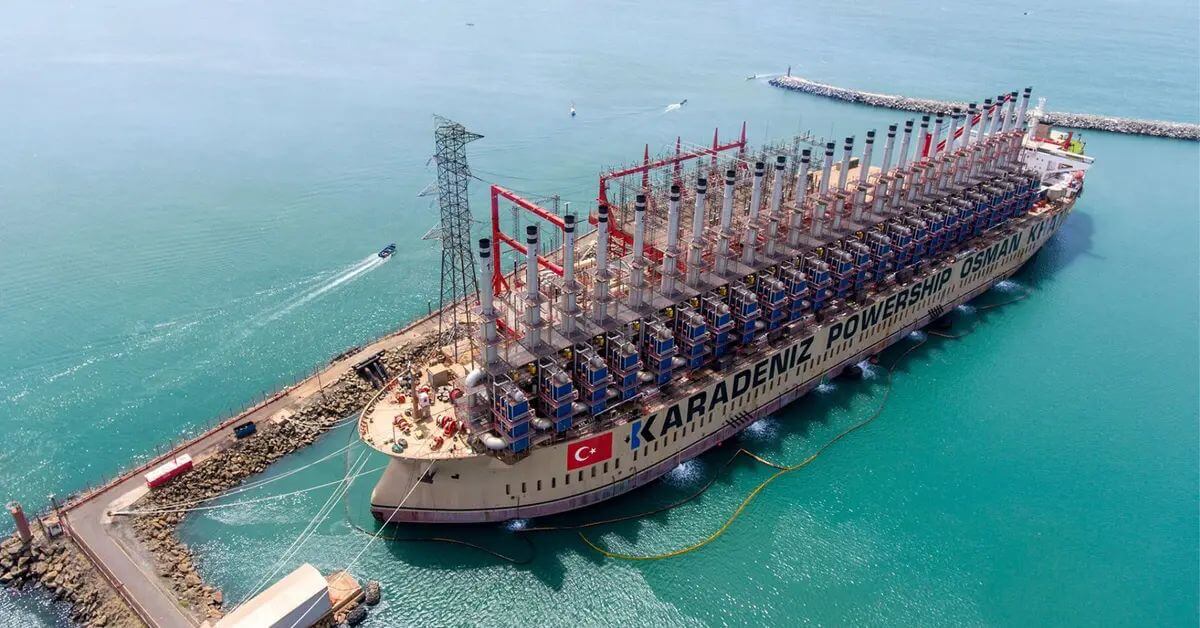
The Whale Class powerships represent a practical, if incomplete, step toward bridging the gap between urgent energy needs and long-term decarbonization goals. Seatrium's contract to build five hydrogen-ready floating power plants for Karpowership signals a serious commitment to scalable ocean energy, but the real test lies in whether these vessels will ever burn the hydrogen blends they are designed to accept. For our readers, researchers, policymakers, and industry watchers, this project offers a measurable case study in how the maritime sector is calibrating its transition.
The vessels, each capable of delivering 500 to 600 megawatts, are designed as plug-and-play solutions that can connect to national grids within 30 days of arrival. That speed is a genuine advantage for regions facing power shortages or infrastructure gaps. Yet the hydrogen-ready label is not a guarantee of hydrogen use. The companies have not specified when blending will begin or what proportion of power generation will rely on it. This raises a pointed question: are these ships a genuine move toward cleaner energy, or a hedge against future regulation? The contrast with other ocean energy developments is instructive. Consider the 76 Turbines Stand in Baltic Sea as Poland's Offshore Wind Takes Shape project, which delivers a fixed 1.2 gigawatts from a renewable source with no fuel dependency. Powerships offer flexibility, but they also lock in combustion as the primary generation method.
The partnership between Seatrium and Karpowership is not new, they have collaborated since 2018 on floating storage and regasification units, but this contract extends their work into a domain where environmental stakes are higher. Floating power plants can bypass the need for land-based infrastructure, but they still depend on coastal grid connections and, in this case, on fossil fuels or hydrogen blends whose availability and cost remain uncertain. Meanwhile, Canada's Patrol Submarine Project Charts a Calibrated Course for Sovereign Ocean Intelligence reminds us that ocean-based assets are increasingly being designed with dual-use capabilities and long-term adaptability in mind. The Whale Class ships, with their onboard substations and multi-fuel systems, reflect a similar logic: build for flexibility now, retrofit for sustainability later.
The most concrete detail to watch is the arrival of the first vessel at Seatrium's Tuas Boulevard Yard in December 2027. That date marks the beginning of a multi-year integration process, and it is the first point at which the real-world performance of these hydrogen-ready systems can be validated. Until then, the promise of hydrogen blending remains just that, a promise. For an industry that needs measurable, empirical progress on climate indicators, the Whale Class powerships are a step worth watching, but not one worth celebrating prematurely.