Scientists discover a natural Arctic cloud factory missing from climate models
Our take
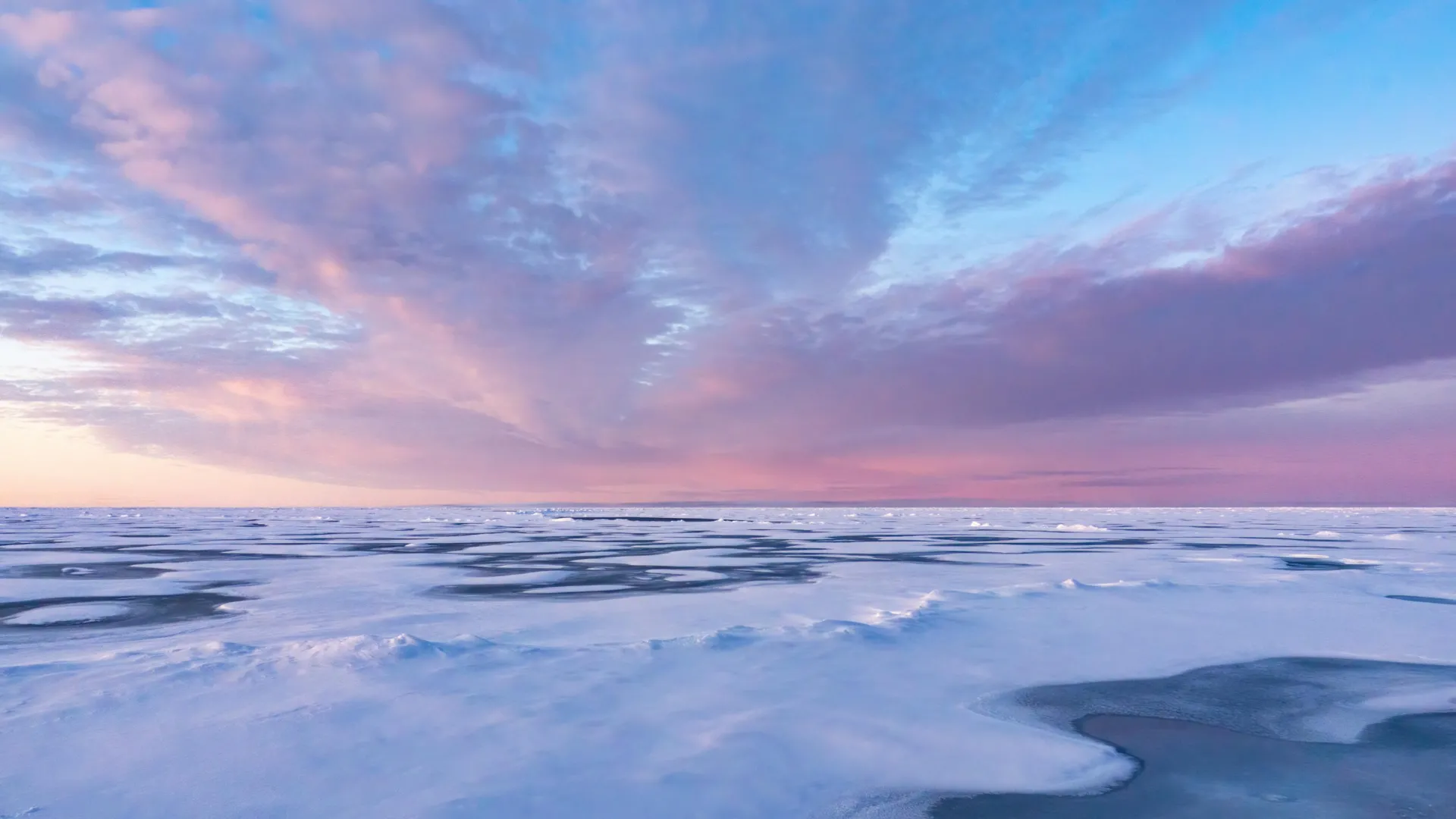
The recent discovery of a previously unaccounted-for Arctic cloud formation process presents a significant challenge to current climate modeling and underscores the complexity of the region's response to warming. Scientists have observed that near melting sea ice, a chemical reaction triggered by sunlight transforms compounds released from the ocean, algae, and the ice itself into cloud-seeding particles, multiplying their numbers by as much as 50% in a single day. This phenomenon, occurring within the rapidly expanding ice-edge region, suggests a potential feedback loop where retreating sea ice inadvertently amplifies cloud formation, which could, in turn, influence Arctic temperatures. Understanding these intricate interactions is crucial, particularly as geopolitical considerations surrounding the Arctic—such as India's plans for increased shipping traffic along the Northern Sea Route [India Plans First Cargo Ship On Northern Sea Route By 2027]—intensify and further impact the region's delicate ecosystem. The implications extend beyond purely scientific inquiry; accurate climate models are essential for informed policy decisions and resource management in a changing Arctic.
The significance of this discovery lies in its potential to reshape our understanding of Arctic amplification – the phenomenon where the Arctic warms at a rate significantly faster than the global average. Existing climate models, while increasingly sophisticated, have not fully captured the nuances of this ice-edge process, potentially leading to underestimations of Arctic warming. The rapid expansion of the ice-edge zone, driven by continued sea ice decline, means this newly identified mechanism is becoming increasingly relevant. Moreover, the interconnectedness of Arctic systems highlights how seemingly localized processes can have far-reaching consequences. For instance, research into the microbiome of ringed seals, a sentinel species of Arctic change [Microbiome baseline for an Arctic sentinel: spatial patterning of nasal and anal microbiomes in ringed seals], provides critical insights into the broader ecological shifts occurring within the Arctic food web, potentially influencing the chemical composition of the water and, consequently, the cloud-seeding process itself. The interplay of these factors demands a more holistic approach to Arctic climate research.
The need to integrate this discovery into climate models is paramount. Scientists are now actively working to quantify the impact of this cloud-seeding process on Arctic temperatures and regional climate patterns. This effort requires a combination of field observations, laboratory experiments, and advanced computational modeling. The challenge lies in accurately representing the complex chemical reactions and physical processes occurring at the ice edge, as well as incorporating the dynamic nature of the ice-edge region itself. The recent emergence of diseases like yellow fever, potentially linked to drought conditions and altered animal migration patterns [How a brutal drought may have helped unleash yellow fever in Brazil], serves as a stark reminder of how environmental changes can trigger unexpected and cascading effects, emphasizing the importance of comprehensive climate modeling. A robust model will be essential to predict the trajectory of Arctic warming and its consequences for global climate patterns.
Looking ahead, the question becomes: how will the integration of this new process into climate models ultimately alter our projections for Arctic sea ice extent and the frequency of extreme weather events in mid-latitude regions? The feedback loops within the Arctic climate system are incredibly complex, and this discovery serves as a potent reminder of the knowledge gaps that still exist. Further research is needed to fully understand the sensitivity of this cloud-seeding process to changes in ocean chemistry, atmospheric conditions, and ice characteristics. Continuous monitoring and validation of climate models against real-world observations will be crucial to ensure their accuracy and reliability in predicting the future of the Arctic and its impact on the global climate.
Read on the original site
Open the publisher's page for the full experience