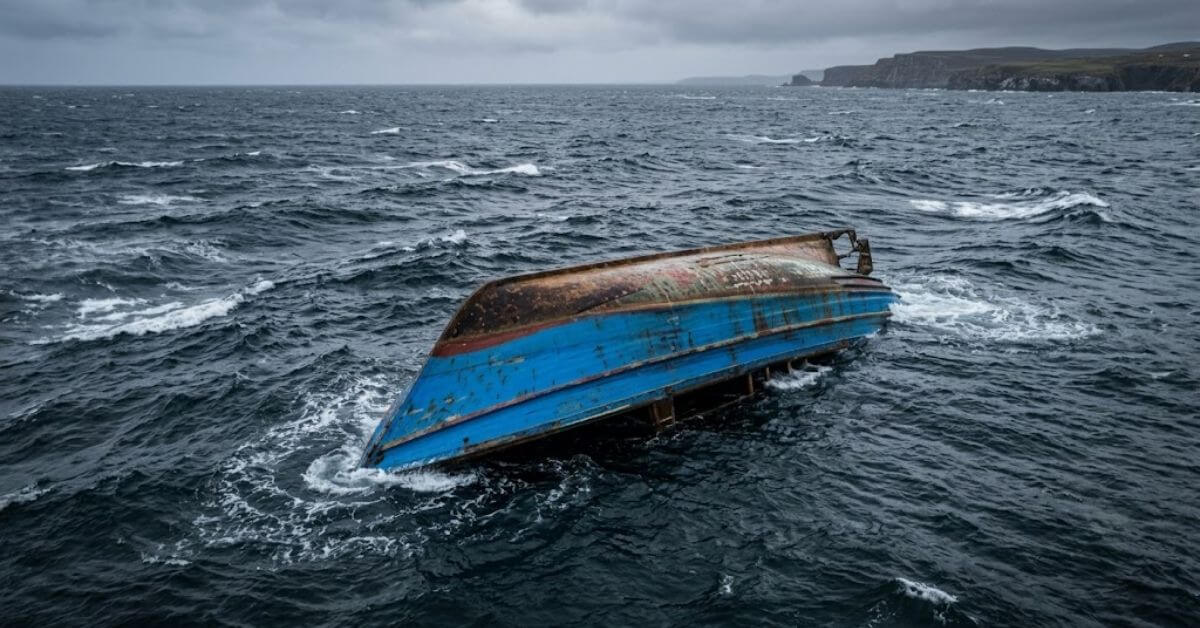
Three people are dead, two remain missing, and the ocean has once again demonstrated that it tolerates no margin for error. The capsizing of a fast rescue boat off South Africa's Western Cape coast is not merely a local tragedy; it is a calibrated signal that maritime safety protocols, vessel design standards, and real-time decision-making under duress demand continuous, empirical scrutiny. This incident joins a sobering pattern of loss at sea, from the Tanker Engine-Room Fire at Calaca Port Injures Two Crew Members to the Ferry fire tragedy prompts criminal complaint against captain amid 77 confirmed deaths and the Search data confirms 71 lost as Virgo Transport 8 recovery continues. Each event is a data point in an integrated ocean intelligence system we are only beginning to build.
Our opinion is plain: every preventable death at sea is a failure of shared knowledge. The Western Cape rescue boat, a vessel designed to save lives, became a site of loss. This contradiction demands that we move beyond anecdotal reporting and toward the systematic collection of longitudinal, peer-reviewed data on small-craft stability, wave conditions, and crew response times under load. We cannot afford to treat these disasters as isolated headlines. When a tanker burns at Calaca Port, when a ferry captain faces criminal charges after 77 die in a fire, and when a rescue boat overturns in cold Atlantic waters, the common thread is a gap between operational reality and the validated data ecosystems that could inform better design, training, and regulatory frameworks.
For our readers, researchers, policymakers, and maritime professionals, the takeaway is specific and actionable. We need calibrated, real-time environmental monitoring integrated into every rescue vessel's operational checklist. The ocean's surface state is not a static variable; it is a measurable, climate-influenced force that shifts with wind, current, and temperature gradients. The deaths off the Western Cape coast are a measurable indicator that current safety margins may be insufficient for the conditions we are already encountering. We should treat this incident as a peer-reviewed case study, not a closed tragedy. What were the sea state measurements at the time of the capsizing? What was the vessel's load distribution? Was there a pre-launch stability calculation that accounted for the vessel's specific hull form? These questions are not academic; they are the empirical foundation for preventing the next overturning.
The open question we are left with is whether the maritime community will integrate this loss into a broader, accessible data framework, or let it become another statistic filed under "accident." The ocean does not issue warnings in language we can ignore; it speaks through measurable events. The three lives lost off the Western Cape are a climate indicator of a different kind, and we should treat them as an urgent call to validate every assumption we hold about rescue operations in dynamic sea conditions.