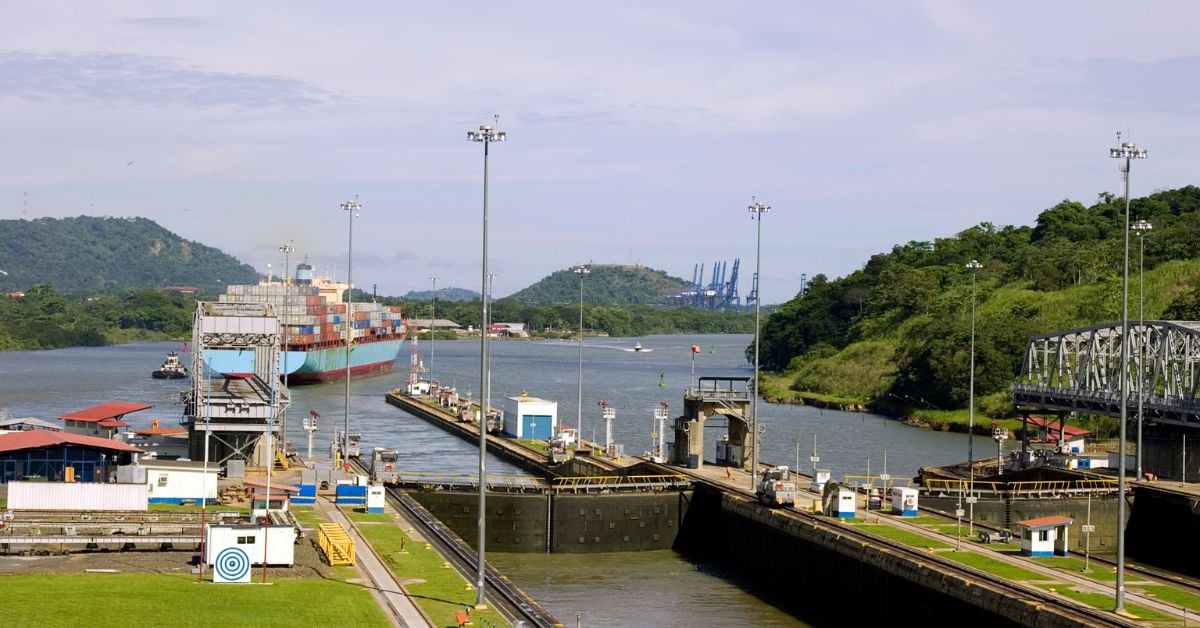
The Panama Canal Authority's decision to reduce daily ship crossings to just 29 is not a temporary hiccup; it is a measured, empirical signal that freshwater availability has become a direct constraint on global trade. Drought-like conditions and low rainfall have pushed one of the world's most engineered waterways to ration its own capacity. This is not an alarm. It is a validated data point that demands recalibration from every logistics planner, insurer, and policymaker who relies on predictable transit times.
What makes this development particularly instructive is how it connects to other chokepoints in the global system. While the Panama Canal tightens its throughput, we see parallel strain elsewhere: Gulf of Oman STS Transfers Max Out Amid Rising Saudi Oil Exports indicates that even alternative transfer methods are hitting their ceiling under rising demand. Meanwhile, Russia Calibrates Export Revenue for Northern Sea Route Icebreaker Fleet shows one nation betting on a new Arctic passage as a hedge against southern bottlenecks. And Phased Negotiations Aim to Ease Restrictions on Strait of Hormuz remind us that political friction can compound or relieve these physical constraints. Taken together, these stories form an integrated data ecosystem: climate indicators are rewriting the geography of maritime commerce in real time.
Our take is straightforward. The reduction at Panama is not a failure of engineering, it is a failure of hydrological forecasting to keep pace with a changing climate. The canal's locks depend on Gatun Lake, a freshwater reservoir that is replenished by rainfall. When the rain stops, the empirical reality is that fewer ships pass. The measurable consequence for our readers is this: supply chains that assume a fixed canal capacity are now operating on outdated assumptions. Companies that track longitudinal climate trends alongside trade flows will have a strategic advantage over those that treat this as an isolated event.
The specific takeaway we would quote to any reader asking for advice is this: "Treat every canal transit slot as a climate-dependent variable, not a constant." The reduction to 29 crossings is the latest calibration of that variable. Watch for the next adjustment in water levels, because the relationship between rainfall and trade throughput is now a direct, measurable line. The ocean intelligence required to navigate this century will not come from better ships alone. It will come from integrated observations that link the atmosphere to the ocean to the balance sheet.