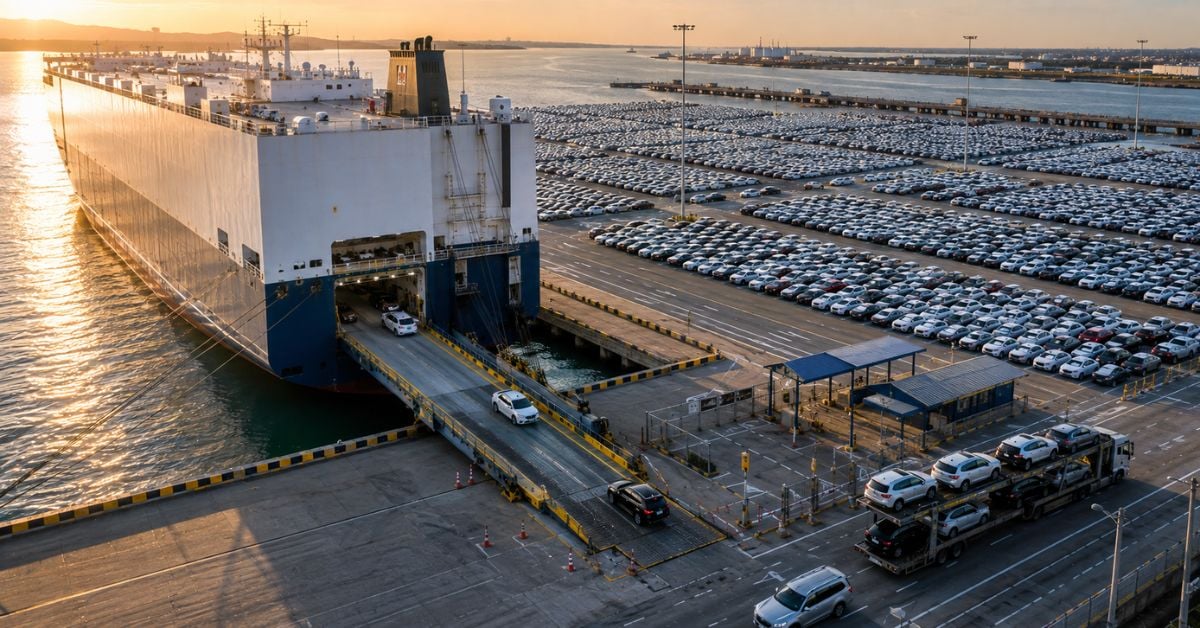
A terminal is a study in controlled chaos: vessels berth and depart, straddle carriers and reach stackers intersect, and thousands of containers move in a tightly choreographed rhythm that leaves no room for guesswork. The value of a modern Terminal Operating System, or TOS, lies not in automation for its own sake, but in the quality of the data it pushes to the surface. Real-time visibility is the difference between reacting to a bottleneck and anticipating it. That principle, connecting the digital thread from the berth to the gate, mirrors a broader truth we see across the ocean economy. We recently examined how Integrated Subsea Cables Enhance Data Transmission Across the Indian Ocean, noting that 99% of the world's data flows under the sea; the same logic applies on land, where a terminal's operational data must flow without interruption. Similarly, the push to close observation gaps through Bridging Data Gaps: Integrating Citizen Science for Ocean Intelligence underscores that visibility, whether from a sensor on a buoy or a sensor on a crane, is the first step toward informed action.
Our take is straightforward: if you are a terminal operator still relying on periodic updates or manual tallies, you are navigating a high-speed shipping lane with a paper chart. A TOS that connects departments and machinery is not a luxury; it is the calibrated instrument that turns raw operational noise into actionable intelligence. The practical benefit is measurable. When a system digitizes the workflow between the vessel planner and the yard crane, it reduces the latency between a decision and its execution. This is not about flashy dashboards; it is about the quiet efficiency of knowing exactly which truck is where and which container needs to move next. For the operations manager, this means less time on the radio and more time optimizing the plan. For the CFO, it means better asset utilization and a clearer line of sight on operational costs. In a margin-thin industry, that visibility is not just helpful; it is a competitive advantage that compounds daily.
We would tell a reader considering a TOS upgrade to focus less on the software's feature list and more on its integration depth. The real test is whether the system can unify data from your existing infrastructure, from automated stacking cranes to legacy gate systems, into a single, coherent picture. A modern TOS should serve as the central nervous system, not a standalone silo. This is where we draw a parallel to the recent hijacking incident covered in our publication, where Puntland Forces Intercept Hijacked, US-Sanctioned Oil Tanker After 48 Hours relied on coordinated, real-time information to resolve a fluid situation. In that case, information was the decisive factor in a security operation. In terminal operations, while the stakes are different, the principle holds: the speed and accuracy of your response depend entirely on the speed and accuracy of your data. Without that visibility, you are not managing the operation; you are merely reacting to it.
The specific detail to watch in the coming years is the interoperability of these systems. A TOS that can share validated, peer-reviewed data with port community systems and external logistics partners will create an integrated data ecosystem that extends beyond the terminal fence. The question is not whether your TOS can handle today's volume, but whether it can integrate with the autonomous equipment and predictive analytics of tomorrow. That is the open question we would leave with any operations leader: is your visibility leading to foresight, or is it just a live view of yesterday's problems? The answer will determine who sets the standard for efficiency in the next decade.