Port of Churchill Ships 30,000 Tonnes Of Canadian Grain To Europe For The First Time In 6 Years
Our take
The resumption of grain shipments from the Port of Churchill, Manitoba, to Europe after a six-year hiatus represents a significant, albeit localized, shift in global trade dynamics and underscores the ongoing search for resilient supply chains. The departure of a vessel carrying 30,000 tonnes of durum wheat highlights the potential of Canada’s Arctic shipping routes, although the challenges inherent in such operations remain considerable. This development comes at a time when geopolitical instability and climate-related disruptions are increasingly impacting global food security, making alternative transportation corridors vital. Recent developments in maritime technology also contribute to this evolving landscape, as evidenced by the [U.S Navy To Build Small Drone-Fired Anti-Submarine Weapons For Aircraft Carriers], showcasing innovations impacting naval operations and, by extension, maritime trade security. Furthermore, the push towards sustainable shipping solutions, exemplified by [DP World Names Its First Methanol Dual-Fuel Vessel ‘DP World London’], will influence the viability of Arctic routes, demanding environmentally conscious operational practices.
The Churchill port, uniquely situated at the terminus of the Hudson Bay Railway, has long held promise as a crucial link between Canada’s agricultural heartland and European markets. However, its history has been punctuated by periods of closure and uncertainty, largely due to the challenges of navigating the often ice-choked Hudson Bay. The recent shipment signals a renewed commitment to utilizing this route, potentially offering a shorter and more cost-effective alternative to traditional routes through the Panama or Suez Canals. This is particularly relevant given ongoing tensions in regions like the Strait of Hormuz, where Iran has recently asserted control over shipping lanes, reportedly preventing [Iran Says It Prevented 30 Ships From Crossing Strait Of Hormuz Outside Approved Route Since Aug. 22]. The ability to diversify transport options mitigates risk and strengthens supply chain resilience, a lesson underscored by recent global events.
The broader significance of this development extends beyond the immediate economic impact for Canadian grain producers. It speaks to a larger trend of nations seeking to de-risk their trade dependencies and explore alternative routes, particularly as climate change continues to reshape traditional shipping patterns. The Arctic, while presenting logistical hurdles, offers the potential for significantly reduced transit times between Europe and Asia, if the infrastructure and operational capabilities can be effectively developed and maintained. This necessitates significant investment in ice-breaking capabilities, port infrastructure, and navigational technologies, alongside a careful assessment of the environmental impact of increased Arctic shipping activity. The viability of Churchill and other Arctic ports will depend on a calibrated approach that balances economic opportunity with environmental stewardship.
Looking ahead, the long-term success of the Port of Churchill will hinge on several factors, including the stability of ice conditions, the efficiency of the rail link, and the ability to secure consistent volumes of grain shipments. The potential for increased competition from other Arctic routes, such as the Northern Sea Route along Russia’s coast, also warrants consideration. A critical question to monitor will be whether this initial shipment represents a sustainable revival or a temporary surge driven by specific market conditions. The interplay of geopolitical factors, technological advancements in ice navigation, and evolving climate indicators will ultimately determine the future role of Churchill and other Arctic ports in the global trade landscape.
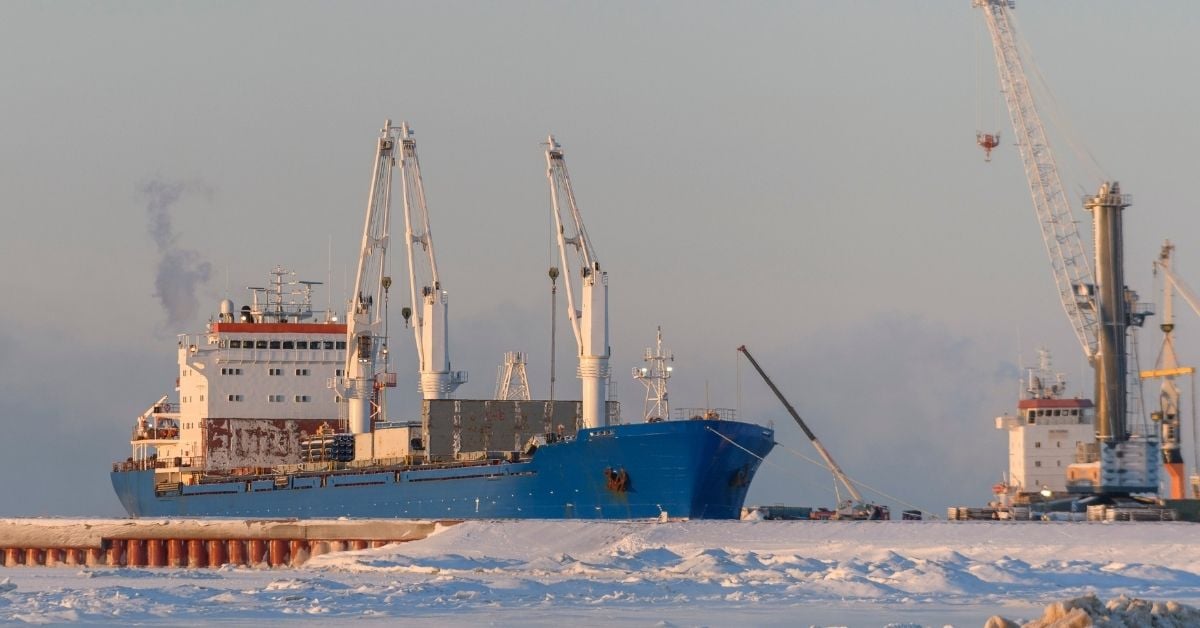
For the first time in 6 years, a vessel carrying 30,000 tonnes of durum wheat from Canada’s northern Manitoba departed for Europe, in what the government called a major milestone.
Port of Churchill is Canada’s only deep-water port in the Arctic region, which is also linked to the railways. The facility last handled shipments before COVID-19 in 2020.
However, its owner, the Arctic Gateway Group and the Hudson Bay Railway said that shipments of grain would begin this year in the summer months.
The port witnessed a surge in operations, which gave hope that its shipping season, which runs for four months, might get longer.
A ceremony was organised at the port premises on Monday by the owners to mark the first export of grain from the community.
Northern Affairs Minister Rebecca Chartrand said during the event that it marks the return of the port as an important gateway linking the Prairies and the Arctic to the rest of the world.
She also added that increased investments in the port would enable Canada to reach new markets and would enhance the country’s relations with the United States.
Chatrand said that building strong trading relationships, investing in port infrastructure and boosting trade volumes will enable Canada to reduce its dependence on a single market.
Arctic Gateway said that the Port of Churchill would witness its first most diverse shipping season in 2026, handling an array of cargo types.
Another vessel will be loaded with zinc concentrate this week, making it the port’s first-ever shipment of potash. A northern re-supply ship destined for Nunavut would also be loading at Churchill.
Arctic Gateway also conducted studies which showed that shipping could continue for a longer time from the port without use of heavy icebreakers as sea ice is melting.
CEO and Chief Executive Officer Chris Avery said the port had been neglected for decades, highlighting that it was closed by the previous owner in 2016 after the railway could not be repaired.
Operations resumed in 2019 after Arctic Gateway took over. Manitoba is planning to connect with foreign companies to bring more investments to the strategic port, which residents say could be a good thing, as it would boost tourism, connectivity and create employment; however, the environmental factors must be taken into account.
Read on the original site
Open the publisher's page for the full experience