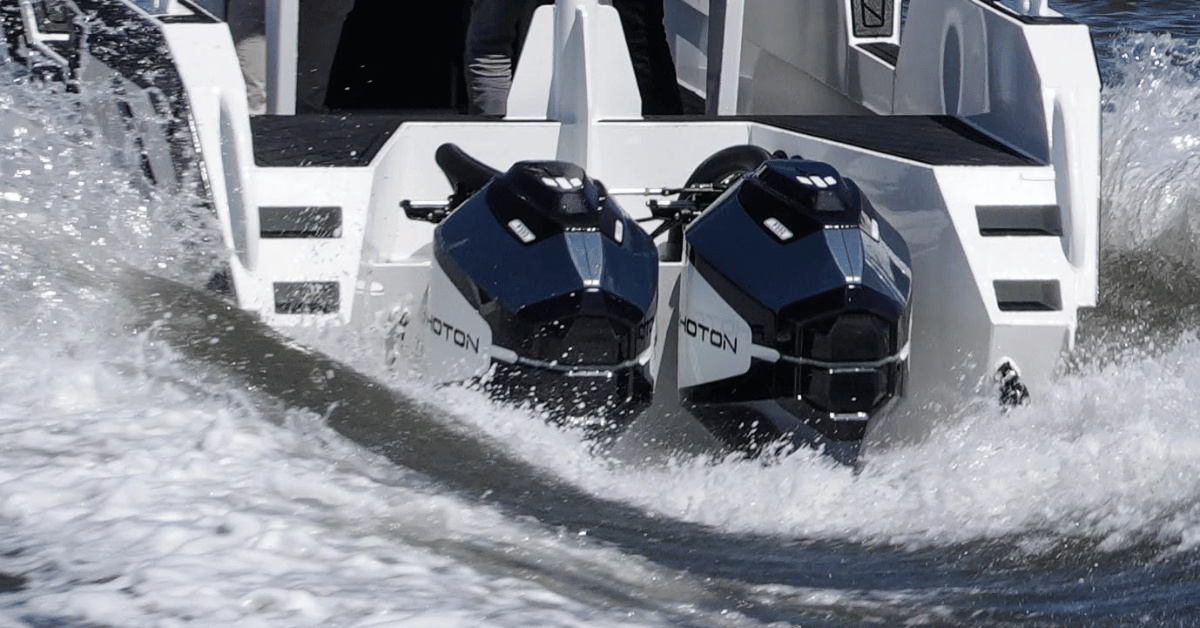
Photon Marine's $1 million award to deploy an electric workboat, fast charger, and first-of-its-kind floating battery for New York waters is a practical step forward, not a symbolic gesture. This is the kind of integrated infrastructure, vessel, charger, and energy storage platform working as a closed loop, that makes electrification viable in constrained urban harbors. For our readers tracking the intersection of maritime technology and climate action, this project demonstrates something essential: decarbonization at sea depends as much on where and how you store energy as on the vessel itself. The floating battery solves a chronic problem, how to charge a workboat when shore-side grid capacity is limited or when dock space is too valuable to dedicate to charging stations. It is a model that could scale to other ports facing the same tension between operational demand and infrastructure constraints.
This announcement resonates differently when placed alongside other recent developments in marine science and safety. Consider the Satellite and field data merge to track harmful blooms in El-Mex Bay story, which combines remote sensing with in-situ sampling to monitor algal blooms. Both projects rely on the same principle: you cannot manage what you cannot measure. Photon Marine's floating battery, like the satellite data in El-Mex Bay, creates a feedback loop between observation and action. Meanwhile, the tragic report of Five seafarers killed as pirates open fire on hijacked tanker during rescue reminds us that the maritime domain is not only a technical challenge but a human one. Electrifying workboats reduces emissions and noise, but it does not replace the need for robust security, crew welfare, and international law enforcement. These are not competing priorities; they are parallel obligations that any ocean-facing organization must hold simultaneously.
What makes Photon Marine's approach worth watching is its insistence on validation through deployment. A floating battery is not a new idea on paper, but putting one in the water with a real workboat and a real charging schedule forces the engineering to confront tide, temperature, salt spray, and operator behavior. The $1 million award is modest by infrastructure standards, which is precisely the point: it funds a demonstration that can generate empirical data on charging cycles, battery degradation, and operational uptime. That data will be more valuable than any white paper. For policymakers and port authorities, the specific takeaway is this: the path to zero-emission harbor craft runs through integrated energy systems, not through isolated vessel upgrades. A battery boat without a charger is a science project; a charger without grid support is a bottleneck. Photon Marine's design closes that loop, and New York's waterways will be the test bed.
The open question is whether the floating battery can survive the operational reality of a working harbor, vessel wakes, debris, winter icing, and the constant demand for rapid turnarounds. That is the detail to watch. If the platform delivers reliable, repeatable charging cycles over a full year of service, it will provide a validated template for ports from Rotterdam to Singapore. If it fails, the failure will be equally instructive, revealing the gap between laboratory assumptions and field conditions. Either outcome advances the empirical knowledge base that ocean intelligence depends on. We will be tracking the results.