Onboard Carbon Capture Can Cut Shipping Emissions By 30-70%, New Lloyd’s Register Report Shows
Our take
The recent Lloyd’s Register report highlighting the potential of onboard carbon capture to reduce shipping emissions by 30-70% is a significant development, particularly as the maritime industry navigates increasingly stringent environmental regulations. The transition to alternative fuels, while essential for long-term decarbonization, faces considerable logistical and infrastructural hurdles. As explored in From Cost Centre To Commercial Edge: How Shipping Companies Are Turning Emissions Compliance Into Leverage, companies are actively seeking strategies to manage emissions compliance, and onboard carbon capture offers a near-term solution that can be implemented on existing vessels, buying valuable time as alternative fuel supply chains mature. The ability to retrofit existing fleets provides a pragmatic approach, minimizing disruption and maximizing the utilization of current assets. This contrasts with the more substantial investment required for entirely new vessel designs optimized for alternative fuels. Furthermore, the report's findings align with a broader trend of innovation within the maritime sector, exemplified by MOL’s recent consolidation of ship management companies – MOL Merges 6 Ship Management Companies To Strengthen Safety Across 200+ Vessels – demonstrating a focus on operational efficiency and risk mitigation, which increasingly includes environmental performance.
The technological feasibility of onboard carbon capture has been demonstrated, but scaling up the technology to meet the demands of the global shipping fleet presents considerable engineering and economic challenges. The report’s projected emissions reduction range is contingent on factors such as the specific capture technology employed, the type of fuel burned, and the operational profile of the vessel. Crucially, the captured CO₂ still requires a viable destination. Options include storage (though geological storage at sea poses its own logistical and environmental concerns) or utilization – for instance, in the production of synthetic fuels or other industrial processes. The economic viability of these downstream pathways will be a key determinant of the widespread adoption of onboard carbon capture. It’s also important to consider the energy penalty associated with carbon capture; the process itself requires energy, potentially impacting overall fuel efficiency and requiring careful calibration to avoid negating some of the emissions reductions. The complexity of integrating these systems into existing ship designs also warrants thorough assessment and validation through longitudinal testing and empirical data collection.
The geopolitical landscape further influences the dynamics of maritime emissions reduction. Recent events, such as the increased tensions in the Strait of Hormuz, as reported in Iran Says It Prevented 30 Ships From Crossing Strait Of Hormuz Outside Approved Route Since Aug. 22, highlight the vulnerabilities of global trade routes and the potential for disruptions to fuel supply chains. Onboard carbon capture, by providing a degree of emissions mitigation independent of external fuel sources, could contribute to greater resilience in the face of such geopolitical uncertainties. This integrated data ecosystem approach, combining emissions reduction technology with enhanced operational security, reflects a growing understanding of the interconnected nature of the maritime industry. The development and implementation of these technologies require rigorous peer-reviewed validation and calibration to ensure accuracy and reliability, aligning with World Data Ocean’s commitment to scientific integrity.
Looking ahead, the success of onboard carbon capture will depend not only on technological advancements and economic feasibility but also on supportive regulatory frameworks and international collaboration. The continued refinement of carbon capture technologies, coupled with the development of robust CO₂ utilization pathways, will be critical. A key question moving forward is whether the industry can establish a standardized, measurable framework for assessing the lifecycle carbon footprint of vessels equipped with carbon capture systems, ensuring that emissions reductions are genuinely realized and not simply shifted to other parts of the value chain. The integration of real-time data on capture performance and fuel consumption will be essential for optimizing system efficiency and verifying compliance with evolving environmental regulations.
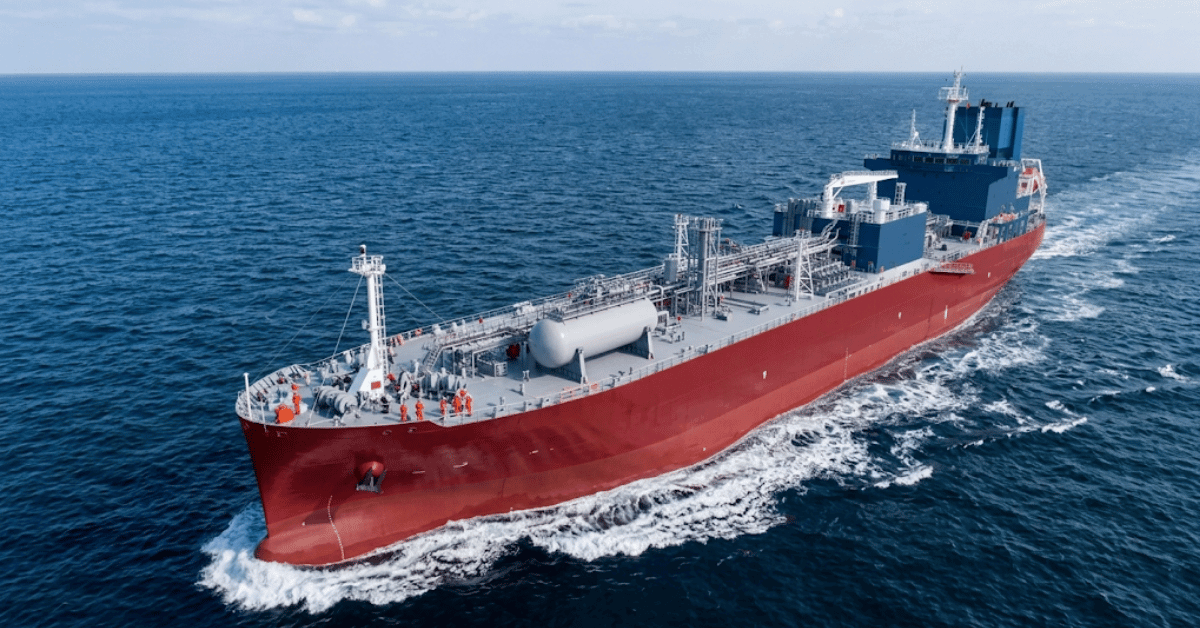
Onboard carbon capture and storage systems (oCCS) could play a significant role in helping shipping reduce CO2 emissions, while alternative fuel supply chains continue to develop, according to a new Lloyd’s Register (LR) report.
The report, Applying Onboard Carbon Capture & Storage to Existing Ships, comes as shipowners face increasing pressure to decarbonise and reduce CO₂ emissions. Only around 4% of the near-zero GHG emission fuel production capacity needed by 2030 has reached final investment decision. Alternative fuel-capable vessel orders have also fallen from 45% of contracted tonnage in 2024 to 37% in 2025.
Against this backdrop, the report argues that much of the fleet on order or in service today will continue to rely on conventional petroleum fuels well into the 2030s. For these vessels, oCCS offers an additional route to reducing CO₂ emissions alongside alternative fuels and energy efficiency technologies.
The research finds that specific oCCS technologies have moved beyond the concept stage and are entering commercial deployment. Current full-scale installations are capturing 30-40% of CO₂ emissions, while larger pilots are targeting capture rates of around 70%.
LR’s analysis identifies oCCS as a viable retrofit for a specific fleet segment: vessels with more than ten years of trading life remaining, significant exposure to carbon pricing, access to a credible CO₂ offloading chain, and sufficient onboard space for capture equipment without unacceptable commercial penalties. For these ships, the technology could help extend commercial competitiveness as environmental regulations tighten and carbon costs increase.
The report identifies three market segments as the strongest near-term candidates for oCCS deployment: MR and chemical tankers trading on EEA routes, LNG-fuelled vessels able to harness the cryogenic cold energy released during the vaporisation of LNG to cool and liquefy CO₂ captured from exhaust gases, and short-sea or feeder vessels with frequent access to EEA ports and carbon pricing exposure.
Panos Mitrou, Senior Vice President of Shipping Strategy, Lloyd’s Register said: “The reality is that much of the fleet on order or in service today will still be operating well into the 2030s and beyond. While alternative fuels remain central to shipping’s long-term decarbonisation strategy, shipowners also need practical options for reducing CO₂ emissions from existing vessels.
“Onboard carbon capture has the potential to become an important part of shipping’s decarbonisation toolkit. For the right vessel types and trades, it offers a realistic pathway to reducing CO₂ emissions and managing carbon costs while fuel supply chains, infrastructure and regulations continue to evolve.”
While the report highlights significant opportunities, it also cautions that the technology is not a universal solution. Current oCCS systems can impose fuel consumption penalties of between 15% and 30% in many current applications and can require significant onboard space for capture equipment and CO₂ storage. Retrofit decisions must be assessed on a vessel-by-vessel basis, taking account of trading patterns, remaining asset life, carbon pricing exposure and access to CO₂ offloading infrastructure.
The main barrier to wider deployment remains the limited availability of ports and infrastructure capable of receiving captured CO₂. While major carbon storage projects are progressing in north-west Europe, including North Sea storage networks, the report identifies port reception facilities as the weakest link in the emerging carbon value chain.
The report also highlights the need for greater regulatory clarity. While EU ETS allows captured and permanently stored CO₂ to reduce compliance obligations, other frameworks, including FuelEU Maritime and future IMO regulations, are still evolving.
Looking ahead, broader deployment will depend on three key developments progressing in parallel: the outcome of FuelEU Maritime’s Article 30 review, IMO recognition of captured CO₂ within a global pricing framework, and expansion of CO₂ offloading infrastructure.
The report, which forms part of LR’s Retrofit Research Programme, was launched today at SMM in Hamburg. It is available from Lloyd’s Register at: Applying Onboard Carbon Capture and Storage to Ships | LR
Read on the original site
Open the publisher's page for the full experience