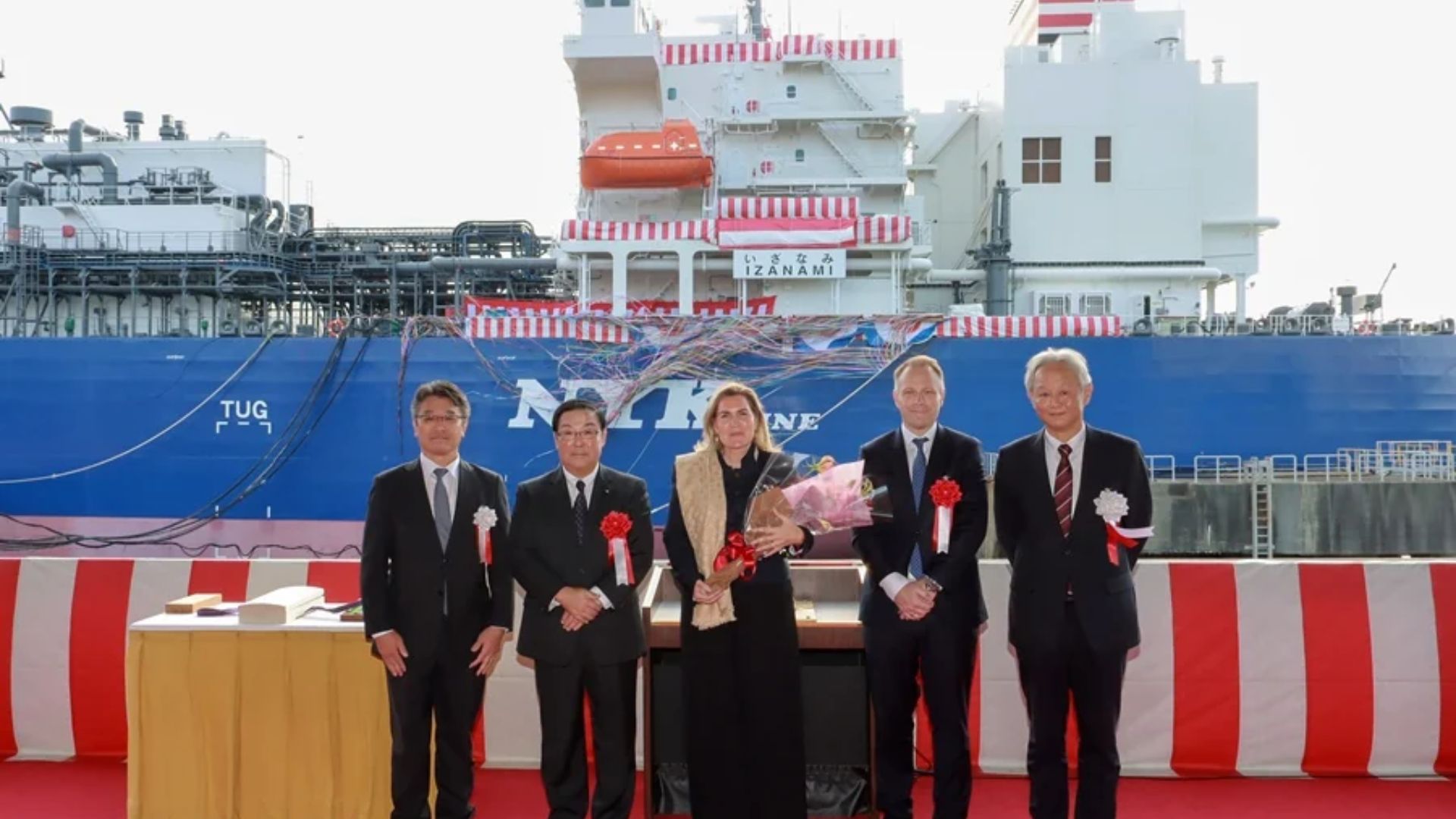
The maritime industry has long talked about ammonia as a future fuel, but the launch of NYK's *Izanami* moves that conversation from theoretical to empirical. This vessel is the world's first to be adopted with ammonia-fueled engines for both main and auxiliary power, a distinction that carries measurable weight. As we have seen in other sectors, such as the Validated efficiency marks first US electric hydrofoil pilot boat, validated operational data is what transforms promising technology into a replicable standard. For shipping companies and regulators alike, the *Izanami* is now a floating laboratory, one that will generate the real-time, peer-reviewed performance metrics needed to calibrate future investment and policy.
The vessel's significance is grounded in its dual-fuel architecture. Ammonia emits no carbon dioxide when burned, and its ability to be stored and transported as a liquid makes it a practical candidate for deep-sea routes where battery or hydrogen options remain constrained. NYK has not simply bolted an ammonia engine onto an existing hull; it has engineered an integrated system where both the main two-stroke engine and the auxiliary four-stroke engines run on the fuel. This is a critical distinction. Auxiliary engines often account for a significant share of a ship's total emissions during port operations and maneuvering, and addressing them directly closes a gap that single-engine demonstrations have left open. The project, developed under Japan's NEDO Green Innovation Fund with partners including Japan Engine Corporation and IHI Power Systems, now transitions from development to operational verification. The vessel will be time-chartered to Yara Clean Ammonia Switzerland, a group company of a global ammonia leader, ensuring that the demonstration voyages occur under real commercial pressure, not just in controlled trials. This matters because, as the Validated: wind power cuts cargo fuel use by 70% in first year case showed, actual operating conditions often reveal efficiencies and challenges that simulation cannot predict.
Our take is straightforward: the *Izanami* is a credible, calibrated step forward, but its ultimate value will be determined by the data it produces over the next several years. The naming ceremony, attended by about 40 people including representatives from Yara, and the subsequent unveiling with Japan's vice-minister of Land, Infrastructure, Transport and Tourism, signal strong institutional backing. Yet the real test lies in the operational phase. Will the ammonia-fueled auxiliary engines maintain reliability during extended port stays? How does the vessel's overall greenhouse gas reduction profile compare to LNG or methanol alternatives when accounting for ammonia's upstream production emissions? These are empirical questions, and NYK has committed to accumulating that knowledge for future vessel designs. The company has already demonstrated a similar approach with the tugboat *Sakigake*, the world's first commercially operated ammonia-fueled vessel, which has been running since August 2024. That experience should shorten the learning curve for the *Izanami*.
One detail to watch is the vessel's cargo capacity: approximately 40,000 cubic meters. That is a midsize gas carrier, not a giant container ship. The choice is deliberate. By starting with a vessel class that is manageable in size and crew complexity, NYK can validate safety systems and crew training protocols before scaling the technology to larger ships. The *Izanami* is not the end of the ammonia-fueled shipping story; it is the first calibrated data point in a longitudinal study that the industry desperately needs. The question now is how quickly those findings will be shared, and how soon the next, larger ammonia-fueled vessel will follow.